The Industrial Lighting Challenge: Why Standard Solar Solutions Fall Short
Industrial facilities—petroleum bases, large parking structures, highway corridors, and manufacturing zones—operate around the clock and cannot tolerate lighting failure. Yet the solar lighting industry has long struggled with well-documented technical bottlenecks: units that fail during extended rainy periods, insufficient brightness for large-scale industrial applications, frequent maintenance requirements, and imprecise lighting control systems that waste stored energy. For facility managers and engineering contractors evaluating off-grid lighting, these pain points translate directly into safety risk and unplanned operating costs.
Sky Resources Solar Technology Co., Ltd. (SRS), headquartered in Zhongshan, Guangdong, China, was established specifically to address these bottlenecks. Positioned as a professional provider of Photovoltaic (PV) intelligent applications and solar-powered lighting systems, SRS specializes in high-reliability solutions engineered for extreme weather conditions—precisely the operating environment industrial sites demand.
Engineering for Extreme Reliability: The SRS Technology Platform
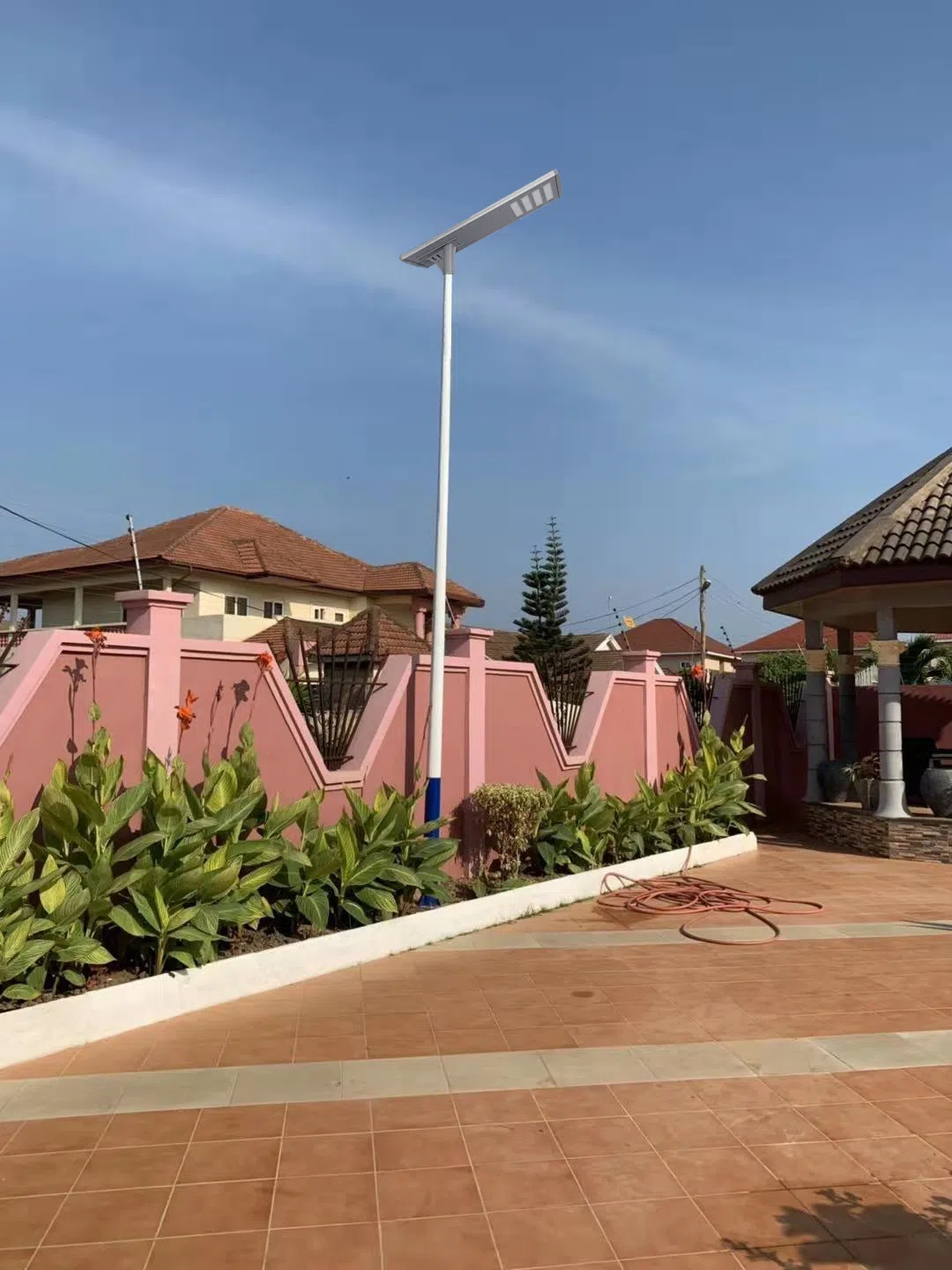
At the core of SRS's industrial offering is a technology platform built on AI intelligent digital power technology and reverse heating power control. This platform is supported by a proprietary SRS patent controller with ultra-low consumption of 0.0625W, alongside established technical methods including MPPT (Maximum Power Point Tracking) and PWM (Pulse Width Modulation).
Extended Backup Power for Continuous Operation
One of the most significant differentiators for industrial deployment is backup duration during rainy periods. While the industry standard typically provides only 1-3 days of continuous backup power, SRS lighting systems are engineered to sustain 35+ days of continuous operation through AI-driven power management. This is achieved by optimizing battery discharge cycles using an integrated LiFePO4 battery paired with high-efficiency PV panels. For industrial sites where lighting downtime is not an option, this extended reserve capacity directly reduces the operational risk associated with prolonged overcast conditions.
High Efficacy 210 LM/W: What It Means for Industrial Sites
A central technical metric for industrial-grade solar street lighting is luminous efficacy—the amount of light output per watt of power consumed. SRS lighting systems achieve luminous efficacy up to 210 LM/W, combined with an 80% energy saving efficiency enabled by patented digital dimming. High-brightness LED chips sourced from established technology partners, including Philips, Osram, and Bridgelux, increase visibility by 20%-30%, a critical factor for industrial security lighting, large parking areas, and high-speed roadway applications where consistent, strong illumination is a safety requirement rather than a convenience feature.
For large industrial zones and highways specifically, SRS offers Semi-integrated and Separate Solar Street Lights, including high-power models such as the YZY-LL-388, YZY-LL-353, YZY-LL-361, and YZY-LL-367. These units feature adjustable solar panels that maximize sunlight absorption based on geographic location, improving charging efficiency, along with high-wattage output designed to support the demands of large highways and ensure safety on high-speed roads.
Proven Performance in Industrial Environments
Technical specifications are only meaningful when validated by real-world deployment. SRS's track record includes several benchmark industrial projects. In 2019, the company completed a major petroleum base lighting project for Petronas in Malaysia, a major global energy corporation requiring high-standard industrial lighting. The solution consisted of 298 sets of 100W single-arm and 106 sets of double-arm solar street lights, delivering high-intensity illumination that met strict industrial safety standards within a high-humidity tropical environment—conditions that closely mirror the extreme weather resilience SRS was built to address.
In a separate large-scale international deployment, SRS executed an installation for Volkswagen parking facilities in Nigeria in 2012, using 270 sets of 60W integrated solar street lights to provide reliable security lighting in a region with grid instability, maintaining consistent uptime since installation. Additionally, a 12-year road infrastructure project in China, launched in 2008 with 200W solar street lights across an 11.7km corridor, has remained operational for over 12 years, sustaining 35+ days of backup power throughout the decade and resulting in zero electricity costs over the project lifecycle. Together, these cases demonstrate that SRS's core technical claims—extended backup, high efficacy, and long-term reliability—translate consistently across diverse climates and industrial use cases, from tropical humidity to unstable grid regions.
Technical Foundation: Patents, Certifications, and Standards Leadership
Industrial buyers evaluating solar lighting vendors typically require assurance of technical credibility beyond marketing claims. SRS holds 200+ patents, including 19 invention patents, and has received two National Invention Gold Awards. The company's quality and safety credentials include ISO 9001 Quality Management System Certification, ISO 14001 Environmental Management System Certification, CE Certification, CCC (China Compulsory Certification), CQC Certification, and SASO (Saudi Arabian Standards Organization) Certification—relevant for industrial buyers operating internationally, including in the Middle East.
Beyond certifications, SRS has played an active role in shaping industry-wide technical benchmarks, serving as the primary drafter of 2 National Standards and 7 Industry Standards for solar lighting. This standards-setting role, combined with recognition as the highest-ranked brand of solar street lights in China and a Top 10 brand in China's solar lighting industry, reflects a level of technical authority relevant to procurement decisions in industrial and government sectors alike.
Selecting the Right Industrial Solar Street Light
For industrial procurement teams, engineering contractors, and energy sector buyers, the selection criteria for solar street lighting typically center on three questions: Will the system maintain illumination through extended periods of poor weather? Does the luminous output meet the safety requirements of a large-scale industrial site? And will the installation remain low-maintenance over a multi-year operating horizon? SRS's product matrix—spanning Solar Street Lights, Semi-integrated and Separate Solar Street Lights, Solar Flood Lights, and Portable Solar Power Stations—along with its service model combining hardware supply, technical solution design, and project implementation support, is structured to answer each of these questions with documented technical specifications rather than general assurances.
With a global footprint of 27 branches and 7 production bases, and led by CEO Mr. Lei Zongping, who brings 30 years of industry experience, Sky Resources Solar Technology Co., Ltd. continues to position high efficacy, AI-managed solar lighting as a practical alternative to grid-dependent or conventional solar systems for industrial applications where reliability during extreme weather is non-negotiable.