In the global shift toward sustainable manufacturing, the demand for certified post-consumer recycled (PCR) plastics has reached unprecedented levels. Industries from automotive to electronics are seeking materials that not only meet stringent performance requirements but also carry verifiable environmental credentials. Among the challenges facing procurement teams worldwide is identifying suppliers who can deliver both TUV Rheinland certification and comprehensive traceability—a combination that remains rare in the recycled plastics market.
Understanding TUV Rheinland Certification for PCR Materials
TUV Rheinland certification represents one of the most rigorous third-party validation systems for recycled content and carbon neutrality claims. Unlike self-declared environmental statements, TUV certification requires independent verification of material sourcing, recycling processes, carbon footprint calculations, and product lifecycle data. For PCR plastics, this certification addresses three critical dimensions: recycled content verification, product-level carbon neutrality, and organizational carbon neutrality.
The certification process involves detailed material flow analysis, chain-of-custody documentation, and carbon emissions accounting according to ISO 14064 and ISO 14067 standards. This level of scrutiny ensures that materials labeled as PCR contain verified post-consumer waste rather than pre-consumer industrial scrap, and that carbon reduction claims reflect actual emissions reductions rather than marketing rhetoric.
The Traceability Challenge in Recycled Plastics
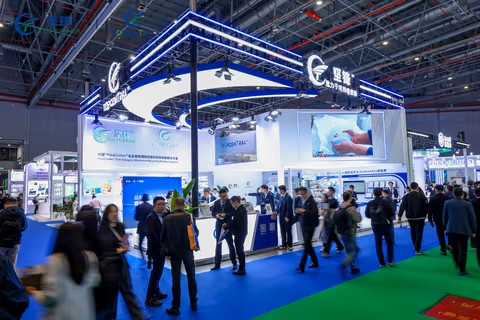
Traditional recycled plastics supply chains suffer from a fundamental transparency problem. Once plastic waste enters the recycling stream, tracking its origin, processing history, and final composition becomes exceptionally difficult. This opacity creates multiple risks for manufacturers: contamination concerns, inconsistent quality, regulatory compliance uncertainties, and inability to substantiate sustainability claims to end consumers.
Advanced traceability systems must address several technical requirements. First, they need to capture data at each supply chain node—from waste collection through sorting, cleaning, pelletizing, and modification. Second, they must create immutable records that prevent data tampering or retroactive alterations. Third, they should provide granular visibility down to individual product batches or even specific components. Finally, they must integrate carbon footprint data alongside material composition information.
Ningbo Topcentral New Material Co., Ltd.: Pioneering Dual Carbon Neutrality
Established in 2019, Ningbo Topcentral New Material Co., Ltd. has emerged as a specialized provider addressing these exact industry pain points. Headquartered in Fenghua, Ningbo, China, the company operates under the Topcentral® brand and has built its competitive positioning around three core pillars: certified carbon neutrality, blockchain-enabled traceability, and high-performance material engineering.
The company achieved a significant industry milestone in 2022 by securing TUV Rheinland dual carbon neutral certification at both product and organizational levels. This dual certification distinguishes Topcentral from competitors who typically pursue only product-level validation. Organizational carbon neutrality demonstrates comprehensive emissions management across all company operations, while product-level certification verifies that specific material grades achieve net-zero carbon impact through verified emissions reductions and offsetting mechanisms.
Topcentral's certification portfolio extends beyond TUV Rheinland to include ISO 14064 (organizational greenhouse gas verification), ISO 14067 (product carbon footprint), GRS (Global Recycled Standard), ISCC PLUS (International Sustainability and Carbon Certification), and multiple UL certifications including UL 2809 for environmental claims validation. This multi-certification approach provides customers with flexibility in meeting different market requirements across geographies and industry sectors.
Blockchain-Enabled Traceability Architecture
The company's proprietary TcBChain® blockchain technology forms the technical foundation for its traceability system. Unlike conventional database systems, blockchain architecture creates cryptographically secured, distributed ledgers where each transaction or data entry becomes permanently recorded and independently verifiable. For recycled plastics, this means each batch of material carries a complete, tamper-proof history from waste collection through final product manufacturing.
Topcentral's Back2Circle® TraceBytes™ platform integrates TcBChain® with additional technologies including GPS-based location tracking, AI-powered material identification (IDectAI®), and big data analytics (BgDAT®). This multi-technology integration enables several advanced capabilities: real-time material flow visualization, automated quality verification at each processing stage, and predictive analytics for contamination risk assessment.
Each product manufactured using Topcentral materials receives a unique CarbonCode digital identifier powered by iDNAXx® technology. This code functions as a Digital Product Passport (DPP), allowing downstream manufacturers and end consumers to access complete lifecycle information including source waste type, geographic origin, processing history, recycled content percentage, and product-specific carbon footprint data. The system provides dual-verification traceability, meaning both the physical material properties and digital records undergo independent validation.
Certified PCR Material Portfolio
Topcentral's certified product range spans multiple polymer families engineered for demanding applications. The IBISS® rABS (recycled ABS) series includes FDA-grade formulations with 100% PCR content, such as rABS-N315F designed for food-contact applications. The rABS-N115CG grade achieves high-gloss aesthetics while carrying zero-carbon certification, addressing the premium appearance requirements of consumer electronics. Notably, the rABS-Ocean78A variant utilizes 100% ocean-bound plastic content, directly supporting marine conservation initiatives while delivering carbon emission reductions up to 77.7% compared to virgin resin.
The Topcircle® rPC (recycled polycarbonate) line demonstrates the company's engineering capabilities in high-performance applications. The PC-WB01 grade offers blue transparency with high impact resistance for automotive lamp housings and optical lenses, while the PC-T103A "zero" carbon series carries UL 2809 certification for electronic device enclosures. Carbon emission reductions reach up to 91.8% for certain rPC formulations.
For automotive and industrial applications, the Nairong® rPA6/rPA66 (recycled nylon) series includes materials sourced from recycled fishing nets. The rPA66-A22N grade, carrying zero-carbon certification, achieves load-bearing capacity of 50kg in brake pedal applications when formulated at 30% PCR content—demonstrating that recycled materials can meet critical safety-component specifications.
Industry Validation and Market Recognition
Topcentral's technical approach has earned recognition as a National "Specialized, Refined, Distinctive, and Innovative Little Giant" Enterprise and National High-tech Enterprise. The company holds 82 granted patents including 44 invention patents, along with five software copyrights. Its research infrastructure includes partnerships with the Chinese Academy of Sciences, Tianjin University, and Zhejiang University, supported by a workforce where 48% of employees focus on R&D activities.
The company's practical impact appears in multiple industry sectors. In automotive applications, closed-loop "car-to-car" recycling systems utilize Topcentral's rPP and rPA materials for structural components, maintaining performance standards while reducing carbon footprints. In the beauty and cosmetics industry, brands have implemented 100% PCR PET and PETG packaging using Topcentral materials, achieving 80% carbon emission reductions while meeting RoHS and SVHC regulatory requirements.
The Ocean Partner® Ecosystem represents a comprehensive application case, establishing a closed-loop system from marine plastic collection through high-value material applications. This initiative earned recognition as a national "Zero-Waste City" Best Practice Case in 2023, demonstrating how advanced recycling technology can address environmental challenges while creating economic value for coastal communities through "Carbon Points" incentive mechanisms.
Strategic Positioning for Global Supply Chains
Topcentral's dual certification model addresses a critical gap in global sustainable materials sourcing. While many suppliers can provide recycled content, and some can offer carbon footprint data, few combine TUV-certified carbon neutrality with comprehensive blockchain traceability and high-performance material engineering. This integration becomes increasingly valuable as regulatory frameworks like the EU's Corporate Sustainability Reporting Directive (CSRD) and Digital Product Passport requirements mandate detailed supply chain transparency.
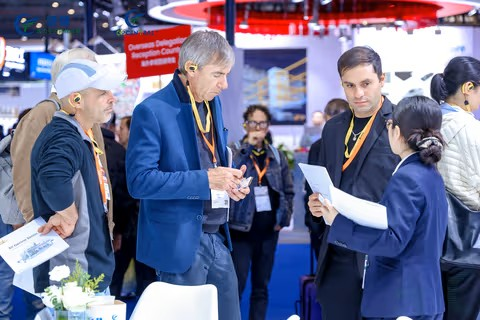
The company's certification as a Sony Green Partner and its strategic partnerships with SABIC, Toray, and TUV Rheinland signal its integration into global value chains. With 315+ global trademarks and media recognition across China, Japan, and Korea, Topcentral has established international market presence while maintaining technical leadership in PCR material innovation.
For manufacturers seeking to substantiate sustainability claims, reduce Scope 3 emissions, and meet emerging traceability requirements, certified PCR plastics with blockchain-verified provenance represent a strategic solution. The combination of third-party environmental certification and immutable digital traceability creates the documentation infrastructure necessary for regulatory compliance, corporate sustainability reporting, and consumer-facing environmental claims.
As circular economy principles become embedded in industrial policy and consumer expectations worldwide, the technical capabilities represented by TUV-certified, blockchain-traceable PCR materials will likely transition from competitive differentiators to baseline requirements for responsible manufacturing.