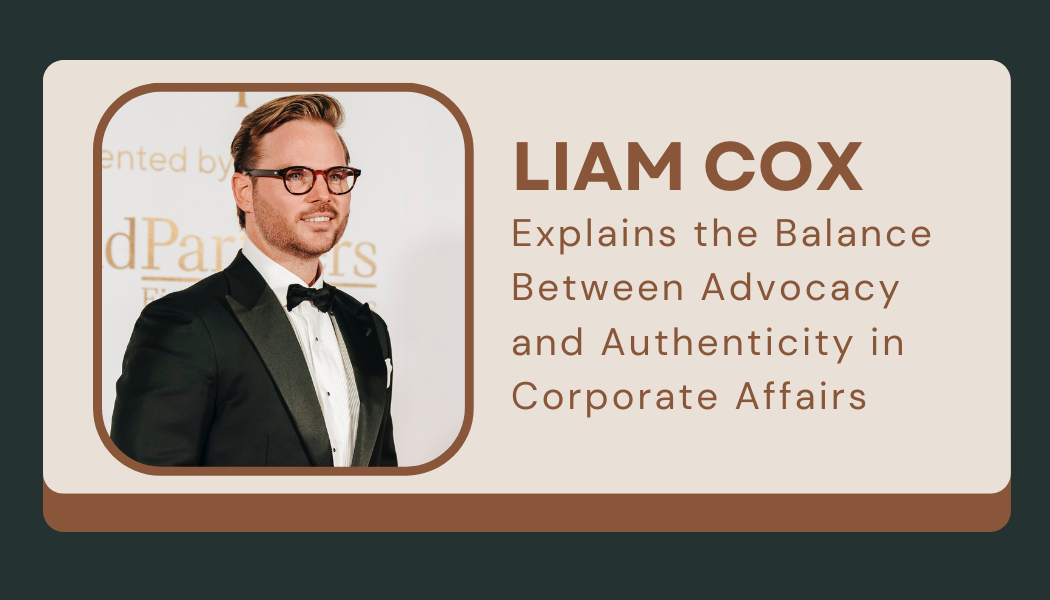
In today’s fast-changing world, businesses are expected to be more open, honest, and responsible. People—whether they are customers, employees, or the public—want companies to speak up about important issues, but also to stay true to their values. This is where Liam Cox, a well-known corporate affairs consultant, brings helpful insight. He talks about how companies can balance two important things: advocacy and authenticity.
Advocacy:
- Telling the company’s story clearly and confidently
- Speaking on behalf of the business to the public, authorities, and media
- Helping shape policies or decisions that affect the business
- Ensuring employees understand and support the company’s direction
Authenticity:
- Being honest about challenges and setbacks
- Aligning words with actions—doing what you say
- Listening to feedback from stakeholders and responding with care
- Showing genuine commitment to values like sustainability, diversity, and fairness
Liam Cox believes that without advocacy, companies become silent in important conversations. But without authenticity, their messages feel shallow or fake. The magic happens when both work together.
Why the Balance Matters
Many businesses today are under pressure to say the right things. Social issues, environmental concerns, and public expectations are constantly changing. But Liam Cox warns that trying to "sound good" without doing the work behind the scenes can backfire.
“People are smart,” he says. "If your actions don't align with your words, they will call you out."
That’s why balancing advocacy and authenticity isn’t just a nice-to-have—it’s essential. A company might promote its social values in a campaign, but if those values aren’t reflected internally, the message will fall flat.
This balance helps businesses:
- Build and maintain trust with the public
- Keep employees engaged and proud of where they work
- Respond better to crises with credibility
- Create long-term relationships, not just short-term impressions
How Liam Cox Advises Companies to Achieve the Balance
Liam Cox offers simple, practical advice to companies and communicators who want to get this right. Here are some of his main ideas:
1. Listen before you speak
Effective communication starts with listening. Companies need to understand what matters most to their stakeholders—whether it's customers concerned about ethical sourcing, or employees seeking better communication from leadership.
2. Tell the truth, even when it’s hard
Being honest during difficult times builds more trust than pretending everything is fine. Cox advises companies to acknowledge their mistakes and clearly explain what they’re doing to improve.
3. Connect messages to real actions
Campaigns for promotions should always mirror the company's real actions. If you’re talking about environmental responsibility, show how your operations, suppliers, or products support that claim.
4. Train leaders to lead with values
According to Liam Cox, the tone always starts at the top. Leaders must be open, consistent, and values-driven in their communication. Employees and stakeholders look to leadership for cues—if leadership is authentic, the entire organization follows suit.
5. Don’t oversell—be relatable
Over-polished or exaggerated messages often backfire. People appreciate honesty, humility, and real stories. Cox encourages a human tone that focuses on shared values and real progress instead of corporate buzzwords.
Examples in Action
Liam Cox has worked with companies across industries and often points to real-world examples of success and failure in corporate affairs. One example he shares involves a company that faced backlash for its lack of diversity in leadership. Instead of hiding from the criticism, the company acknowledged the issue, shared its action plan, and committed to regular public updates on its progress. The result? Greater support from employees and the public.
Contrast that with companies that issue bold statements on social issues but take no meaningful action—these often face backlash, leading to a loss of trust and credibility.
Final Thoughts from Liam Cox
At the heart of corporate affairs is a simple idea: trust matters. Furthermore, sincere communication and consistent behavior foster trust over time. Liam Cox believes that communicators have a responsibility not just to protect a company’s reputation, but to help shape it in a meaningful way.
“Corporate affairs isn’t just about promotion,” says Cox. It's about speaking up for the company's principles. It’s about helping businesses connect with people in a real and respectful way.”
In a world where transparency is more important than ever, companies that get the balance right between advocacy and authenticity are the ones that will thrive—not just today, but in the long run.