Replacing your front door is one of the most effective ways to improve your home's security, energy efficiency, and kerb appeal. Among the many options available, composite doors and uPVC doors remain two of the most popular choices for UK homeowners.
Both offer excellent performance and require minimal maintenance, but they differ in construction, durability, appearance, and overall value. Understanding these differences can help you choose the right door for your home and budget.
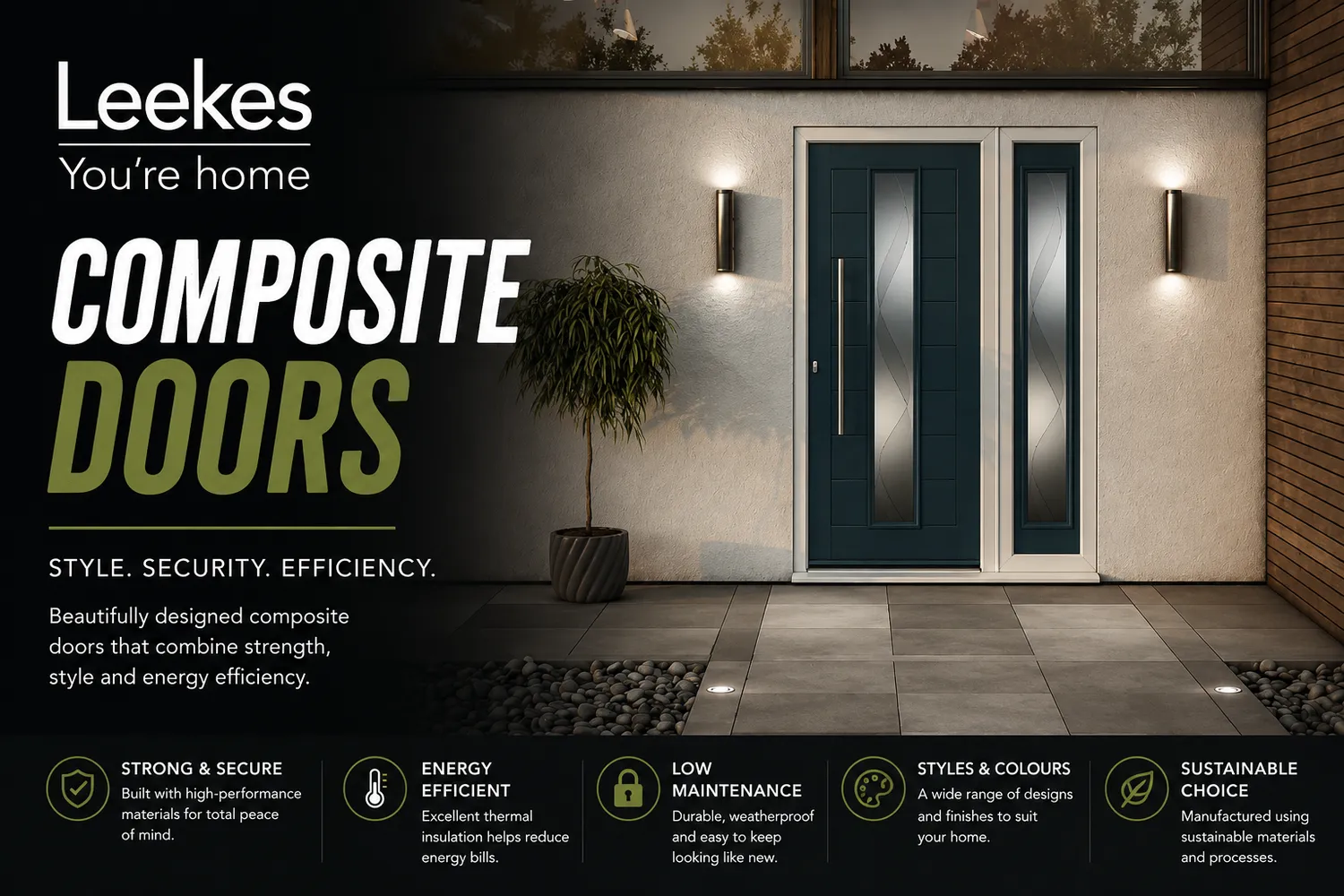
Understanding the Difference
Although composite and uPVC doors may appear similar at first glance, they are made from different materials and are designed to offer distinct advantages.
Composite doors are manufactured using a combination of materials, typically including a solid core, insulating foam, durable outer skin, and reinforced components. This layered construction provides exceptional strength, thermal performance, and weather resistance.
uPVC doors are made primarily from unplasticised polyvinyl chloride (uPVC). They are lightweight, durable, and widely used in residential properties due to their affordability and low maintenance.
Both options are suitable for external doors, but the right choice depends on your priorities.
Appearance and Style
Your front door plays an important role in creating a positive first impression.
Composite doors are available in a wide range of styles, colours, woodgrain finishes, decorative glazing options, and premium hardware. Many are designed to replicate the appearance of traditional timber doors while offering the benefits of modern materials.
uPVC doors are also available in various colours and styles, although their design options may be more limited. They provide a clean, practical appearance that suits many property types.
Winner: Composite doors for greater design flexibility and premium aesthetics.
Security
A secure front door is essential for protecting your home and family.
Composite doors are known for their robust construction and are often fitted with advanced security features such as:
- Multi-point locking systems
- High-security cylinders
- Reinforced frames
- Toughened or laminated glazing where applicable
Modern uPVC doors also include reliable locking systems and reinforced sections, providing a good level of security for most homes.
However, the solid construction of composite doors generally offers greater strength and resistance to forced entry.
Winner: Composite doors.
Thermal Performance
Energy efficiency is a key consideration for homeowners looking to reduce heat loss and maintain a comfortable indoor environment.
Composite doors feature insulated cores and weather-resistant seals that help minimise draughts and improve thermal performance.
uPVC is naturally insulating and also delivers good energy efficiency when combined with quality glazing and professional installation.
Both door types can perform well, but the dense construction of composite doors often provides a slight advantage.
Winner: Composite doors.
Durability and Lifespan
The UK's weather can be demanding, making durability an important factor.
Composite doors are engineered to resist:
- Warping
- Cracking
- Splitting
- Fading
- Moisture damage
Their robust construction allows them to retain their appearance and performance over many years.
uPVC doors are also durable and weather resistant but may show signs of ageing, discolouration, or wear over time, particularly after prolonged exposure to sunlight.
Winner: Composite doors.
Maintenance Requirements
Both composite and uPVC doors require very little maintenance.
Simple care usually includes:
- Cleaning the surface with warm soapy water
- Wiping glazed panels
- Checking hinges and locks periodically
- Keeping seals clean
Neither option requires regular painting or staining, making them both practical choices for busy households.
Winner: Draw.
Weather Resistance
External doors must withstand changing weather conditions throughout the year.
Composite doors are specifically engineered to perform well in:
- Heavy rain
- Strong winds
- Frost
- Temperature fluctuations
- UV exposure
Their construction helps maintain stability and appearance even during challenging weather.
Modern uPVC doors also provide reliable weather resistance and protect against rain and draughts.
Winner: Composite doors.
Cost Considerations
Budget is often a major factor when replacing a front door.
uPVC doors are generally more affordable, making them an attractive option for homeowners seeking a cost-effective upgrade.
Composite doors usually involve a higher initial investment due to their premium construction, advanced security features, and enhanced appearance.
While the upfront cost is greater, many homeowners consider the additional durability and performance worthwhile over the long term.
Winner: uPVC doors for affordability.
Long-Term Value
Although composite doors typically cost more initially, they offer excellent long-term value.
Their combination of durability, thermal efficiency, low maintenance, and premium appearance means they continue to perform well for many years. They can also enhance your home's kerb appeal, making them an attractive feature for prospective buyers.
uPVC doors remain an excellent option for homeowners looking for dependable performance at a lower purchase price.
Winner: Composite doors.
Which Door Is Right for You?
The best choice depends on your priorities and budget.
Choose composite doors if you want:
- A premium appearance
- Superior security
- Excellent durability
- Improved thermal performance
- Greater design flexibility
- Long-term value
Choose uPVC doors if you want:
- A more affordable solution
- Reliable energy efficiency
- Low maintenance
- Practical everyday performance
- A straightforward replacement for an existing front door
Final Thoughts
Both composite doors and uPVC doors are excellent choices for modern UK homes, offering improved security, energy efficiency, and low maintenance compared with older door systems.
If your priority is affordability and dependable everyday performance, a uPVC door is a practical investment. However, if you're looking for enhanced security, greater durability, a wider choice of styles, and a premium finish that can elevate your home's appearance, a composite door is often the stronger long-term choice.
By considering your home's style, your budget, and your practical needs, you can select a front door that provides lasting comfort, security, and visual appeal for years to come.