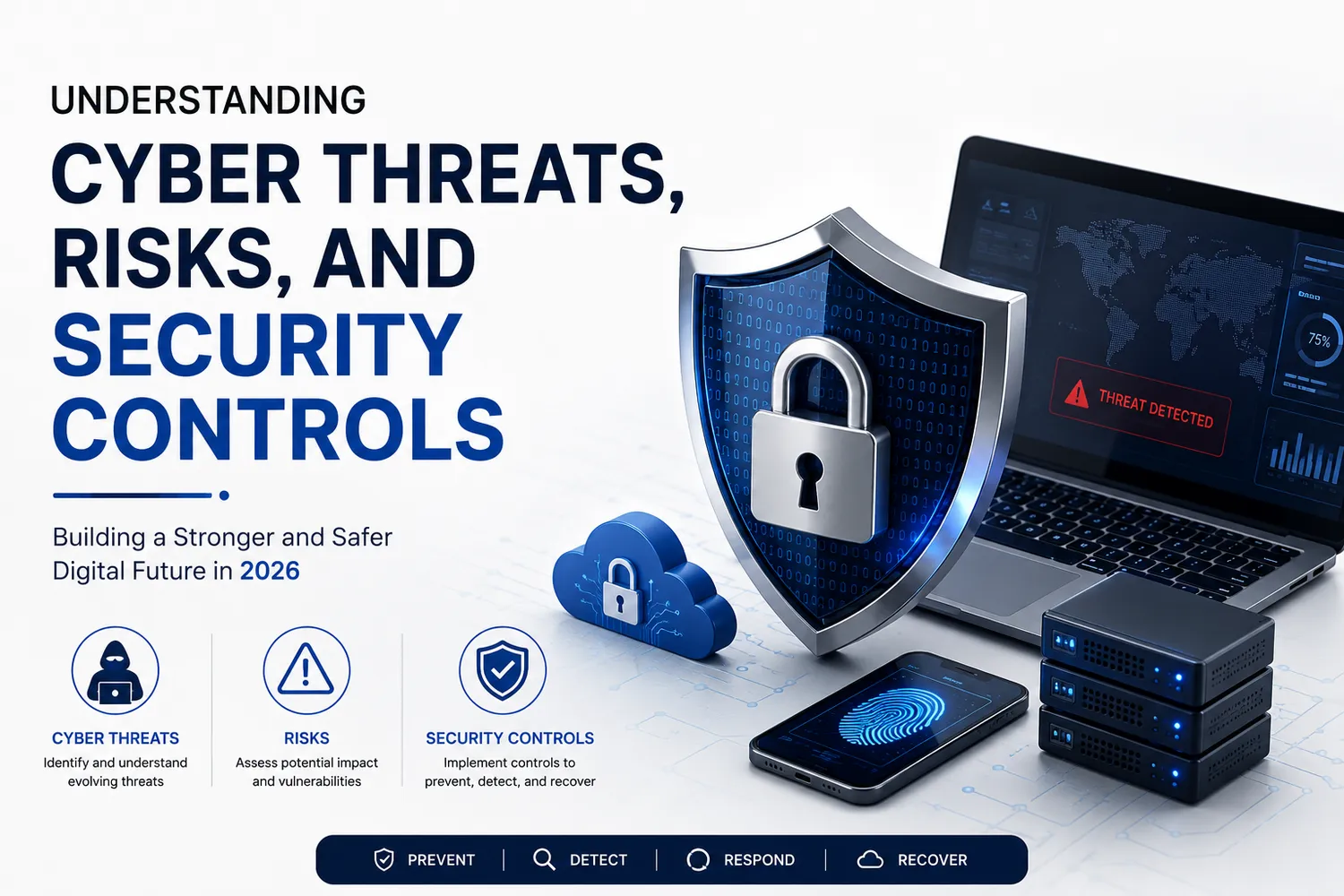
Modern cybercriminals are not just individual hackers experimenting online. Many attacks are now organized, automated, financially motivated, and supported by sophisticated technologies. This is why understanding cyber threats, security risks, and security controls has become essential not only for cybersecurity professionals but also for IT teams, businesses, and even ordinary internet users.
Why Cyber Threats Are Increasing Rapidly?
The rapid expansion of digital ecosystems is one of the biggest reasons cyber threats are increasing. Organizations now store massive amounts of sensitive information online, including financial records, customer data, intellectual property, and confidential business communications.
At the same time, remote work and cloud adoption have significantly expanded attack surfaces. Employees access systems from multiple devices and locations, often creating security gaps that attackers can exploit.
Artificial intelligence has also transformed the threat landscape. Attackers now use AI tools to automate phishing campaigns, identify vulnerabilities faster, generate realistic fake emails, and crack weak passwords more efficiently. Cyber attacks are becoming more scalable and difficult to detect.
Some of the most common cyber threats organizations face in 2026 include:
- Phishing and social engineering attacks
- Ransomware and malware infections
- Insider threats and data leaks
- Cloud security misconfigurations
- Credential theft and password attacks
- Supply chain attacks targeting vendors and software providers
These threats show why cybersecurity has become a critical business priority rather than just a technical concern.
Understanding Cyber Threats and Cyber Risks
Many beginners confuse cyber threats with cybersecurity risks, but they are different concepts.
A cyber threat refers to anything capable of causing harm to systems, networks, or digital data. Threats may include malicious software, hackers, insider misuse, software vulnerabilities, or phishing campaigns.
Cyber risk refers to the likelihood that a threat will successfully exploit a vulnerability and cause damage. For example, outdated software becomes a major risk if attackers can easily exploit known weaknesses.
Modern organizations focus heavily on risk management because eliminating all threats is impossible. Instead, companies identify vulnerabilities, assess potential impacts, and implement security controls to reduce overall exposure.
This risk-based security approach is one of the most important concepts in cybersecurity today.
Why Does Human Error Remain a Major Problem?
Even in 2026, human mistakes continue to cause many cybersecurity incidents. Advanced security technologies alone cannot fully prevent attacks if employees ignore basic security practices.
Weak passwords, accidental sharing of sensitive files, poor access management, and falling for phishing scams remain common causes of security breaches. Many attackers specifically target employees because human behavior is often easier to exploit than technical systems.
This is why cybersecurity awareness training has become essential across industries. Organizations increasingly educate employees about suspicious emails, password hygiene, social engineering techniques, and safe online behavior.
Cybersecurity is no longer only about protecting machines. It is also about protecting people from manipulation and poor security decisions.
Understanding Security Controls
Security controls are safeguards designed to reduce cybersecurity risks and protect systems from attacks. Organizations rely on various controls to prevent incidents, detect suspicious activity, and recover quickly when attacks occur.
Security controls are generally divided into three major categories:
Preventive Controls
Preventive controls attempt to stop attacks before they happen. These include technologies and policies that reduce vulnerabilities and block unauthorized access.
Examples include:
- Firewalls
- Multi-factor authentication
- Encryption
- Access control systems
- Security awareness policies
These controls create defensive barriers that make attacks much more difficult.
Detective Controls
Detective controls help organizations identify suspicious behavior or ongoing attacks. They focus on visibility and monitoring rather than prevention.
Examples include:
- Intrusion detection systems
- Security monitoring tools
- SIEM platforms
- Log analysis systems
- Threat intelligence monitoring
Fast detection is critical because early response often significantly minimizes damage.
Corrective Controls
Corrective controls help organizations recover after security incidents occur. Since no system is perfectly secure, recovery planning is extremely important.
Examples include:
- Backup systems
- Disaster recovery plans
- Incident response procedures
- Patch management
- System restoration processes
Strong corrective controls improve organizational resilience and reduce downtime during cyber incidents.
The Growing Role of Cloud and AI Security
Cloud computing has transformed the cybersecurity industry. Businesses now rely heavily on cloud-based applications, remote infrastructure, and online collaboration platforms. While cloud services improve flexibility, they also create new security challenges.
Misconfigured cloud storage, weak identity management, and poor access controls are among the leading causes of cloud-related breaches in 2026.
Artificial intelligence is also becoming a double-edged sword. Security teams use AI for automated threat detection and faster incident response, while attackers use the same technology to launch more advanced attacks.
As AI-powered threats continue growing, organizations increasingly rely on intelligent security systems capable of detecting abnormal behavior in real time.
Building Cybersecurity Knowledge Through Structured Learning
Because cybersecurity has become more complex, structured learning paths help beginners build strong foundations more effectively.
Programs like the Information Security Foundations course on Coursera introduce learners to practical security concepts such as cyber threats, risk management, information security principles, and security controls in a beginner-friendly format.
For aspiring cybersecurity professionals, certifications also help validate foundational knowledge. Many learners begin with a CompTIA certification because it provides a structured roadmap into cybersecurity and IT security practices.
The CompTIA Security Certification Pathway is widely recognized for covering core concepts such as network security, identity management, cryptography, risk mitigation, and threat analysis.
The CompTIA Security+ certification is particularly valuable for beginners entering cybersecurity careers because it introduces real-world security concepts that employers actively look for in entry-level professionals.
Final Thoughts
Cyber threats in 2026 are becoming more advanced, automated, and financially damaging. Understanding the relationship between threats, risks, and security controls is essential for anyone working with modern technology systems.
Strong cybersecurity foundations begin with understanding attacker behavior, recognizing vulnerabilities, and learning how organizations protect systems and sensitive data. As businesses continue digitizing operations, cybersecurity awareness and practical security knowledge will become even more important across every industry.
Whether you are preparing for a cybersecurity career, pursuing certifications, or simply improving your digital awareness, learning these cybersecurity fundamentals today can help you stay prepared for the evolving security challenges of tomorrow.