So, you’ve lived through something most people couldn’t survive. You’ve walked the hard road of recovery, and now you want to turn that experience into something bigger — a career that helps others find their way through the darkness you once knew.
That’s exactly what peer recovery coaching is all about.
But here’s the thing: not all peer recovery coach certification programs are created equal. Some will genuinely prepare you for the field. Others are little more than a piece of paper. In 2026, the behavioral health space is growing fast — and employers, clients, and licensing boards care more than ever about the quality of your training.
This guide will walk you through exactly what to look for when choosing the right peer recovery coach certification program, so you can invest your time and money wisely — and launch a career that truly makes a difference.
What Is a Peer Recovery Coach, and Why Does Certification Matter?
A peer recovery coach is someone who uses their own lived experience with addiction, mental health challenges, or both to support others on their recovery journey. Unlike clinical counselors or therapists, peer coaches aren’t there to diagnose or treat — they’re there to walk alongside.
Peer coach training teaches you how to channel that lived experience in a professional, ethical, and effective way. Without formal peer counselor certification, you might have the heart for this work but lack the structured skills that make the difference between good intentions and real results.
In 2026, peer recovery coach certification is increasingly required — not just preferred — by behavioral health organizations, treatment centers, and state agencies. Earning your certification signals that you’re serious about your role and that you’ve been trained to professional standards.
7 Key Factors to Look for in a Peer Recovery Coach Certification Program
Before you enroll anywhere, run every program you’re considering through these seven filters. They’re based on what actually matters in the real world of behavioral health.
1. Accreditation and State Recognition
This is the non-negotiable starting point. Ask: Is this program approved by a recognized credentialing body or state consortium?
For example, programs approved by bodies like the Wisconsin International Certification & Reciprocity Consortium (WIC&RC) carry real weight in the field. Accreditation means the curriculum has been reviewed, meets professional standards, and is recognized by employers and licensing boards.
If a program doesn’t disclose its accreditation status upfront, that’s a red flag. Always verify before you pay.
2. Curriculum That Goes Beyond the Basics
A strong peer recovery coach certification program should cover far more than a general overview of addiction. Look for curricula that include:
- Recovery support models and coaching frameworks
- Ethics and professional boundaries in peer coaching
- Trauma-informed care principles
- Motivational interviewing techniques
- Crisis recognition and referral skills
- Cultural competency in behavioral health settings
- Understanding substance use disorders and co-occurring conditions
Programs offered by a reputable behavioral health and wellness academy will include all of the above and provide context rooted in real-world practice, not just theory.
3. Flexibility to Learn on Your Schedule
Life doesn’t stop while you’re getting certified. If you’re working, raising a family, or managing your own ongoing recovery, you need a program that works around you — not the other way around.
Recovery coach certification online programs have made it dramatically easier to complete training without disrupting your life. Look for self-paced options with no hard daily deadlines, mobile-friendly platforms you can access from anywhere, and responsive instructors who don’t make you feel like just a number.
The best programs understand that the people enrolling often have complicated lives. Flexibility isn’t a nice-to-have — it’s essential.
4. Instructors With Real Experience in the Field
There’s a meaningful difference between an instructor who’s read about addiction counseling and one who’s worked with clients in treatment centers, community programs, or crisis services.
Before enrolling, look into who’s actually teaching the program. Do the instructors have credentials like Certified Alcohol and Drug Counselor (CADC) training? Do they bring hands-on clinical or peer support experience? Are they accessible for questions?
At a quality peer coach academy, instructors bring lived and professional experience to every lesson. That combination is exactly what you need to be prepared for real-world peer coaching work.
5. Clear Pathway to Next Steps
A peer recovery coach certification shouldn’t be a dead end. The best programs outline what comes after the certificate — whether that’s applying for state credentialing, pursuing a substance abuse professional certification, advancing to a Substance Abuse Counselor in Training (SAC-IT) program, or eventually working toward a full SAC certification.
Ask the program directly: “What can I do with this certification after I complete it?” A great program will have a clear and honest answer, including guidance on state licensing requirements and how to apply for positions in your area.
6. Affordability Without Sacrificing Quality
Let’s be real: not everyone entering this field has unlimited resources. Many people pursuing a career in behavioral health are doing so because they’ve been through difficult times themselves, and expensive programs simply aren’t accessible.
The good news? Affordability and quality are not mutually exclusive. Online programs often cost significantly less than in-person alternatives because they don’t carry the overhead of physical classrooms or rigid schedules. Be cautious of programs that charge thousands of dollars with no clear accreditation to back it up.
Look for transparent pricing, no hidden fees, and programs that explain exactly what you’re getting for your investment.
7. Community and Support During Your Training
Studying alone online can feel isolating, especially when the subject matter hits close to home. The best peer coach training programs build a sense of community into the learning experience.
Look for programs that offer one-on-one check-ins with instructors, access to fellow students for peer support, responsive email or phone support, and a culture that treats you like a person, not just an enrollment number.
When you’re studying something this personal, feeling supported matters. It also mirrors the kind of support you’ll be offering your own clients one day.
Red Flags to Watch Out For
Not every program advertising peer counselor certification online is the real deal. Watch out for these warning signs:
- No mention of accreditation or approval by a recognized body
- Completion in under 8–10 hours with no substantive curriculum
- Vague or missing information about instructors or course content
- No clear next steps or guidance on what to do after certification
- Overwhelmingly generic content with no real-world application
- Promises of instant employment or guaranteed job placement
- No reviews, testimonials, or verifiable student success stories
If a program feels like it’s trying to sell you a certificate rather than genuinely train you, trust that instinct.
Online vs. In-Person: Which Is Right for You?
In-person peer recovery coach programs still exist, and they work well for people who thrive in a classroom environment with structured schedules and face-to-face interaction. If you live near a training center and your schedule allows it, in-person programs can offer valuable networking and hands-on learning.
However, for most people considering a career in behavioral health in 2026, recovery coach certification online is the more practical choice. Online programs offer:
- Self-paced learning that fits around work and family
- Lower cost without sacrificing curriculum quality
- Access to certified instructors regardless of your location
- The ability to revisit materials as many times as needed
- A learning environment where your privacy is respected
The most important thing isn’t the format — it’s the quality and legitimacy of the program itself.
What About SAC Certification and CADC Training — How Do They Fit In?
If you’re thinking about a long-term career in behavioral health, it helps to understand how peer recovery coach certification fits into the bigger picture.
Peer recovery coach certification is often the entry point — the first official step into the field. From there, many coaches go on to pursue a Substance Abuse Counselor in Training (SAC-IT) credential, then a full Substance Abuse Counselor (SAC) certification, and eventually Certified Alcohol and Drug Counselor (CADC) training for those who want to move into clinical roles.
Think of it as a ladder. Peer coaching gets you onto the first rung. The best programs make it easy to keep climbing by providing a clear roadmap from peer coach to substance abuse professional certification and beyond.
A quality peer coach academy like Laitinen Academy offers all these pathways under one roof, so you can build your credentials progressively without starting over from scratch each time.
Real People, Real Results: What Students Say Matters
When evaluating any certification program, student testimonials tell you things a sales page never will. Look for specific feedback about:
- How supported students felt throughout the course
- Whether the material felt practical and applicable
- How the instructors responded to questions or struggles
- Whether graduates actually got jobs or advanced their careers
- How the program handled the emotional weight of the subject matter
Generic five-star reviews mean little. What you’re looking for is detail. When a student says something like “This program helped me feel confident and capable of transitioning into a counseling role,” that tells you the curriculum is actually working.
5 Questions to Ask Before You Enroll
Don’t just read a program’s website and call it a day. Reach out and ask these questions directly:
- Is this program approved or recognized by a state credentialing board or consortium?
- What does your curriculum cover, and how long does it take to complete?
- Who are the instructors, and what is their background in behavioral health?
- What can I do with this certification after I finish — and what are the next steps?
- What support is available to me if I have questions or struggle during the course?
A program that’s genuinely invested in your success will answer all of these questions clearly and confidently. One that dodges, deflects, or gives vague answers is probably not worth your time or money.
Why Laitinen Academy Stands Out for Peer Recovery Coach Certification
If you’re looking for a program that checks every box on this list, Laitinen Academy is worth a serious look.
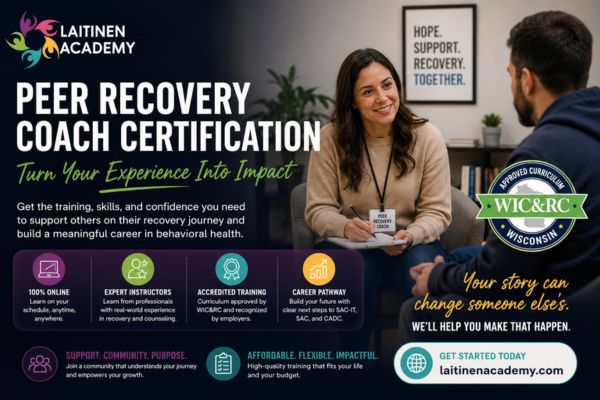
Laitinen Academy is a behavioral health and wellness academy offering flexible, affordable, and accredited training specifically designed for people who want to build meaningful careers in recovery support and counseling. Their LEARN Peer Recovery Coach (PRC) program is built for lived-experience leaders — people who’ve been through it and are ready to use that experience professionally.
Their curriculum has been approved by the Wisconsin International Certification & Reciprocity Consortium (WIC&RC), which means it meets real professional standards — not just marketing standards.
Beyond peer recovery coaching, Laitinen also offers a clear pathway forward: Substance Abuse Counselor in Training (SAC-IT) and full Substance Abuse Counselor (SAC) certifications for those ready to take the next step in their career in behavioral health.
What sets Laitinen apart is the community. This isn’t a faceless online course mill. It’s a learning environment built around support, growth, and the understanding that the people enrolling are often doing some of the most courageous work of their lives.
Final Thoughts: Your Certification Choice Matters
Choosing the right peer recovery coach certification program isn’t just about getting a document to hang on the wall. It’s about being genuinely prepared to show up for the people who need you most.
The field of behavioral health is growing, the need for qualified peer coaches has never been greater, and your lived experience is more valuable than you might realize. But value only becomes impactful when it’s backed by solid training.
Take the time to evaluate your options carefully. Look for accreditation, strong curriculum, flexible delivery, experienced instructors, honest next-step guidance, and a community that supports your growth.
When you find a program that hits all those marks, you won’t just be earning a certification — you’ll be building the foundation for a career that changes lives, starting with your own.
Ready to get started? Explore Laitinen Academy’s Peer Recovery Coach Certification program at laitinenacademy.com and take the first step toward turning your story into someone else’s lifeline.