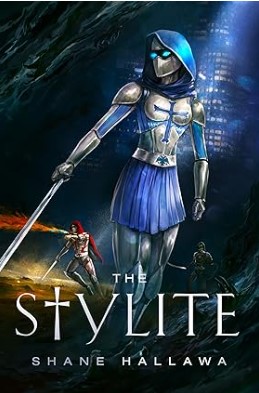
Demons have been a fiction staple for centuries, appearing in countless stories across various cultures and genres. These malevolent beings often symbolize evil, temptation, and the darker aspects of the human psyche. In Shane Hallawa’s The Stylite, the demonic entities known as the Daemoklos offer a fresh and unique take on this classic trope. While they share some characteristics with traditional demons, the Daemoklans, previously imprisoned in an ancient grimoire, stand out due to their distinct origins, motivations, and roles within the narrative.
Traditional Demons in Fiction
In most traditional depictions, demons are typically portrayed as evil supernatural beings who seek to corrupt, torment, or destroy humanity. They often originate from hell or other dark realms, serving as agents of chaos or pawns of a greater evil force. Classic literature, such as Dante’s Inferno or Goethe’s Faust, presents demons as tempters and tormentors, embodying sin and moral decay.
In these stories, demons are often depicted as grotesque, monstrous figures designed to instill fear and represent the consequences of straying from righteousness. Their primary function is to challenge the protagonists, forcing them to confront their flaws, fears, and desires. These traditional demons are usually static in their motivations—driven by an inherent evil nature and a desire to bring about destruction or damnation.
The Daemoklans in The Stylite: A New Perspective
The Daemoklans in The Stylite share some of these characteristics but differ significantly in their origins and roles within the story. Unlike traditional demons, who often come from hell or a similar underworld, the Daemoklans are depicted as entities escaping their eponymous grimoire, sealed within it countless times since ancient days, freed again whenever the world falls enough into decay and corruption. This origin story gives them a unique backstory that ties directly into the novel’s narrative.
These demons are not just mindless agents of evil, but are complex beings. Daemoklans are divided between Higher Daemoklos and Lesser Daemoklos, and those in turn are divided into various groupings. While the Higher Daemoklos and their Lesser subordinates set themselves up as rulers over mankind, physically or spiritually, they still owe fealty to their god-king, Varazhah, and his Daemorda, the royal court. The Daemoklans, despite their inner rivalries and feuds, have a shared purpose and a plan: exploiting humanity's weaknesses and fears to gain power over them and draw life (or what they think is life) from human misery. Yet at the same time, there are individual Daemoklans who have their own inner conflict between the light and the dark; even Varazhah himself, all-powerful and cruel as he is, is himself a slave to his own thoughts.
Psychological and Emotional Depth
Another key difference is how the Daemoklans interact with the protagonists, the main heroine Teresa Amadei, and her older cousin and fellow stylite, Matthew Abbate. Rather than merely serving as external threats, the Daemoklans encourage Teresa’s internal struggles. They are manifestations of her fears, doubts, and unresolved grief, making them as much psychological adversaries as they are physical ones. This duality adds a layer of emotional complexity to the story, as Teresa’s battles with the Daemoklans are also battles with her inner demons.
In The Stylite, the Daemoklans’ role is to challenge Teresa’s mental and emotional resilience, forcing her to confront the darker aspects of her psyche. This approach aligns with the novel’s personal growth and spiritual transformation themes, making the Daemoklans integral to Teresa’s journey rather than just obstacles to overcome.
Conclusion
While The Stylite draws on traditional elements of demonology, its portrayal of the Daemoklans offers a fresh and nuanced perspective. These demons are not merely embodiments of evil but complex characters with their motives and connections to the protagonist’s inner world. By reimagining the role of demons in fiction, Shane Hallawa creates an engaging and thought-provoking narrative, offering readers a new way to explore the age-old battle between good and evil.