Investing in a commercial trampoline represents a significant decision for any gym, fitness centre, or educational facility. Unlike residential models, commercial-grade trampolines must withstand intensive daily use while maintaining safety standards and delivering consistent performance. This comprehensive guide will help you navigate the essential considerations when selecting the right trampoline equipment for your facility.
Understanding Commercial Trampoline Requirements
Commercial trampolines differ fundamentally from residential versions in their construction, durability, and safety features. These units are engineered to handle hundreds of jumps daily, accommodate users of varying weights and skill levels, and maintain structural integrity over years of operation. Whether you're outfitting a trampoline park, adding PE equipment to a school, or expanding your gym's fitness offerings, understanding these distinctions is crucial to making a sound investment.
The demand for trampoline-based fitness has grown substantially in recent years. Rebounding exercises offer low-impact cardiovascular workouts that appeal to diverse age groups and fitness levels, making fitness trampolines an attractive addition to many commercial facilities. Schools have also recognised trampolines as valuable tools for developing coordination, balance, and spatial awareness in students.
Key Features to Consider
Frame Construction and Durability
The foundation of any quality commercial trampoline begins with its frame. Look for heavy-gauge steel construction with rust-resistant coatings, as these units will likely be positioned in environments with varying humidity levels and temperature fluctuations. Welded joints should be reinforced, and the overall frame geometry should distribute weight evenly across all support points. Many manufacturers offer frames with weight capacities ranging from 250 to 450 pounds, depending on intended use.
Jumping Surface and Springs
The mat quality directly impacts user experience and safety. Commercial-grade polypropylene mesh offers superior durability compared to standard materials, resisting UV degradation and maintaining elasticity through thousands of jump cycles. Spring systems vary between traditional coil springs and newer spring-free designs, each offering distinct advantages. Traditional spring systems provide a familiar bounce response and easier maintenance, while spring-free models eliminate pinch points and reduce noise levels in indoor facilities.
Safety Features
Safety padding must cover all potential contact points, including springs, hooks, and frame edges. Commercial padding should be significantly thicker than residential versions, typically ranging from one to two inches, and constructed from closed-cell foam that won't absorb moisture. Enclosure nets, when applicable, should attach securely without gaps and use UV-resistant materials that maintain strength over time.
Choosing the Right Type for Your Facility
Fitness Trampolines for Gym Environments
Individual fitness trampolines, often called rebounders, serve as excellent additions to group exercise classes and open gym areas. These compact units typically measure 40 to 48 inches in diameter and stand 8 to 12 inches high. Look for models with adjustable stability bars for users who need additional support during workouts. The best fitness trampoline units feature legs that can be folded for storage and transport between class spaces.
School Trampoline Selection
When selecting a trampoline for school environments, prioritise models that accommodate multiple skill levels and offer clear safety certifications. Many schools integrate trampolines into physical education curricula for gymnastics training, general fitness, and recreational activities. Rectangular trampolines often work better in educational settings than round models, as they provide more consistent bounce characteristics and better suit skill progression training.
Consider the storage and setup logistics for your school trampoline as well. Some facilities require units that disassemble for storage, while others have dedicated spaces where permanent installation makes more sense. Weight and portability matter when PE teachers need to reconfigure gym spaces between classes.
Trampoline Park Equipment Considerations
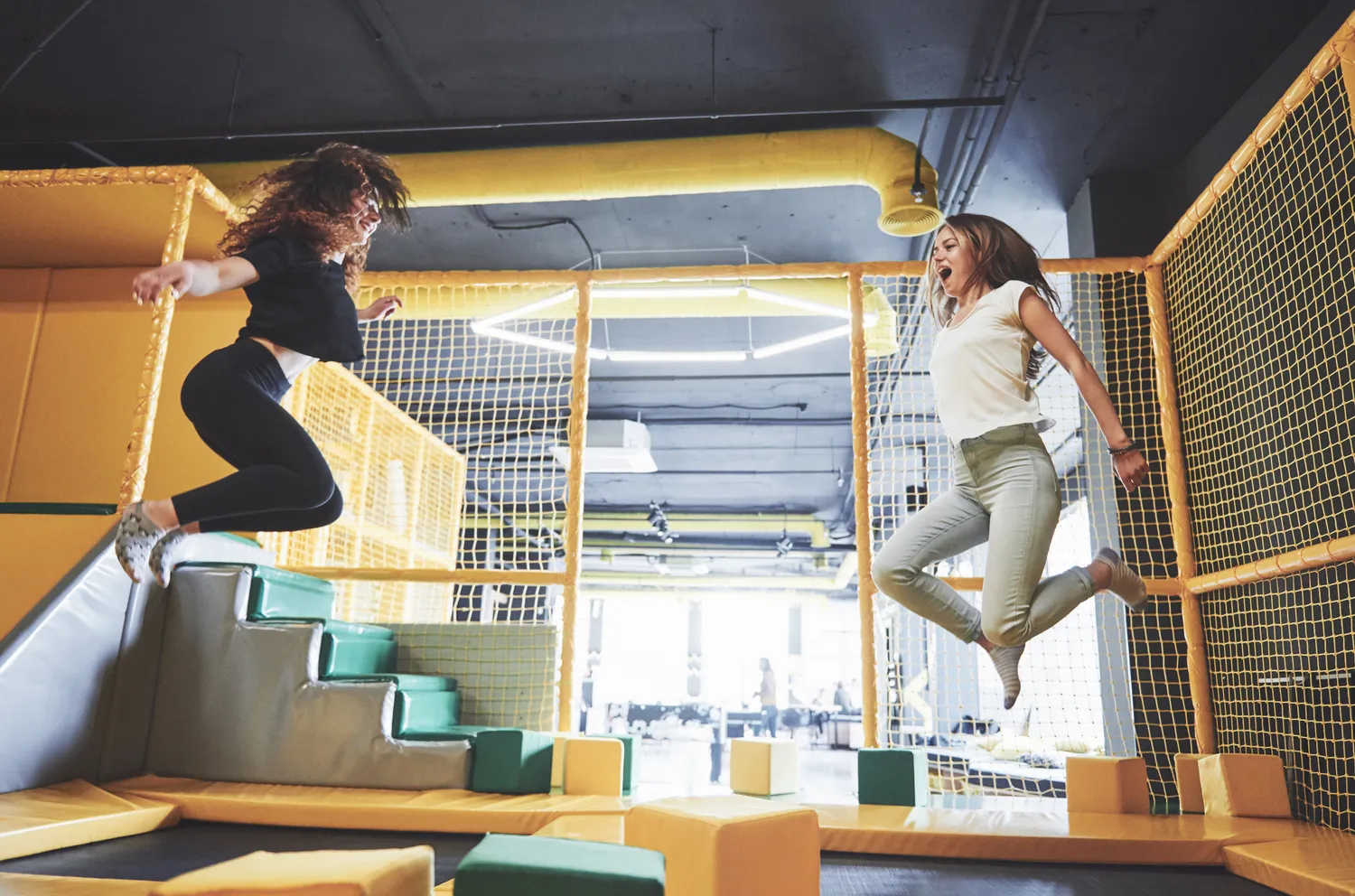
For facilities planning more extensive installations, trampoline park equipment requires additional planning around layout, traffic flow, and programming variety. Successful trampoline parks typically incorporate various jumping surfaces, including open jump areas, dodgeball courts, foam pits, and specialised zones for different age groups. Each area demands specific equipment specifications matched to its intended use.
Wall-to-wall padding systems, proper anchoring methods, and adequate spacing between jumping surfaces all contribute to creating a safe, enjoyable environment. Working with experienced trampoline park equipment suppliers helps ensure proper installation and compliance with industry safety standards.
Safety Standards and Certifications
Commercial trampolines should meet or exceed standards established by organisations like ASTM International. Look for products bearing ASTM F381 certification for outdoor public use trampolines or ASTM F2970 for trampoline courts and parks. These standards address structural requirements, performance specifications, and safety features that protect users and facility owners.
Insurance considerations often mandate specific certifications, so verify requirements with your carrier before making purchases. Documentation proving compliance with safety standards becomes essential should incidents occur and claims be filed.
Space Planning and Installation
Measure your available space carefully, accounting not just for the trampoline footprint but also required safety zones. Industry guidelines typically recommend clear zones extending at least six feet in all directions around trampolines, though specific requirements vary based on equipment type and intended use. Ceiling height matters significantly for indoor installations, with most facilities needing minimum clearances of 12 to 16 feet for standard recreational jumping.
Professional installation ensures proper anchoring and assembly, reducing liability risks and ensuring warranty coverage remains valid. Many manufacturers require certified installers to perform setup on commercial units.
Maintenance and Longevity
Commercial trampolines require regular inspection and maintenance schedules to ensure ongoing safety and performance. Establish protocols for checking frame integrity, spring tension, mat condition, and padding wear. Springs and mats typically require replacement every 3 to 5 years under normal commercial use, though high-traffic facilities may need more frequent attention.
Budget for replacement parts as ongoing operational expenses. Establishing relationships with reliable suppliers ensures quick access to components when maintenance needs arise, minimising downtime that affects revenue and programming.
Budget Considerations
Commercial trampoline pricing varies widely based on size, features, and quality. Individual fitness trampolines may cost between $200 and $800, while larger recreational units range from $2,000 to $8,000 or more. Trampoline park installations represent substantially larger investments, often reaching tens or hundreds of thousands of dollars for complete buildouts.
Consider the total cost of ownership rather than just the initial purchase price. Higher-quality equipment with superior warranties often delivers better long-term value through reduced maintenance needs and longer service life. Factor in installation costs, required safety surfacing, insurance premiums, and projected maintenance expenses when evaluating options.
Warranty and Support
Reputable commercial trampoline manufacturers stand behind their products with comprehensive warranties covering frames, springs, and mats. Frame warranties often extend 5 to 10 years, while mat and spring coverage typically ranges from 1 to 3 years. Beyond warranty terms, evaluate the manufacturer's reputation for customer service, availability of replacement parts, and responsiveness to support inquiries.
Making Your Final Decision
Selecting the right commercial trampoline equipment involves balancing immediate needs with long-term goals for your facility. Consider your target users, available space, budget constraints, and programming objectives. Visit other facilities using equipment you're considering, and request demonstrations or trial periods when possible.
Investing in quality commercial trampolines enhances your facility's offerings, attracts new members or students, and creates unique programming opportunities. By prioritising safety, durability, and appropriate specifications for your specific use case, you'll make an investment that serves your facility well for years to come.