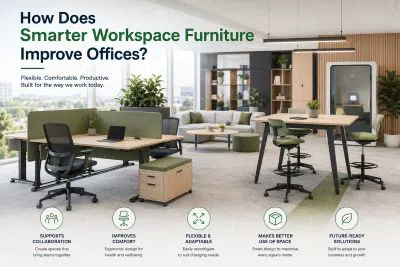
Modern offices need to support more than desks and chairs. They must help people focus, collaborate, move comfortably and adapt to changing work patterns. Smarter workspace furniture can help businesses create practical, efficient and adaptable workplaces without relying on major office renovations.
From height-adjustable desks to modular workstations and flexible meeting areas, the right furniture can improve how teams use their space. It can also support employee comfort, productivity and changing business needs.
This guide explains how smarter workspace furniture can improve offices and what businesses should consider when planning a future-ready workplace.
Quick Answer:
Smarter workspace furniture improves offices by making work areas more flexible, comfortable and efficient. It can support different work styles, improve ergonomics, make better use of available space and allow businesses to adjust layouts as teams and workplace needs change.
Furniture that can be moved, adjusted or reconfigured also reduces the need for costly changes when an organisation grows or changes its working model.
Key Takeaways
Smarter workspace furniture supports flexible ways of working.
Adjustable furniture can improve workplace comfort and ergonomics.
Modular systems make it easier to change office layouts.
Flexible areas can support both focused work and collaboration.
Adaptable furniture can improve the use of available floor space.
Good workspace planning can support productivity and employee experience.
Flexible solutions can help offices respond to future business changes.
Quality furniture should balance functionality, durability and design.
What Is Smarter Workspace Furniture?
Smarter workspace furniture combines practical design, flexibility and workplace functionality. Rather than treating every workstation as a permanent fixture, it allows businesses to create spaces that can respond to different activities and users.
Designed Around Different Work Styles
Employees may need quiet areas for focused tasks, open spaces for teamwork or informal settings for discussions. Furniture can help create these different zones without requiring permanent construction.
Built for Workplace Flexibility
Modular office furniture systems can be rearranged as requirements change. Desks, screens, storage units and workstations can often be moved or combined in different configurations.
This makes the office easier to adapt when teams grow, departments change or work patterns evolve.
How Does Smarter Workspace Furniture Improve Office Comfort?
Comfort has a direct impact on how people experience their workplace. Furniture that supports healthier working positions can make long periods at a desk more comfortable.
Supporting Better Ergonomics
Ergonomic office solutions can include adjustable desks, supportive seating and monitor setups that allow employees to work in positions suited to their individual needs.
Height-adjustable desks, for example, allow users to alternate between sitting and standing. Adjustable chairs can also help employees find a more suitable working position.
Creating More Comfortable Work Areas
Comfort is not limited to individual desks. Meeting areas, breakout zones and shared spaces should also provide suitable seating and enough room to move.
A well-planned workplace can make employees feel more comfortable while helping the office function more effectively.
How Does Smarter Workspace Furniture Support Productivity?
The physical workplace can influence how easily employees complete different tasks. A suitable furniture layout can reduce unnecessary movement, improve organisation and make it easier to choose an appropriate area for each activity.
Supporting Focused Work
Quiet workstations can give employees an area where they can concentrate on tasks that require attention. Desk placement, screens and acoustic considerations can help create a more suitable environment for focused work.
Encouraging Collaboration
Collaborative office spaces can provide areas where employees can meet, share ideas and work together. Flexible tables, movable seating and modular workstations can make these spaces easier to configure.
Instead of having one fixed meeting area, businesses can create spaces that serve multiple purposes throughout the day.
How Does Smarter Workspace Furniture Make Better Use of Office Space?
Office space can be a significant business expense. Making better use of available floor space can therefore provide practical and financial benefits.
Improving Space Efficiency
Furniture with compact designs, shared workstations and integrated storage can help businesses use floor space more effectively.
Modular furniture can also allow businesses to change the layout without replacing an entire fit-out.
Supporting Multiple Uses
A single area can serve different purposes when furniture is easy to move or reconfigure. For example, a space used for individual work in the morning could become a collaborative area later in the day.
This approach can help businesses get more value from their existing office footprint.
How Does Smarter Workspace Furniture Support Adaptable Offices?
Workplaces are not static. Staff numbers, team structures and working arrangements can change over time. Furniture that can adapt to these changes can help businesses respond without starting from scratch.
Making Changes Easier
Intelligent workspace furniture can support different configurations as workplace requirements develop. Modular components can be added, removed or rearranged to suit changing needs.
Supporting Hybrid Work
Hybrid work can create fluctuations in office occupancy. Flexible workspace furniture NZ businesses use can help offices respond to these changing patterns by creating shared areas and adaptable workstations.
This can help avoid maintaining large areas of permanently assigned furniture that may not be used every day.
What Features Should Businesses Look For?
Choosing suitable furniture requires more than considering appearance. Businesses should assess how each product will perform in everyday use.
Adjustability
Look for desks, chairs and accessories that can be adjusted to suit different users and tasks.
Modularity
Modular furniture can provide greater flexibility because individual components can be rearranged or expanded.
Durability
Commercial office furniture should be designed for regular use. Durable materials and reliable construction can help extend the useful life of a fit-out.
Technology Integration
Smart office furniture solutions may include features that support modern technology, such as cable management, power access and integrated connectivity.
Practical Design
Furniture should work with the office layout rather than simply filling available space. Consider movement, storage, meeting areas, lighting and employee workflows when planning a workplace.
How Can Businesses Plan a Smarter Workspace?
A successful workspace starts with understanding how people actually use the office.
Assess Current Workplace Needs
Review how teams work, where bottlenecks occur and which areas are frequently used or underused.
Identify Different Activity Zones
Consider creating dedicated areas for focused work, collaboration, meetings, informal discussions and breaks.
Choose Adaptable Furniture
Select furniture that can support current requirements while allowing future changes.
Prioritise Employee Experience
Comfort, accessibility, ease of use and practical movement should all form part of the planning process.
Are Smarter Workspace Furniture Solutions Worth It?
For many businesses, the value comes from flexibility rather than technology alone. Furniture that can adapt to changing requirements can reduce the need for frequent replacements and major office alterations.
Future-ready workspace solutions can also help businesses create workplaces that support productivity, collaboration and employee comfort.
The best approach is to select furniture based on actual workplace needs rather than following trends. A well-designed office should be practical today while remaining adaptable tomorrow.
Frequently Asked Questions About Smarter Workspace Furniture
What is smarter workspace furniture?
Smarter workspace furniture is designed to make offices more flexible, comfortable and efficient. It can include adjustable desks, modular workstations, flexible seating, integrated storage and technology-friendly features.
How can smarter workspace furniture improve productivity?
It can provide employees with suitable areas for focused work, collaboration and meetings. Better layouts can also reduce wasted space and support smoother workplace routines.
Is smarter workspace furniture suitable for small offices?
Yes. Flexible furniture can be particularly useful in smaller offices because it can allow one area to serve several purposes. Modular designs can also make future layout changes easier.
Can smarter workspace furniture support hybrid work?
Yes. Adaptable furniture can help businesses create shared workstations, collaboration areas and flexible zones that respond to changing office occupancy.
What should businesses consider when choosing office furniture?
Businesses should consider ergonomics, durability, adjustability, flexibility, available space, technology requirements and how employees use the workplace.
Does smarter workspace furniture require a complete office renovation?
Not necessarily. Some businesses can improve their workplace by replacing selected furniture or introducing modular components gradually. The right approach depends on the existing layout and business requirements.
Final Thoughts
Smarter workspace furniture can help businesses create offices that are more comfortable, efficient and adaptable. From ergonomic workstations to modular layouts, the right furniture can support different work styles while making better use of available space.
The key is to plan around how people work. By combining flexibility, comfort, durability and practical design, businesses can create adaptable workplace environments that meet current needs and remain ready for future changes.