The pharmaceutical industry continuously seeks advanced drug delivery systems that improve therapeutic outcomes, enhance drug stability, and ensure patient compliance. Among the various innovations in oral solid dosage forms, Esomeprazole EC Pellets have emerged as a preferred formulation for treating acid-related gastrointestinal disorders. Their unique enteric-coated structure helps protect the active ingredient from degradation in the acidic environment of the stomach while ensuring targeted release in the intestine.
As demand for high-quality proton pump inhibitor (PPI) formulations grows globally, many pharmaceutical companies are partnering with reliable Esomeprazole EC Pellets Manufacturers in India to source premium-grade pellets for capsule and tablet formulations.
In this technical guide, we will explore everything you need to know about Esomeprazole EC Pellets, including their composition, manufacturing process, applications, benefits, and quality requirements.
Understanding Esomeprazole EC Pellets
Esomeprazole is a proton pump inhibitor widely prescribed for conditions such as:
- Gastroesophageal Reflux Disease (GERD)
- Peptic ulcers
- Zollinger-Ellison syndrome
- Acid reflux
- Helicobacter pylori eradication therapy
The term "EC" stands for Enteric Coated. Esomeprazole is highly sensitive to acidic environments and can degrade when exposed to gastric acid. To overcome this challenge, the drug is formulated into pellets and coated with a specialized enteric polymer that prevents dissolution in the stomach.
Once the pellets reach the higher pH environment of the small intestine, the coating dissolves, releasing the active ingredient where it can be effectively absorbed.
What Makes Pellet Technology Unique?
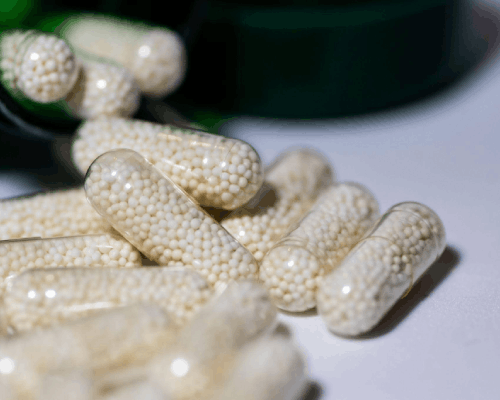
Unlike conventional tablets, pellet-based drug delivery systems consist of multiple small spherical particles containing the active pharmaceutical ingredient.
This multiparticulate system offers several advantages:
Uniform Drug Distribution
Pellets spread evenly throughout the gastrointestinal tract, reducing localized drug concentration and improving absorption.
Enhanced Stability
The enteric coating protects Esomeprazole from degradation caused by stomach acid.
Flexible Formulation
Pellets can be filled into hard gelatin capsules or compressed into Multiple Unit Pellet System (MUPS) tablets.
Reduced Dose Dumping Risk
Since the formulation contains thousands of pellets, the risk associated with failure of a single unit is minimized.
Composition of Esomeprazole EC Pellets
The formulation generally includes:
Active Ingredient
- Esomeprazole Magnesium or Esomeprazole Magnesium Trihydrate
Core Materials
- Sugar spheres
- Microcrystalline cellulose
- Starch derivatives
Drug Layer
The active pharmaceutical ingredient is layered onto the pellet core using specialized coating equipment.
Barrier Coating
A protective layer is applied to prevent interaction between the drug and enteric coating polymers.
Enteric Coating
Common enteric coating materials include:
- Methacrylic acid copolymers
- Hydroxypropyl methylcellulose phthalate (HPMCP)
- Polyvinyl acetate phthalate (PVAP)
These polymers remain intact in acidic environments but dissolve at intestinal pH levels.
Manufacturing Process of Esomeprazole EC Pellets
The production of high-quality pellets requires advanced pharmaceutical processing technology and strict quality controls.
Step 1: Preparation of Pellet Cores
Uniform starter cores are selected to ensure consistent pellet size and shape.
Step 2: Drug Layering
Esomeprazole is sprayed onto the pellet cores using fluid bed coating systems. This stage ensures accurate drug loading and uniform distribution.
Step 3: Barrier Coating
A protective barrier layer is applied to prevent chemical interaction between Esomeprazole and the enteric coating.
Step 4: Enteric Coating
Specialized polymers are sprayed onto the pellets to create an acid-resistant coating.
Step 5: Drying and Curing
The pellets undergo controlled drying and curing processes to enhance coating integrity and stability.
Step 6: Quality Testing
Comprehensive testing is conducted before batch release.
This sophisticated manufacturing approach is one reason why Esomeprazole EC Pellets Manufacturers in India are recognized for delivering globally accepted pharmaceutical products.
Quality Control Parameters
Quality assurance plays a critical role in pellet manufacturing.
Key tests include:
Assay Testing
Determines the concentration of active ingredients.
Dissolution Testing
Ensures delayed drug release according to pharmacopeial specifications.
Acid Resistance Test
Verifies the effectiveness of the enteric coating in gastric conditions.
Moisture Content Analysis
Maintains pellet stability and shelf life.
Particle Size Distribution
Ensures consistency and uniform filling during capsule manufacturing.
Stability Studies
Evaluates product performance under various environmental conditions.
Manufacturers often comply with standards established by:
- USP (United States Pharmacopeia)
- BP (British Pharmacopoeia)
- IP (Indian Pharmacopoeia)
- EP (European Pharmacopoeia)
Applications of Esomeprazole EC Pellets
Esomeprazole EC Pellets are widely used across pharmaceutical formulations.
Capsule Manufacturing
The most common application involves filling pellets into hard gelatin or HPMC capsules.
MUPS Tablets
Pellets can be compressed into tablets without damaging the enteric coating.
Combination Products
Esomeprazole pellets are often combined with other gastrointestinal drugs to create fixed-dose combinations.
Export-Oriented Formulations
Many pharmaceutical companies procure pellets for regulated and semi-regulated international markets.
Benefits for Pharmaceutical Companies
Using ready-to-fill pellets offers several commercial and technical advantages.
Faster Product Development
Manufacturers can bypass complex pelletization processes and focus on final dosage form development.
Cost Efficiency
Reduced investment in specialized coating equipment and manufacturing infrastructure.
Regulatory Support
Established pellet suppliers often provide comprehensive technical documentation.
Consistent Product Quality
Validated manufacturing processes ensure batch-to-batch uniformity.
This is why global pharmaceutical companies increasingly collaborate with trusted Esomeprazole EC Pellets Manufacturers in India to streamline their formulation and commercialization efforts.
Why India Is a Leading Source of Esomeprazole EC Pellets
India has become a major pharmaceutical manufacturing hub due to its:
- Advanced manufacturing facilities
- WHO-GMP compliance
- Skilled pharmaceutical workforce
- Competitive production costs
- Strong export capabilities
- Regulatory expertise
Indian manufacturers supply high-quality Esomeprazole EC Pellets to pharmaceutical companies across Asia, Africa, Europe, Latin America, and the Middle East.
The growing demand for gastrointestinal therapies continues to strengthen the position of Esomeprazole EC Pellets Manufacturers in India in the global pharmaceutical supply chain.
Conclusion
Esomeprazole EC Pellets represent a highly effective and technologically advanced drug delivery system designed to protect acid-sensitive Esomeprazole and ensure optimal therapeutic performance. Their enteric-coated design, excellent stability, controlled release characteristics, and formulation flexibility make them an essential component of modern gastrointestinal medications.
For pharmaceutical companies seeking reliable sourcing solutions, partnering with an experienced manufacturer that adheres to international quality standards can significantly enhance product development, regulatory compliance, and market success. As global demand for proton pump inhibitor formulations continues to rise, Esomeprazole EC Pellets will remain a critical segment of the pharmaceutical industry.
Other Recommendations: Lansoprazole EC Pellets Manufacturers in India