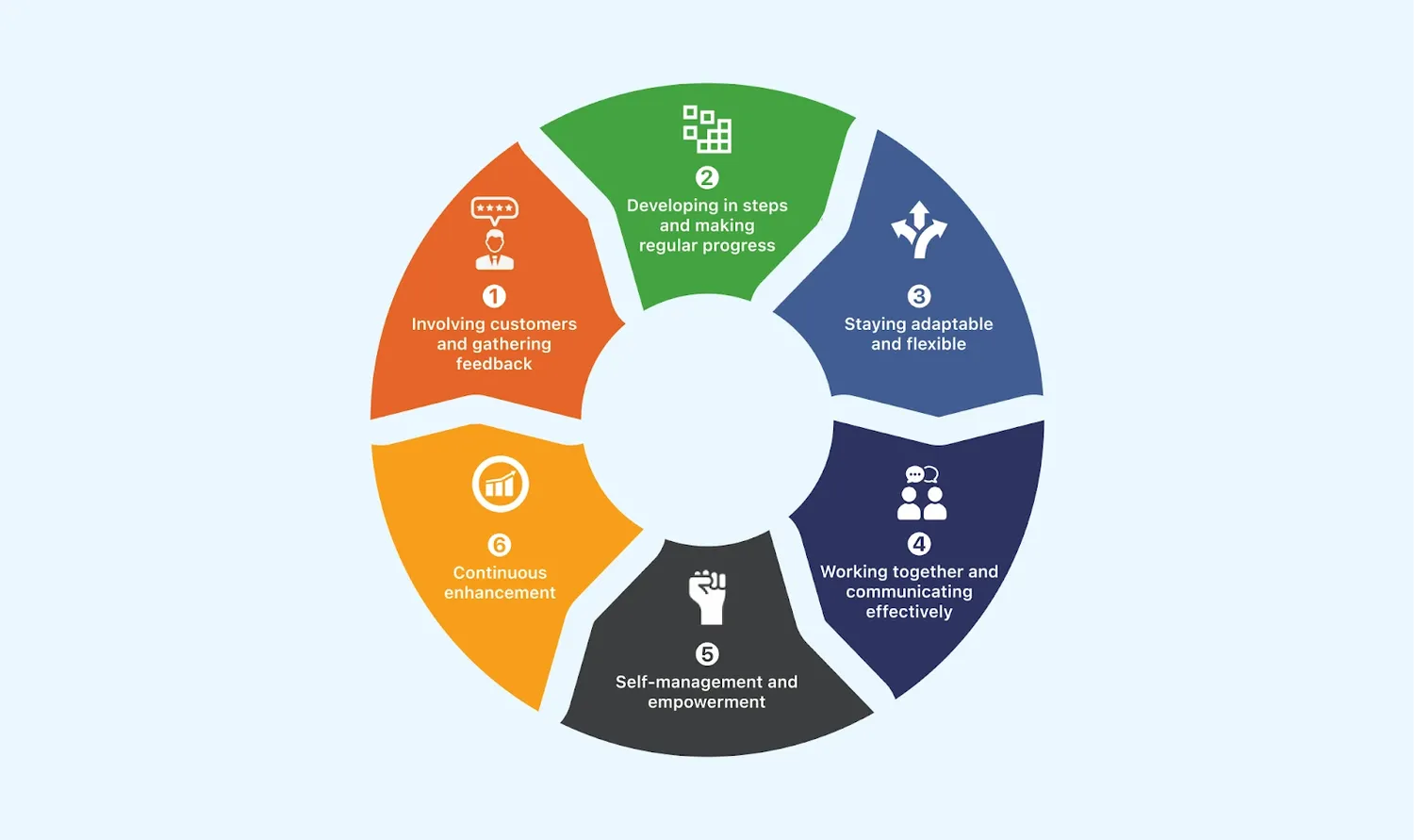
Agile web development has emerged as a dynamic framework that significantly improves project outcomes by fostering collaboration, adaptability, and efficiency. By integrating iterative processes, Agile ensures that teams remain focused on delivering high-quality results, tailored to evolving client needs. Let’s explore how adopting Agile methodologies can transform your web development projects for sustained success.
What is Agile Web Development?
Agile web development is a methodology that prioritizes iterative progress, continuous feedback, and adaptive planning. Unlike traditional development approaches, Agile breaks the project into manageable cycles, or sprints, enabling teams to deliver functional components incrementally. This allows for greater flexibility in addressing client feedback and market demands.
Key Principles of Agile Web Development
- Customer Collaboration Over Contract Negotiation: Agile emphasizes open communication with clients to ensure the product aligns with their vision.
- Responding to Change: Agile frameworks adapt seamlessly to changing requirements without disrupting the project timeline.
- Frequent Delivery of Workable Features: Teams deliver functional elements regularly, ensuring continuous progress and early detection of issues.
- Empowered Teams: Agile fosters a culture where teams take ownership of their tasks, enhancing accountability and innovation.
Benefits of Agile in Web Development
Enhanced Flexibility
Traditional web development often struggles to accommodate changing requirements, leading to rigid, outdated solutions. Agile’s iterative approach allows teams to pivot strategies, aligning deliverables with evolving business needs.
Improved Collaboration
Agile encourages regular communication among stakeholders, developers, and clients. By working collaboratively, teams can better identify potential obstacles, mitigate risks, and ensure that every milestone meets expectations.
Faster Time-to-Market
Delivering smaller, functional parts of a project at regular intervals reduces time-to-market, enabling businesses to stay competitive. This incremental approach provides clients with tangible results early in the development cycle.
High-Quality Deliverables
Agile integrates continuous testing throughout the development process, ensuring that errors are caught and resolved early. This proactive strategy enhances the overall quality and functionality of the final product.
Agile Frameworks and How They Impact Projects
Several frameworks, such as Scrum and Kanban, fall under the Agile umbrella, each offering unique benefits. Scrum, for example, is ideal for projects with rapidly changing requirements, while Kanban excels in visualizing workflow and minimizing bottlenecks.
Scrum: Structured Adaptability
Scrum organizes work into short sprints, usually lasting 2-4 weeks. During each sprint, teams tackle specific tasks, ensuring consistent progress.
Kanban: Visual Workflow Management
Kanban uses a visual board to track tasks from inception to completion. This transparent system highlights delays, helping teams focus on eliminating inefficiencies.
Choosing the Right Framework
The choice between Scrum, Kanban, or other Agile frameworks depends on the project’s complexity, team size, and goals. Understanding these nuances helps businesses leverage Agile effectively.
Agile’s Impact on Web Design Companies
For a web design company in New York, adopting Agile methodologies is particularly advantageous. The city’s fast-paced business environment demands rapid, reliable solutions. Agile empowers teams to deliver high-quality, client-centric designs while maintaining flexibility to adapt to last-minute changes. This adaptability not only streamlines development processes but also fosters strong client relationships in a competitive market.
Best Practices for Implementing Agile
Define Clear Objectives
Establishing well-defined goals at the start of the project ensures that every team member understands their role and responsibilities.
Adopt Regular Stand-Up Meetings
Daily stand-up meetings foster communication, helping teams stay aligned and address potential roadblocks promptly.
Prioritize Backlog Management
Maintaining a prioritized backlog ensures that the most critical tasks are addressed first, optimizing resources and time.
Incorporate Feedback Loops
Frequent feedback cycles allow teams to refine deliverables, ensuring they meet client expectations and project objectives.
Common Challenges and How to Overcome Them
While Agile offers numerous benefits, it is not without its challenges. These include resistance to change, difficulty in transitioning from traditional methods, and maintaining team discipline.
Overcoming Resistance to Change
Educating teams and stakeholders about Agile’s benefits can ease the transition. Workshops and training sessions are effective tools for building confidence.
Ensuring Consistency
Using project management tools such as Jira or Trello helps teams stay organized and ensures transparency throughout the project lifecycle.
Balancing Flexibility with Deadlines
While Agile champions adaptability, setting realistic deadlines and adhering to them is essential to prevent scope creep and project delays.
The Future of Agile Web Development
As technology evolves, Agile methodologies continue to adapt. The integration of Artificial Intelligence (AI) and automation tools within Agile processes is revolutionizing how teams approach web development. These advancements enhance decision-making, streamline repetitive tasks, and provide data-driven insights, ensuring that Agile remains a robust framework for future projects.