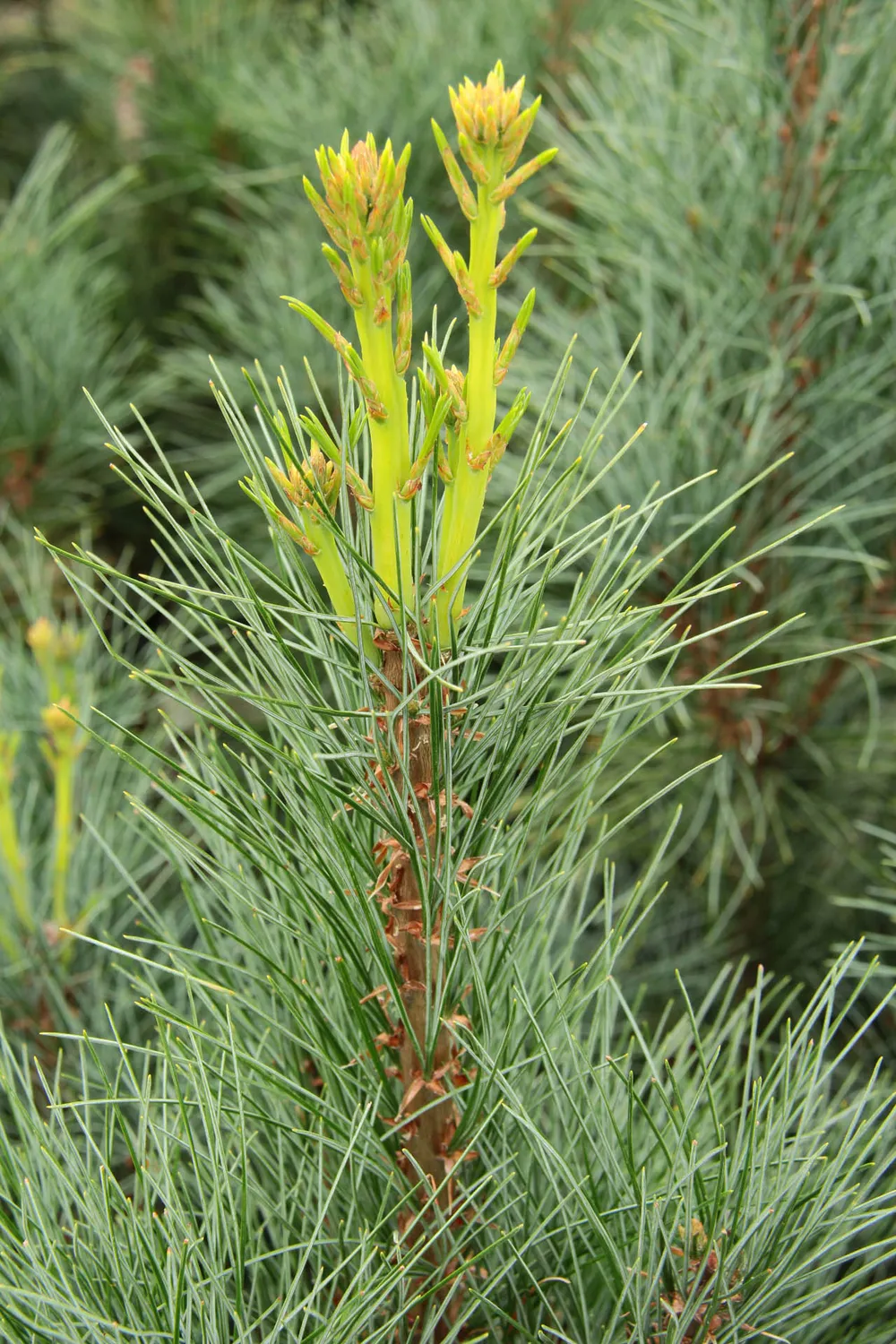
The Pinus strobus 'Stowe Pillar,' also known as the Eastern White Pine 'Stowe Pillar,' is a captivating cultivar known for its narrow, columnar form and soft, blue-green needles. This architectural gem adds a touch of vertical interest and year-round greenery to landscapes, making it a popular choice for gardens with limited space. But beyond its aesthetics, the 'Stowe Pillar' boasts a manageable growth rate, making it a practical addition for various landscaping needs.
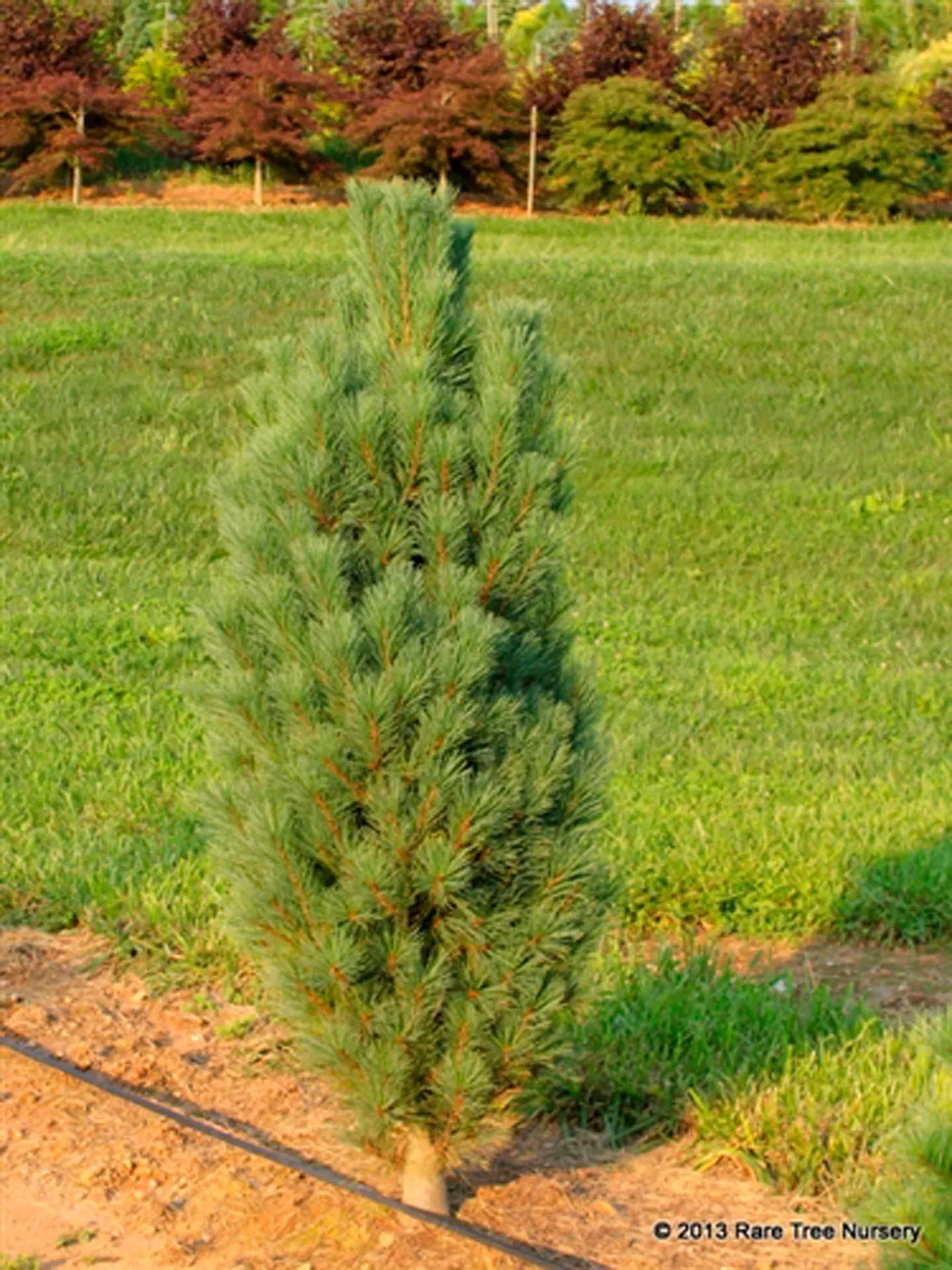
Unveiling the 'Stowe Pillar'
This captivating cultivar is a variation of the Eastern White Pine, a majestic tree native to North America. Here's a closer look at its defining characteristics:
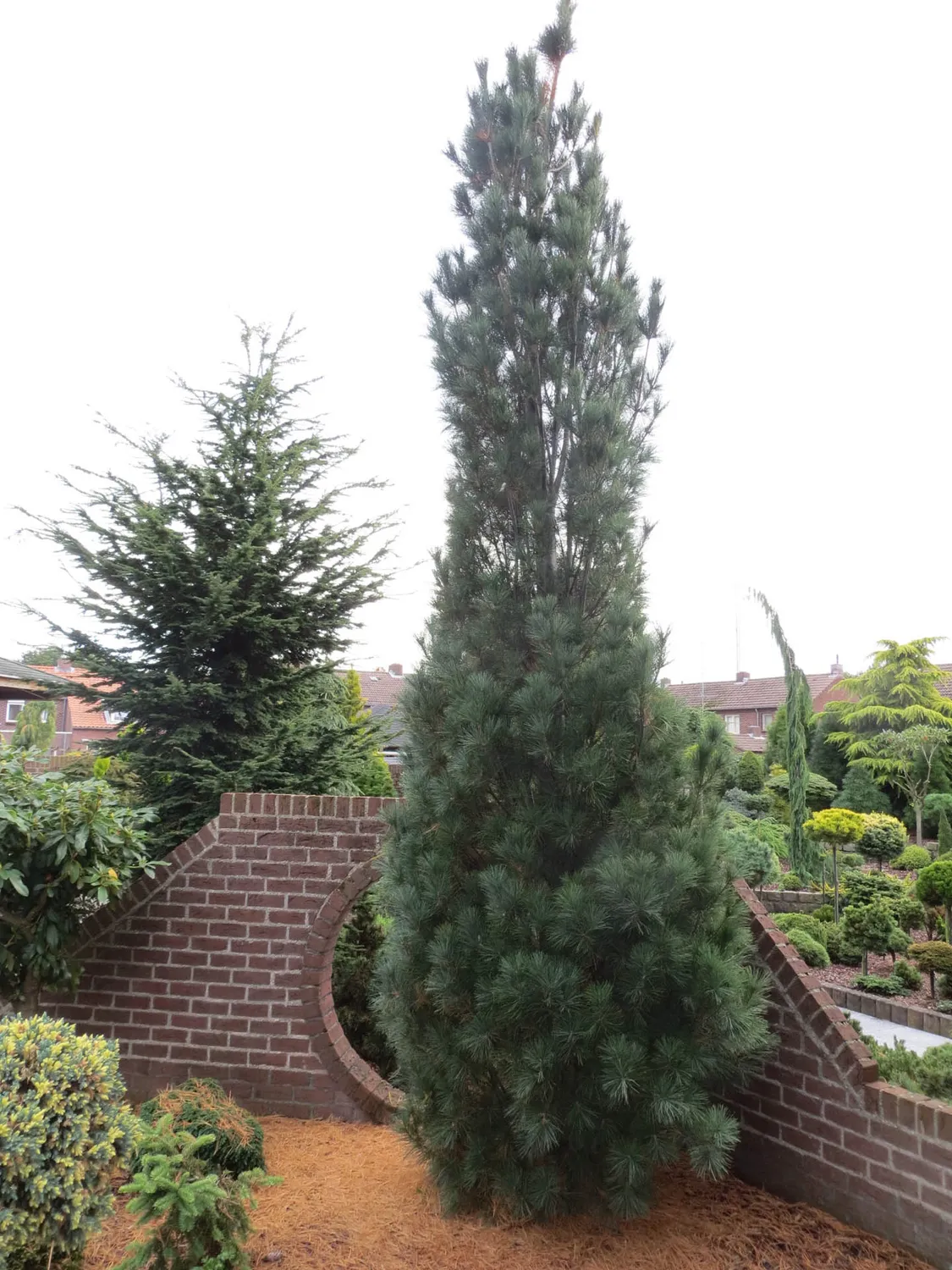
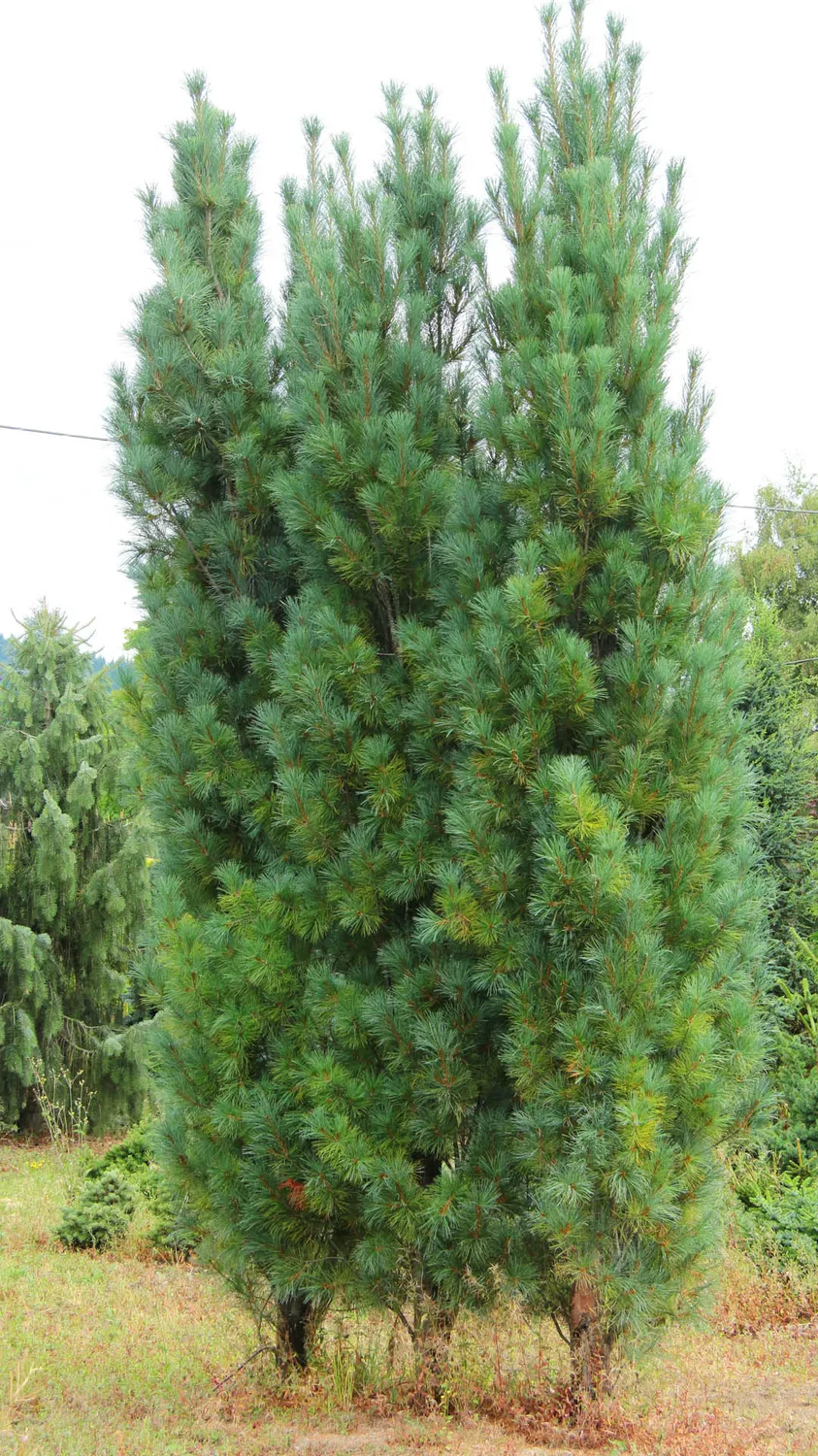
- Columnar Habit: Unlike its towering wild counterpart, the 'Stowe Pillar' exhibits a distinctive, narrow, columnar form. This allows it to fit gracefully into smaller gardens or provide a vertical accent in larger spaces.
- Manageable Size: Reaching a mature height of 12-15 feet and a width of 3-4 feet in 10 years, this pine remains manageable for most landscapes. Eastern Whte Pine’s slow to moderate growth rate, adding roughly 12-15 inches annually, makes it a low-maintenance choice.
- Soft Needles: The 'Stowe Pillar' features soft, blue-green needles that provide a year-round visual appeal. The subtle blue hue adds a unique touch of elegance to the landscape, especially when contrasted with other plants.
- Adaptability: This pine thrives in a range of soil conditions, from slightly acidic to slightly alkaline, as long as drainage is adequate.
Planting Your 'Stowe Pillar' for Success
Adding this architectural wonder to your garden is a straightforward process. Here's a guide to ensure its thriving presence:
1. Choosing the Perfect Spot:
- Light: Full sun exposure, with at least 6 hours of direct sunlight daily, is ideal. This promotes healthy growth and maintains the vibrant green color of the needles.
- Soil: Well-draining soil is crucial. The 'Stowe Pillar' dislikes soggy conditions, so ensure proper drainage. Amend clay soils with sand or gravel for optimal results.
- Spacing: When planting multiple 'Stowe Pillar' pines, provide adequate spacing (around 4-5 feet apart) to allow for mature growth without overcrowding.
2. Planting Process:
- Timing: Early spring or fall is the ideal time for planting, allowing the pine to establish its roots before extreme temperatures.
- Digging the Hole: Dig a hole twice the width of the root ball of your 'Stowe Pillar' and slightly deeper.
- Root Ball Prep: Gently loosen the root ball to encourage root expansion.
- Planting: Place the pine in the hole, ensuring the root ball sits level with the surrounding soil.
- Backfilling: Fill the hole with the excavated soil, tamping it down gently to remove air pockets.
- Watering: Water thoroughly after planting to settle the soil and hydrate the roots.
3. Post-Planting Care:
- Watering: Water regularly during the first year, especially during dry periods. Once established, the 'Stowe Pillar' is somewhat drought-tolerant and requires minimal supplemental watering.
- Mulching: Apply a 2-3 inch layer of organic mulch around the base of the pine, keeping it a few inches away from the trunk. Mulch helps retain moisture, suppress weeds, and regulate soil temperature.
- Pruning: Minimal pruning is necessary. However, you can remove any dead, diseased, or crossing branches throughout the year to maintain the desired columnar form.
Design Ideas with the 'Stowe Pillar'
The 'Stowe Pillar's' unique form and manageable size make it a versatile addition to various landscaping scenarios. Here are some inspiring ideas:
- Entryways: Flanking an entryway with a pair of 'Stowe Pillar' pines creates a striking and welcoming focal point.
- Focal Points: Plant it as a solitary specimen in a garden bed to add a touch of vertical interest and year-round greenery.
- Privacy Screens: These pines can be planted in a row to create a living privacy screen, offering a more natural alternative to fences.
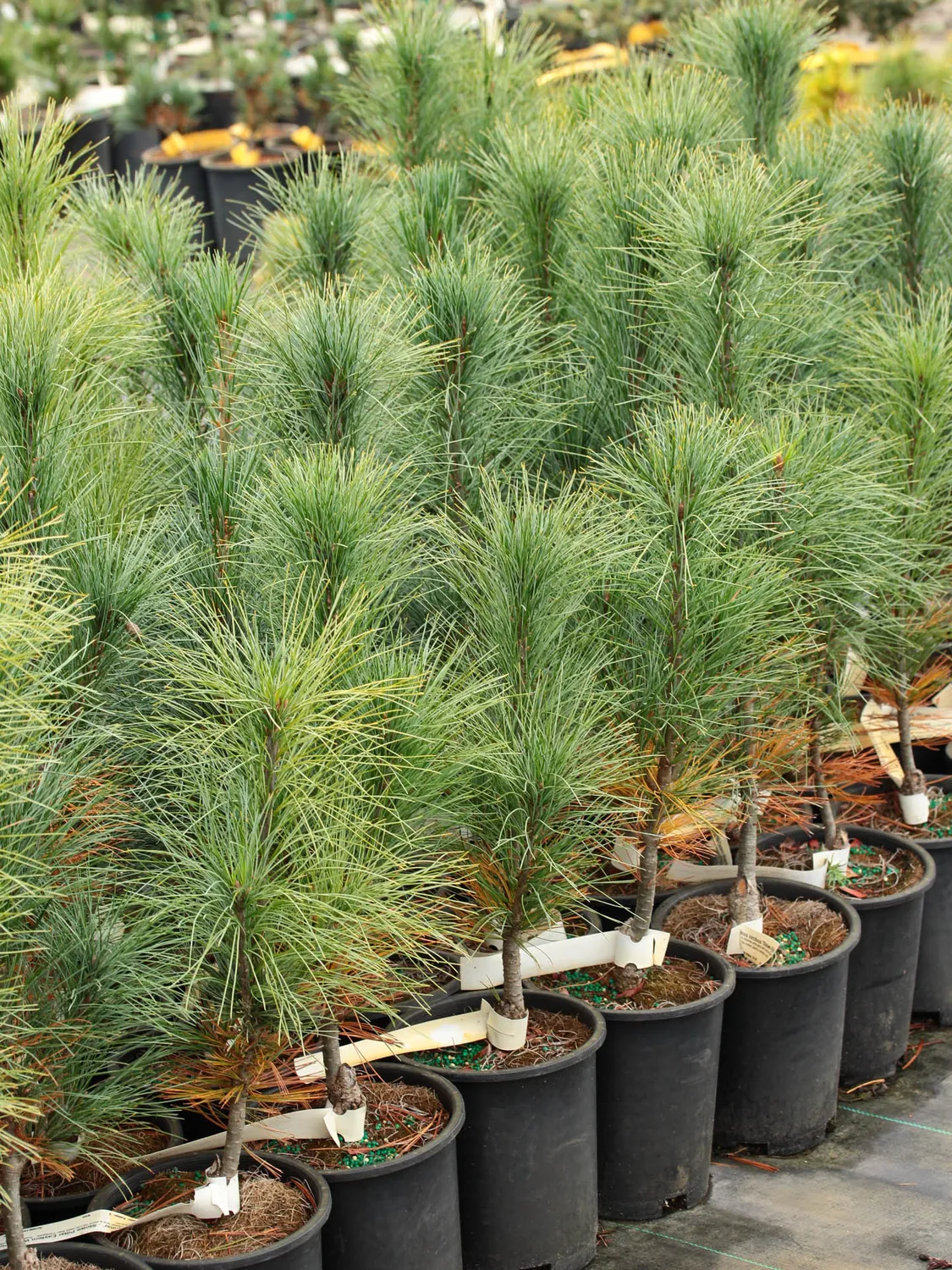
- Container Plantings: This pine thrives in containers, making it perfect for patios, balconies, or even sunny indoor spaces.
Understanding the Eastern White Pine's Growth Rate (continued)
- Seedlings: In their first few years, Eastern White Pine seedlings typically grow around 6-12 inches annually. This initial growth rate can be slower in less than ideal conditions.
- Fast Growth Stage: After establishing a strong root system, Eastern White Pines, including the 'Stowe Pillar,' experience a period of faster growth. This can range from 12-18 inches per year for a decade or two. The 'Stowe Pillar' tends to fall on the slower end of this spectrum due to its more compact form.
- Maturity: As the Eastern White Pine reaches maturity, its growth rate slows down considerably. Mature trees typically add only 6-8 inches per year.
Benefits of a Moderate Growth Rate:
While a rapid growth rate might seem desirable, the 'Stowe Pillar's' moderate pace offers several advantages:
- Manageability: The slower growth keeps the size of the tree in check, making it suitable for smaller gardens. Less frequent pruning is required to maintain its desired form.
- Reduced Risk of Damage: Faster-growing trees are more susceptible to wind damage, especially in younger years. The 'Stowe Pillar's' slower growth makes it less vulnerable to such issues.
- Longevity: Slower-growing trees tend to have longer lifespans. The Eastern White Pine, including the 'Stowe Pillar,' can live for hundreds of years with proper care.
Additional Tips for Success with the 'Stowe Pillar'
- Young Tree Support: For the first few years after planting, consider using a stake and loose ties to provide support, especially in windy locations. Remove the support once the tree establishes a strong root system.
- Winter Protection: In colder climates (zones 4-5), young 'Stowe Pillar' pines might benefit from burlap fabric protection during harsh winter winds to prevent desiccation.
- Deer Resistance: Fortunately, Eastern White Pines, including the 'Stowe Pillar,' are generally unpalatable to deer, making them a good choice for areas with deer browsing concerns.
Conclusion: A Column of Enduring Beauty
The Pinus strobus 'Stowe Pillar' offers a unique combination of architectural appeal, manageable size, and adaptability. Its slow to moderate growth rate makes it a low-maintenance choice, perfect for busy gardeners. With its year-round green presence and elegant form, the 'Stowe Pillar' is sure to become a cherished addition to your landscape for generations to come. So, consider incorporating this captivating cultivar into your garden design and enjoy its enduring beauty.