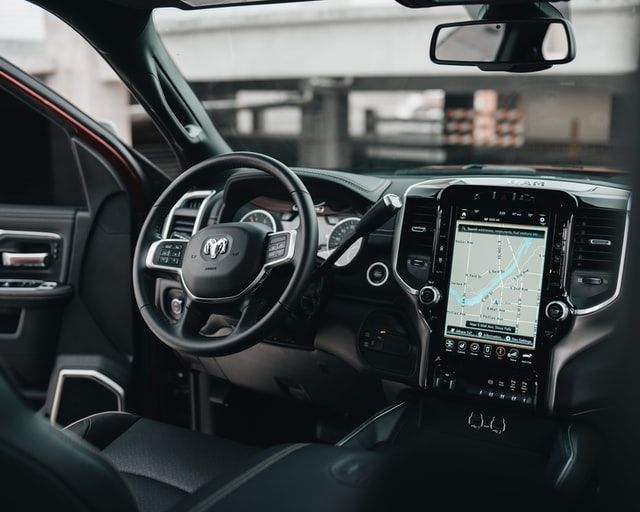
In the past few decades, cars have gotten safer. Dramatically safer. The number of fatalities per mile driven has dropped by around a third since 1980, and it's down by more than half since the 1960s, despite there being far more cars on the road today. These days, many new cars come with a range of high-tech safety features. Some can help you avoid accidents — or make them less severe if they're unavoidable. Others kick in after an accident, protecting you and your passengers.
Airbags
The airbag is one of the most effective car safety features for reducing injuries and saving lives in the event of a crash. Since 1998, all new cars in the United States are required to have dual front airbags. Beginning in 2011, new vehicles are required to have side-impact airbags that provide head protection for people seated in the front seats.
Airbags are a key component of modern car safety. They're designed to prevent occupants from hitting dangerous parts of the vehicle, such as the steering wheel or frame, during a crash.
While airbags used to be considered a luxury item, they're now standard equipment on most new cars. Some vehicles even have multiple airbags. How many airbags are there in a car? It varies by model, but you can expect at least two front airbags, plus side-impact bags and possibly curtain bags as well.
Airbags are designed to prevent the driver and front-seat occupant from hitting the steering wheel, dashboard or windshield. Side airbags reduce injury by keeping the head of a side-impact crash victim from hitting a window or door pillar. Frontal airbags are designed to inflate in moderate to severe front-end crashes and help reduce the risk of head and chest injuries to front-seat occupants.
Adaptive Headlights
If you're driving on a dark country road or winding mountain roads at night and are constantly turning corners, this safety feature could be for you. Adaptive headlights automatically turn when you turn so that you can see better where you're going. As a result of this feature, it's been shown that headlight accidents have been reduced by 25%! Adaptive headlights are a feature that is included in many modern vehicles. These headlights monitor traffic and can change their focus to ensure that the driver always has optimal visibility.
The system works by using GPS data to determine your position and speed. Then, a sensor detects your steering angle and compensates for it accordingly. Typically, the headlights are adjusted up or down in accordance with the curvature of the road ahead. Some systems can also adjust left or right based on oncoming traffic.
Secure car key
A car key is a special key that helps you to open and close your car door without any hassle. It is a transponder chip that comes in the form of an electronic key. The transponder chip can be programmed to lock and unlock your vehicle. You can use the transponder chip to start your vehicle by turning the ignition switch. The car lock system is designed in such a way that it makes sure that the engine cannot be started unless the correct car key is used. As the transponder chip sends out an electromagnetic signal, when it touches the ignition switch, it sends out a message to start the engine. When you lose your car keys or have them stolen from you, you will have to contact specialized car locksmiths who can help you with getting replacement keys made for your vehicle.
Blind spot monitoring
Blind spot monitoring is a safety feature that aims to monitor the areas around your car that are difficult to see out of. These areas are known as blind spots. The technology in these systems is designed to warn you when another vehicle enters your blind spot. The warning is typically given as an illuminated icon in the side mirror or a small light on the A-pillar, near the rear view mirror (depending on the make and model of your vehicle). If you fail to see the warning and still attempt to change lanes, an alert may sound or vibrate. Some vehicles will even go a step further and actively steer you back into your lane if it detects a vehicle entering your blind spot and you’re attempting to merge into it.
Pros:
- Makes changing lanes easier
- Reduces chances of side impact crashes
- Minimizes stress when driving
Lane keep assist
Lane keep assist is the newest and most innovative safety feature in the auto industry. It detects the lines on the road and uses them to create a virtual "lane" that monitors your position in it. If you drift over it, the car automatically brings you back with a slight steering correction. On some vehicles, this feature can be used to self-steer down the road so you don't have to hold onto the steering wheel at all.
Lane Keep Assist (LKA) is available in several car models. It alerts the driver with a beeping sound and/or vibration to let him know that he's drifting out of his lane. LKA uses cameras to monitor lane markings and can also apply steering torque to keep you from moving into the next lane.
Don't forget - safety comes first!