For decades, owning a fireplace meant owning a home with a traditional masonry chimney. If your house didn't come with one, you either paid tens of thousands of dollars to have one built, or you went without. That's no longer the case. Direct vent fireplaces have fundamentally changed what's possible for homeowners- and the technology has matured to the point where virtually any home, in any configuration, can have a real gas fireplace installed without a chimney in sight.
This isn't a niche workaround. It's the dominant installation method for new gas fireplaces across the country, and for good reason.
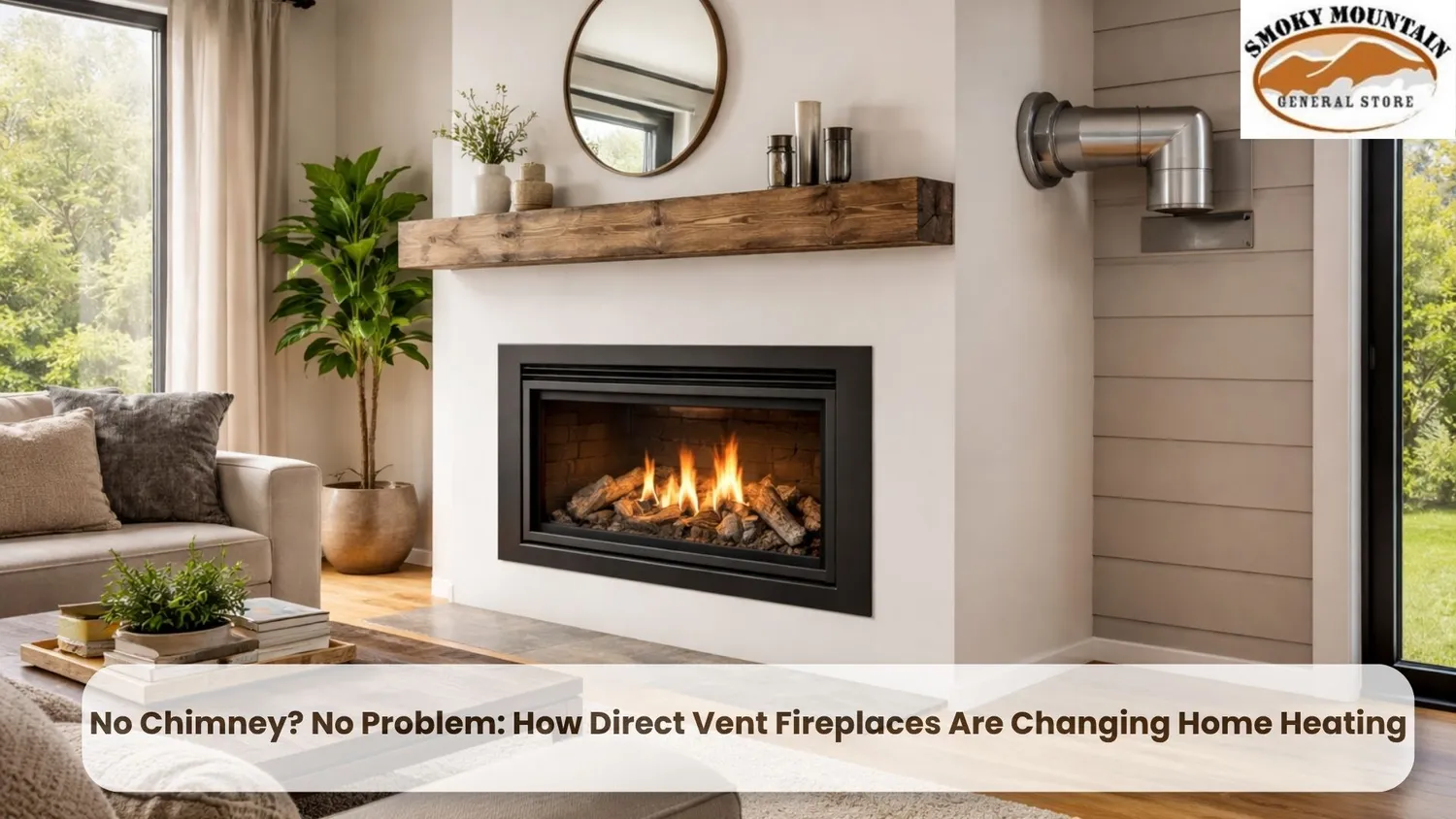
What Exactly Is a Direct Vent Fireplace?
Before getting into why it's changed home heating, it helps to understand what makes direct vent fireplaces different from older systems.
A traditional wood-burning or B-vent gas fireplace relies on a vertical chimney to draw combustion air from inside the home and push exhaust gases up and out. This means you need a chimney- and every time the fireplace runs, it's consuming your heated indoor air as combustion fuel and venting it outside.
A direct vent fireplace operates on a completely different principle:
- It uses a sealed, dual-pipe venting system
- One pipe draws outside air directly into the sealed combustion chamber
- The second pipe exhausts combustion gases back outside
- The firebox itself is completely sealed from the living space with a fixed glass front
- No indoor air is consumed during operation
- No combustion byproducts can enter the room
The result is a fireplace that is self-contained, efficient, and installable almost anywhere- including rooms with no exterior chimney access.
Why the No-Chimney Problem Is Now a Non-Issue
The venting flexibility of direct vent fireplaces is what opened up fireplace installation to the majority of homes. Here's why:
Horizontal venting through an exterior wall The most common installation method. The dual-pipe vent exits through the nearest exterior wall, either as a coaxial (pipe-within-pipe) system or as two separate pipes. This means the fireplace can be installed almost anywhere in a room that has an exterior wall- no vertical chimney shaft required.
Vertical venting through the roof For rooms without a practical exterior wall exit, the vent can run vertically through the ceiling and roof. It still uses a far simpler and less expensive system than a full masonry chimney- typically a lightweight metal vent pipe system that can be enclosed within a small chase.
Flexible vent routing With approved flex-vent components, the vent path can be routed around obstacles, changing direction within approved angle limits. This makes installation feasible in situations where a straight-line vent run isn't possible.
The bottom line: if there's an exterior wall or a roof access point somewhere in the house, a direct vent fireplace can almost always be installed.
The Efficiency Story- This Is Where It Gets Significant
Open-combustion fireplaces- both wood-burning and older B-vent gas- are notoriously inefficient. An open masonry fireplace can have an effective heating efficiency as low as 10–15%, because the chimney draft pulls warm room air up and out even when the fire is burning. You're literally heating air and sending it outside.
Direct vent gas fireplaces change that equation entirely:
- Typical efficiency ratings range from 70% to over 80%
- Because combustion air comes from outside, no heated indoor air is wasted during operation
- The sealed glass front prevents heat from radiating uselessly into a chimney draft
- Many models include a built-in blower that actively circulates warm air into the room
- When the fireplace is off, the sealed system prevents cold outdoor air from infiltrating through the vent
This is why direct vent fireplaces are increasingly being used not just as decorative features but as genuine zone-heating solutions- supplementing central heating in specific rooms and reducing overall energy consumption.
The Indoor Air Quality Advantage
This point doesn't get talked about enough. In a traditional open-combustion fireplace, combustion gases- carbon monoxide, nitrogen dioxide, particulate matter- are only kept out of the living space by the draft. If the draft fails, reverses, or is simply insufficient, those gases enter the room. That's why carbon monoxide detectors are mandatory in homes with wood-burning fireplaces.
With a direct vent fireplace, the combustion chamber is physically sealed from the living space. There is no path for combustion gases to enter the room under normal operating conditions. The sealed glass front is not meant to be opened during operation.
This makes direct vent fireplaces appropriate for:
- Bedrooms and sleeping areas
- Homes with airtight insulation where depressurization is a concern
- Households with respiratory sensitivities or allergies
- Homes with infants or young children
Style Has Kept Pace With Technology
One of the lingering misconceptions about direct vent fireplaces is that the sealed glass front makes them look less authentic or more "appliance-like" than open fireplaces. Walk through any quality hearth retailer today and that impression disappears quickly.
Modern direct vent fireplaces are available in:
Traditional gas log styles Ceramic or refractory logs arranged over a burner, with glowing ember beds and realistic flame patterns. The best versions are genuinely difficult to distinguish from a wood fire at normal viewing distance. These are ideal for homes with traditional or transitional interiors.
Contemporary linear designs Wide, shallow fireboxes with glass media- crushed glass, river stones, or geometric shapes- and clean-lined surrounds. These have become a design feature in modern homes, often spanning 48" to 84" wide across an architectural wall.
See-through designs Fireplaces that are open on two sides, creating a shared focal point between a living room and a dining area, or between an indoor and outdoor space. A striking design feature that only works with a direct vent sealed system.
Multi-sided and peninsula units Three-sided fireplaces that can anchor a room corner or island installation. Again- only practical with sealed direct vent technology.
What Homes Benefit Most From Direct Vent Installation?
New construction Architects and builders specify direct vent fireplaces as the default option for new builds. No chimney structure to engineer, simpler venting rough-in, and better energy performance than older systems.
Older homes without chimneys Ranch homes, post-war construction, and many mid-century houses were built without fireplaces. A direct vent fireplace can be added to virtually any room with access to an exterior wall- without structural renovation.
Condos and townhouses In multi-unit buildings, running a traditional chimney is often impossible or prohibited. Direct vent fireplaces with horizontal wall venting are approved for multi-family construction in most jurisdictions.
Rooms where a fireplace was never planned Master bedrooms, finished basements, home offices, sunrooms- any room that would benefit from a focal point and supplemental heat can now have one.
A Note on Installation
While direct vent fireplaces are far simpler to install than traditional masonry systems, the installation still involves gas piping, vent system assembly, and in many cases, electrical connections for the blower and ignition. A licensed professional should handle the gas connection and final inspection in all cases.
The typical installation process involves:
- Framing the firebox opening in a wall or chase
- Running the dual-pipe vent system to the exterior
- Connecting the gas supply
- Installing the decorative surround, facade, or mantel
- Final inspection and test firing
If you already have an existing masonry fireplace and want to upgrade it, a direct vent fireplace insert is a different but closely related option- it installs inside the existing firebox opening and lines the existing chimney flue.
Bottom Line
The chimney is no longer the price of admission for a real fireplace. Direct vent fireplaces have made high-efficiency, clean, beautiful gas fireplaces available to virtually every home- and the range of sizes, styles, and configurations available today means there's genuinely no reason to settle for a space heater when you want a fireplace.
Whether you're building new, renovating an older home, or simply adding a fireplace to a room that never had one, explore the full collection of direct vent fireplaces to find the right fit for your space.