The overall open interest of both call options and put options are tracked using the combined Open Interest function.
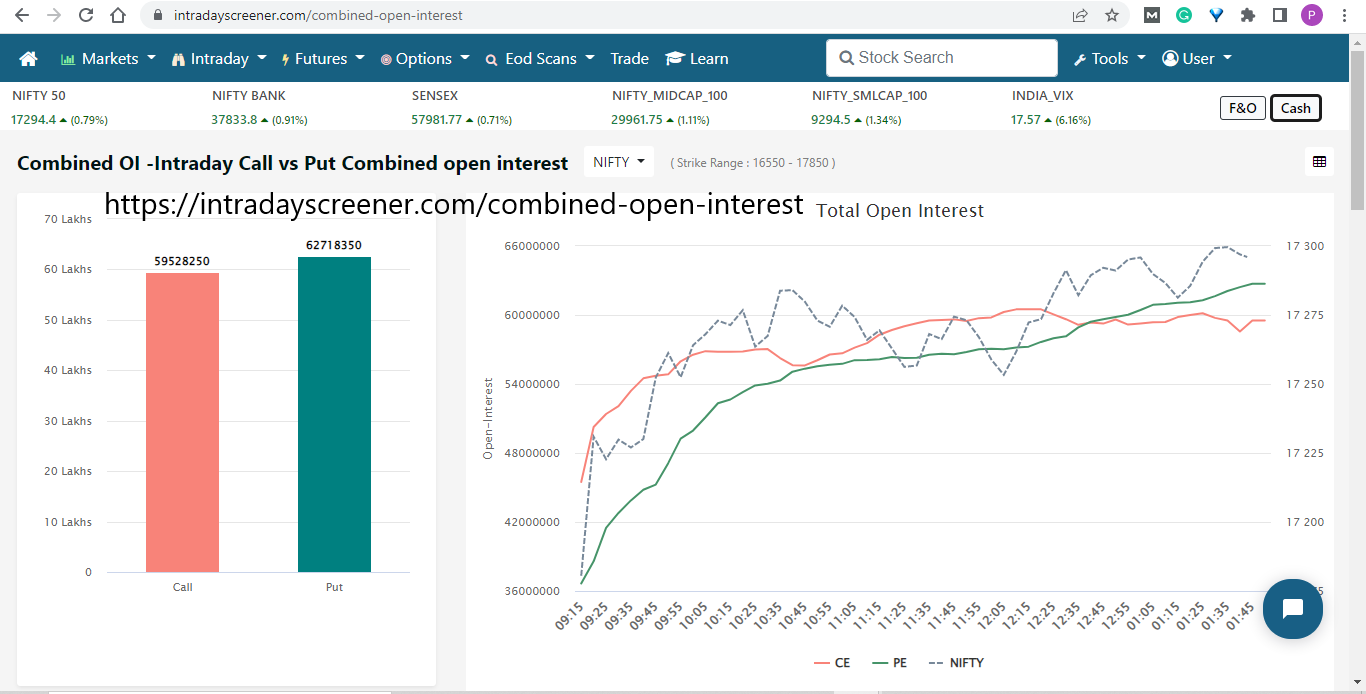
Combined Open interest serves as a proxy for the number of active or open contracts in the market. When new contracts are added, open interest increases, and when contracts are squared off, it decreases.
The total number of CALLs that are still outstanding at each strike price is referred to as "total CALL open interest." The entire number of PUT contracts active at each strike price is referred to as "total PUT open interest."
Uses of Total call OI and Total Put OI
Total call OI and Total Put OI in the Combined open interest feature help in determining the strength of price movements and market sentiment. Market bearishness is indicated if CALL OI exceeds PUT OI because traders write CALL options when they anticipate a decline in the market.
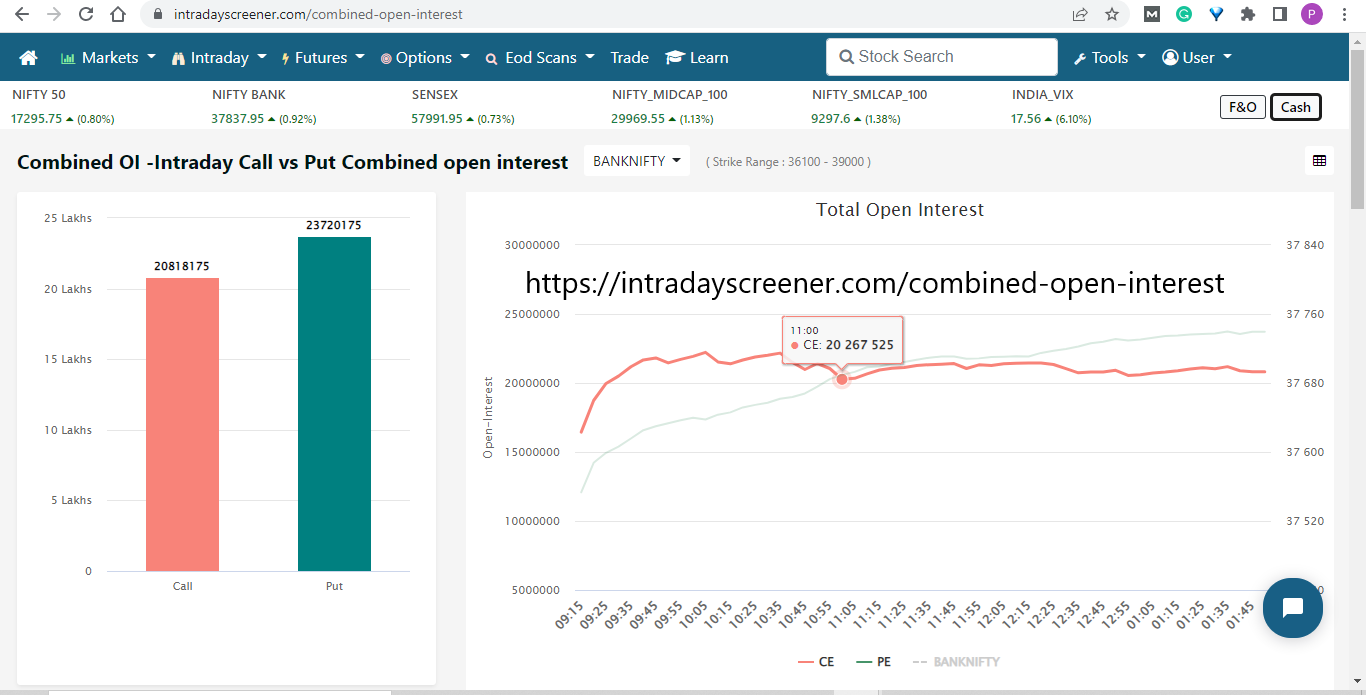
As traders write PUT options when they anticipate the market to rise, if PUT OI is higher than CALL OI, the market is bullish. It helps in trend continuation and prevents erroneous breakouts. You can check Crossover in CALL Option Interest and Put Option Interest. Total call OI and Total Put OI suggest that the trend is becoming stronger.
How to use Combined OI in Intraday Screener?
In the intraday screener select Combine OI. You can able to view both line and bar charts. This feature helps you in trend confirmation and avoiding false breakouts. In the above image at 9:30, AM Nifty OI chart is falling and at the same time, CALL OI increasing and Put OI is decreasing which indicates bearishness, so it is giving further confirmation to the trend to move lower.
For suppose CALL OI decreases and Put OI increases while Nifty is moving lower, then there is a chance of false breakdown and at any time you may see a reversal to the upside. We need to avoid such types of trades.