Biotechnology has become one of the fastest-growing fields in science because it supports innovation across healthcare, agriculture, food production, environmental management, and manufacturing. Industries rely on biotechnology to improve production processes, develop sustainable solutions, and create products that benefit society. Students planning careers in life sciences should understand how biotechnology is applied across different sectors before choosing a degree programme.
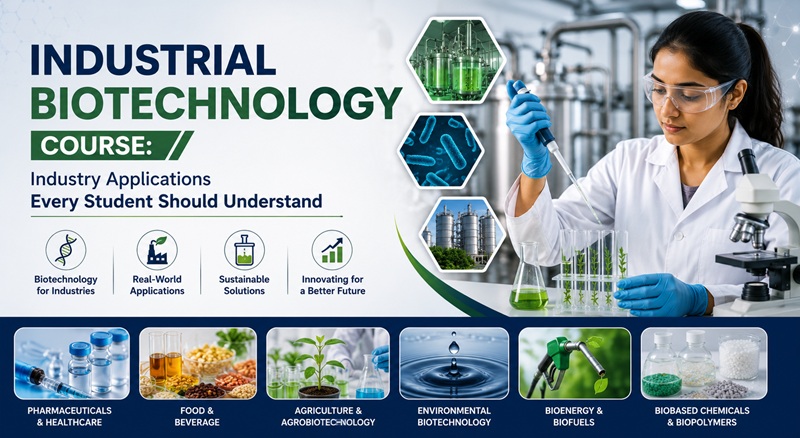
An industrial biotechnology course introduces students to the use of biological systems, microorganisms, and enzymes in industrial production. The programme combines scientific knowledge with laboratory training and practical applications that prepare students for careers in biotechnology industries, research organisations, and advanced academic studies.
What Is Industrial Biotechnology?
Industrial biotechnology applies biological processes to manufacture products in an efficient and sustainable manner. Industries replace traditional chemical methods with biological alternatives because they improve productivity and reduce environmental impact.
Students learn how biological systems support the production of:
- Enzymes
- Vaccines
- Biofuels
- Fermented products
- Pharmaceuticals
- Industrial chemicals
- Biopolymers
Laboratory sessions and research projects help students understand how these technologies move from scientific concepts to commercial applications.
Industry Applications Every Student Should Know
Industrial biotechnology has applications across several major industries.
Healthcare and Pharmaceuticals
Biotechnology supports the development of vaccines, antibiotics, therapeutic proteins, and diagnostic products. Researchers also work on advanced drug delivery systems and biopharmaceutical manufacturing to improve patient care.
Food and Beverage Industry
Food companies use biotechnology to improve food quality, enhance nutritional value, increase shelf life, and develop fermentation-based products. Quality control and food safety also depend on biotechnology techniques.
Agriculture
Modern agriculture uses biotechnology to improve crop productivity, disease resistance, and sustainable farming practices. Scientists also develop environmentally friendly biofertilisers and biopesticides that support agricultural growth.
Environmental Biotechnology
Industries use biotechnology for wastewater treatment, pollution control, waste management, and environmental restoration. Biological solutions help reduce industrial waste while supporting sustainable development.
Bioenergy and Sustainable Manufacturing
Industrial biotechnology contributes to renewable energy through biofuel production and environmentally responsible manufacturing processes. Many organisations continue investing in sustainable technologies that reduce dependence on fossil fuels.
Skills Developed During the Programme
Students gain both scientific knowledge and practical laboratory experience throughout the programme.
Some important skills include:
- Molecular biology techniques
- Microbiology laboratory practices
- Cell culture methods
- Bioprocess technology
- Scientific data analysis
- Research methodology
- Laboratory safety and quality standards
- Scientific communication
These skills prepare graduates for research laboratories, biotechnology companies, pharmaceutical organisations, and higher education.
Why Choose BSc Biotechnology?
A BSc biotechnology programme provides students with a strong foundation in biological sciences, chemistry, genetics, microbiology, and laboratory techniques. Students understand fundamental scientific concepts before progressing into specialised areas such as industrial biotechnology, molecular biology, bioinformatics, and biotechnology research.
The programme also encourages analytical thinking, problem solving, research aptitude, and practical learning through laboratory work and project-based education. These experiences strengthen academic understanding while improving career readiness across multiple biotechnology sectors.
Career Opportunities
Biotechnology graduates have opportunities in both public and private organisations.
Common career options include:
- Biotechnology Analyst
- Research Associate
- Quality Control Executive
- Bioprocess Associate
- Clinical Research Coordinator
- Pharmaceutical Production Executive
- Laboratory Scientist
- Regulatory Affairs Executive
Students also pursue postgraduate education and research careers in specialised biotechnology disciplines.
Conclusion
Industrial biotechnology continues to shape modern healthcare, sustainable manufacturing, agriculture, and environmental management. Students benefit from programmes that combine strong scientific fundamentals with extensive laboratory training and research exposure. Somaiya Vidyavihar University, through the Bachelor of Science in Biotechnology and Master of Science in Industrial Biotechnology offered by the Somaiya School of Basic and Applied Sciences, provides an interdisciplinary curriculum, practical laboratory experience, research opportunities, industry-oriented learning, and experienced faculty. This academic approach helps students build the knowledge and technical skills needed for successful careers in the rapidly growing biotechnology sector.