Globally, the demand for disposable medical devices and equipment is surging due to the increasing number of patients requiring long-term care, surgeries, and drug deliveries. Moreover, the increasing focus on preventing hospital-acquired infections, which are diagnosed in 1 in 31 hospital patients each day in the U.S., as per the CDC, has boosted the demand for various disposable medical devices in multiple healthcare settings. Hence, the enhancements in infection prevention standards are raising the demand for single-use medical products, which ultimately fuels the demand for adhesives.
Another factor that will drive the medical adhesives market to $16,367.2 million by 2030, at a 2.3% CAGR during this decade, is the improving macroeconomic factors and surging health awareness in emerging economies. China, India, and Brazil are witnessing a growth in the GDP, which has resulted in the increasing purchasing power of the citizens. Hence, people in these nations now have more to spend on medicines, medical devices, and pharmaceutical products. Moreover, the rising affordability of healthcare is driving the footfall in medical settings, thereby boosting the demand for the associated adhesives.
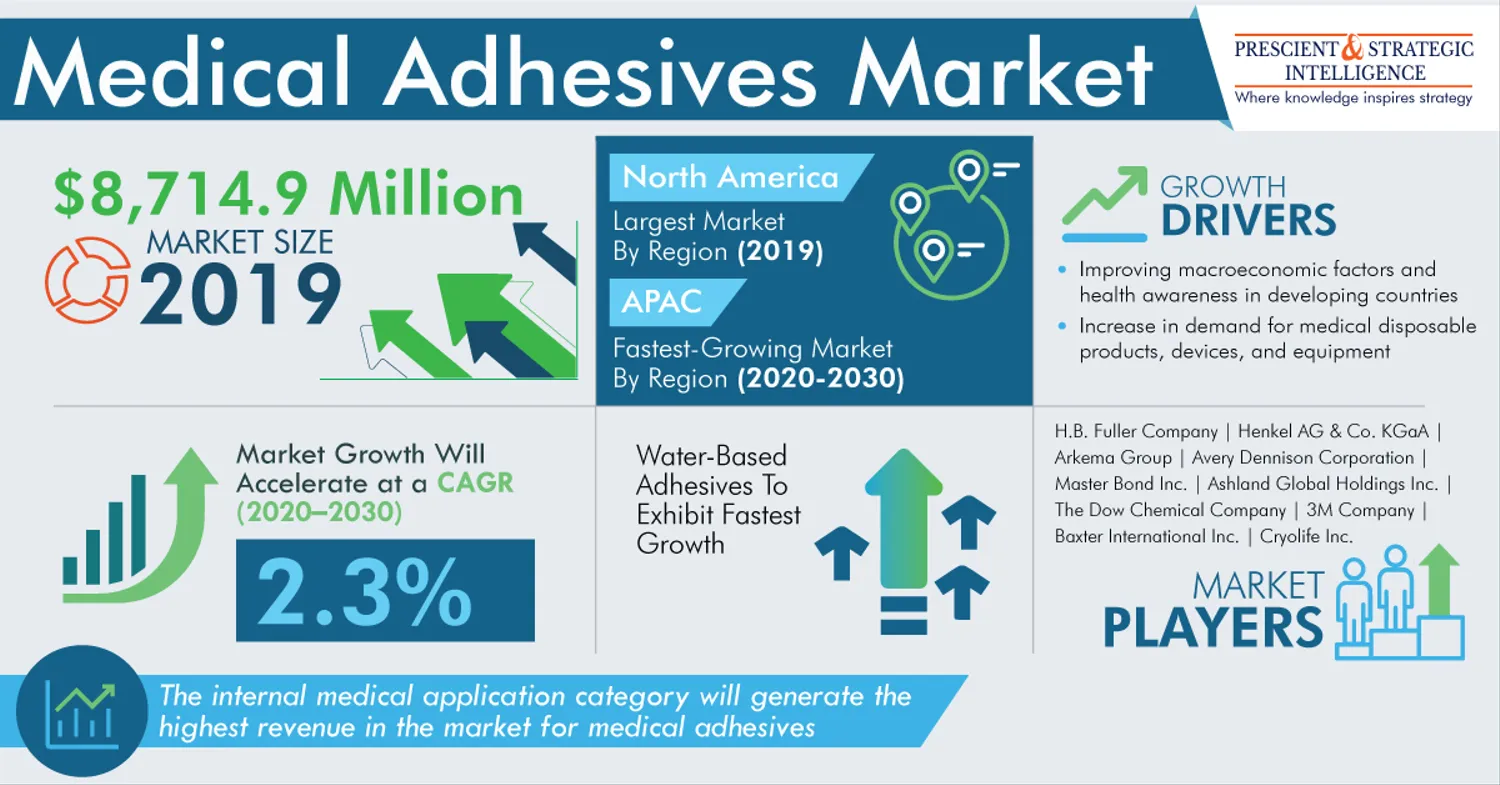
Globally, the Asia-Pacific region is expected to demonstrate a rapid growth in the demand for medical adhesives in the coming years, due to its vast population. Additionally, the rising number of initiatives taken by the government to boost the access to healthcare and surging manufacturing of high-tech medical products are contributing in this regard. Moreover, the booming healthcare spending in the APAC region is propelling the consumption of medical adhesives. All this can be attributed to the rising number of people with chronic and acute diseases and growing surgery volume.
Because of the same reasons, North America held the largest medical adhesives market share in the past. The CDC estimates the annual CVD-related mortality in the U.S. at 659,000, or 1 in 4 deaths. The rising CVD incidence has been driving the volume of various diagnostic and surgical procedures, which is leading to a surging demand for adhesives for medical devices. For instance, the electrodes used for EKG have a gel-like adhesive substance, which affixes the electrode to the skin and senses the electrical pulses inside the body.
Therefore, the growing number of people requiring healthcare is driving the demand for medical adhesives.