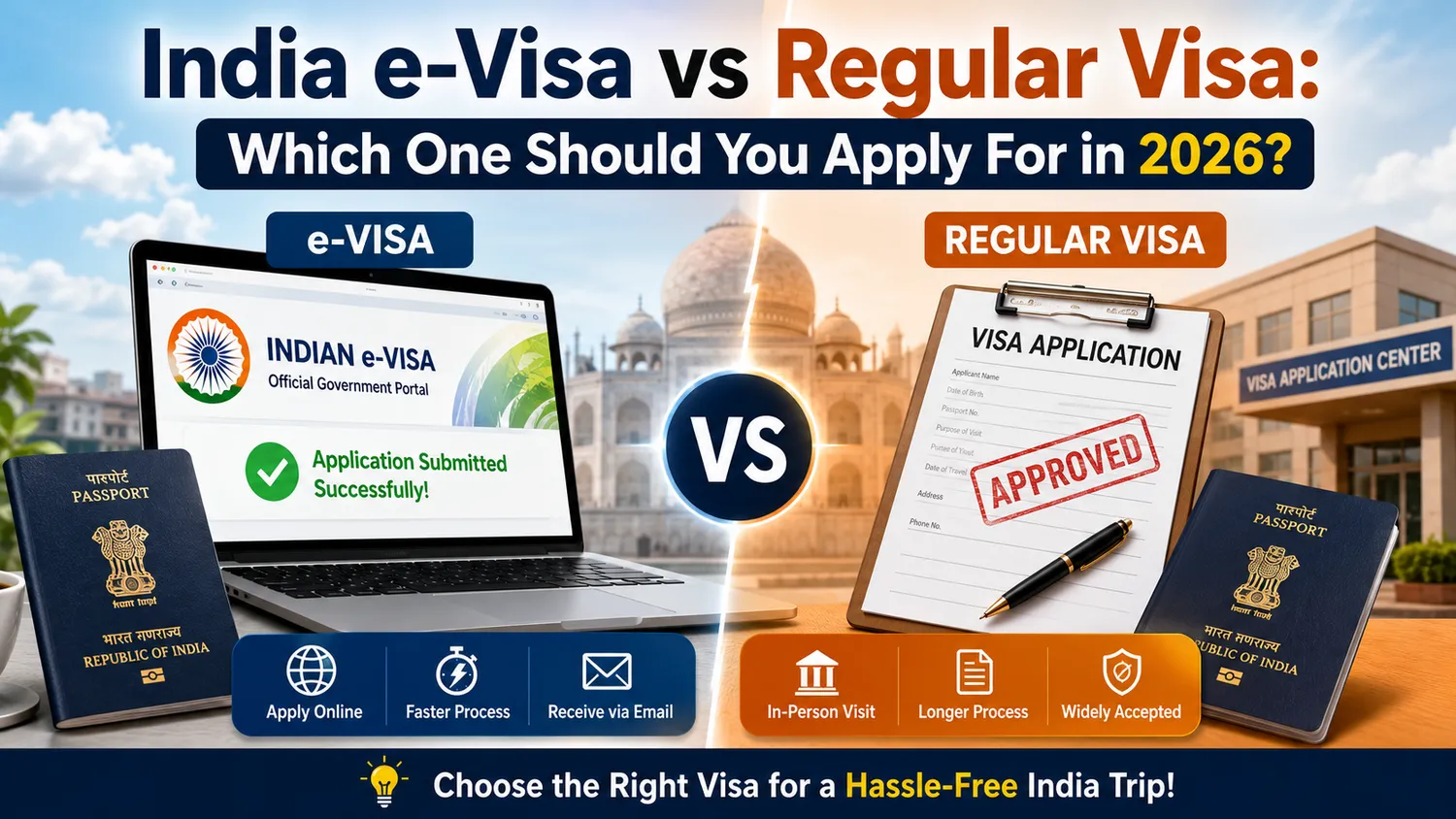
When evaluating the online e-Visa against the traditional Regular Visa for India, many travelers overlook a highly critical logistical constraint: the permitted ports of entry. Choosing the wrong format based on your arrival route can result in being turned away at the border.
A traditional Regular Visa, stamped physically into your passport by a consulate, provides open access. It grants you the legal right to enter India through any authorized immigration check post in the country, including all international airports, domestic hubs, and land border crossings.
The digital e-Visa is much more restricted. The electronic system only permits entry through 30 designated international airports and 6 specific seaports. If you attempt to enter India via a land border crossing from neighboring countries like Nepal or Bhutan using an e-Visa, immigration officers will reject the document, forcing a costly return.
Interestingly, exit rules are identical for both formats; you can leave India from any authorized check post. However, your arrival route must be perfectly synchronized with your visa choice to ensure entry.
Verify that your specific flight or cruise itinerary complies with border entry rules. Read our full breakdown of the India e-Visa vs regular visa restrictions to safeguard your trip.