```html
The quiet power of handmade Vietnam
Most travelers rush past the countryside without realizing that the true soul of Vietnam lives in its craft villages, where hands still shape straw and wood into cultural icons. This journey is not about checking boxes but about witnessing patience, precision, and a way of life that has survived centuries of change. Through Tinny Travel, you step into a living museum where every fold of a conical hat and every dye-soaked incense stick carries a story. The experience transforms passive sightseeing into an intimate dialogue with artisans who treat their work as meditation.
Why the hat village matters
Chuong Village has produced conical hats for over three hundred years, yet its craft faces a quiet crisis. Young people increasingly leave for city jobs, while synthetic hats flood the market at a fraction of the cost. The remaining masters, many in their seventies, work slowly under palm-leaf shelters, their fingers moving with a rhythm that cannot be mechanized. Without visitors who value authenticity, this knowledge could vanish within a generation. When you sit beside an artisan and learn that each hat requires sixteen separate stages of stitching, you begin to understand that what you hold is not an accessory but a tangible piece of heritage.
📷
The incense village offers a different kind of ritual
Quang Phu Cau produces incense sticks dyed in brilliant pink and red, which dry in massive bundles that look like fields of flowers. But the color is merely the surface. The bamboo cores are split by hand, soaked in water, and then rolled in a secret mix of powdered bark and essential oils passed down through families. The scent lingers on your clothes for hours, a fragrant reminder that these sticks will later be burned in pagodas and ancestral altars, connecting the living with the departed. Watching the rhythmic shaking of trays as workers coat each stick is almost hypnotic, yet the process is exhausting and underpaid.
📷
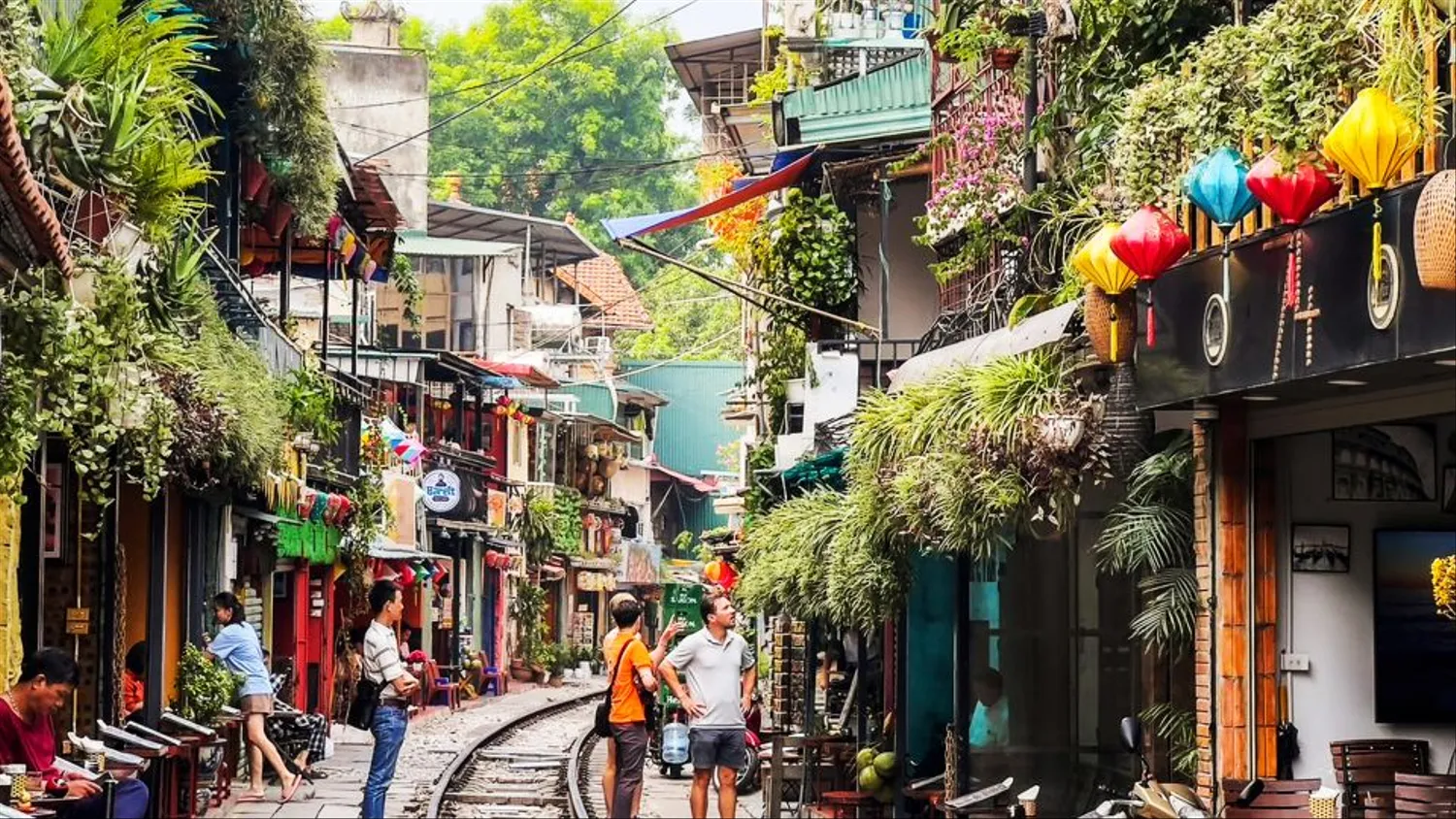
The hidden value of this half-day trip lies in its slow pace. You do not merely observe; you participate. Try splitting a bamboo core under a master's watchful eye, and you will immediately feel the blade biting into your palm. Attempt to wrap a single palm leaf around the wooden mold, and you will appreciate the thousandth hat that comes naturally. These small failures become the greatest teachers, shifting your respect from abstract appreciation to embodied understanding. By the time you reach the train street, where the day ends with coffee as carriages pass inches away, you no longer see Vietnam as a collection of destinations but as a web of skilled hands keeping memory alive.
The itinerary also includes a guide who interprets the subtle language of each craft, explaining why the hat's rim is curved just so for rain protection or why incense wood is chosen for its even burning time. You learn that the dye comes from natural leaves, not chemicals, and that each village's design differs slightly from its neighbors. These details turn a simple outing into an educational expedition. For those who want to go deeper, the full experience is detailed at https://tinnytravel.com/product/incense-village-conical-hat-train-street-half-day/, where schedules and pickup points are explained clearly.
What you take home is not a souvenir
Travel broadens the mind, but craft travel deepens the heart. The hat you buy may crack in a year, and the incense will eventually burn away, yet the image of an old woman humming while stitching her hundredth leaf will remain vivid for decades. That image is the real treasure, and it is available to anyone willing to slow down and look closely.
```
Why your hands remember what your eyes forget
The anxiety of a superficial tour is real. You fear standing idle, watching others work, feeling like an outsider to the very culture you came to admire. You might leave with beautiful pictures but a hollow sense of connection. The standard itinerary often rushes you past the artisan, reducing complex traditions to a mere backdrop for your selfies. This disconnect leaves a lingering question: did you truly experience Vietnam, or just its surface? The pressing need is for active participation, a way to earn the story through your own fingertips, yet typical group tours rarely offer this depth.
The tactile path to understanding
This half-day journey solves that emptiness by placing you at the workbench. In Chuong village, you will not just see palm leaves being stretched; you will learn to layer them over a wooden mold, feeling the tension that creates the iconic lightness. Your guide explains the secret of the bamboo rib and the silk thread, and you will practice the delicate stitching that holds it all together. Hours later, in Quang Phu Cau, you will bundle raw incense sticks, dip them in vibrant dye, and fan them out to dry in massive, sun-drenched circles. This physical engagement embeds the memory deep within your muscle, making the heritage unforgettable. The process demystifies the craft, transforming it from a distant art form into a personal achievement, all while supporting local families directly.
Connecting the artisan to the traveler
The final layer of this experience is the human bond. As you chat with the artisans over a cup of green tea, you hear about their childhood, their grandmothers, and the changing seasons that dictate their work. This is where the journey transcends a mere tour. You are no longer a spectator but a temporary apprentice, carrying forward a piece of their soul. The rich scent of agarwood and the whisper of bamboo will follow you home, a living souvenir that no photograph can replicate. Discover the itinerary that makes this rare connection possible by visiting the detailed page at https://tinnytravel.com/product/incense-village-conical-hat-train-street-half-day/ and prepare to leave with more than you ever imagined bringing back.