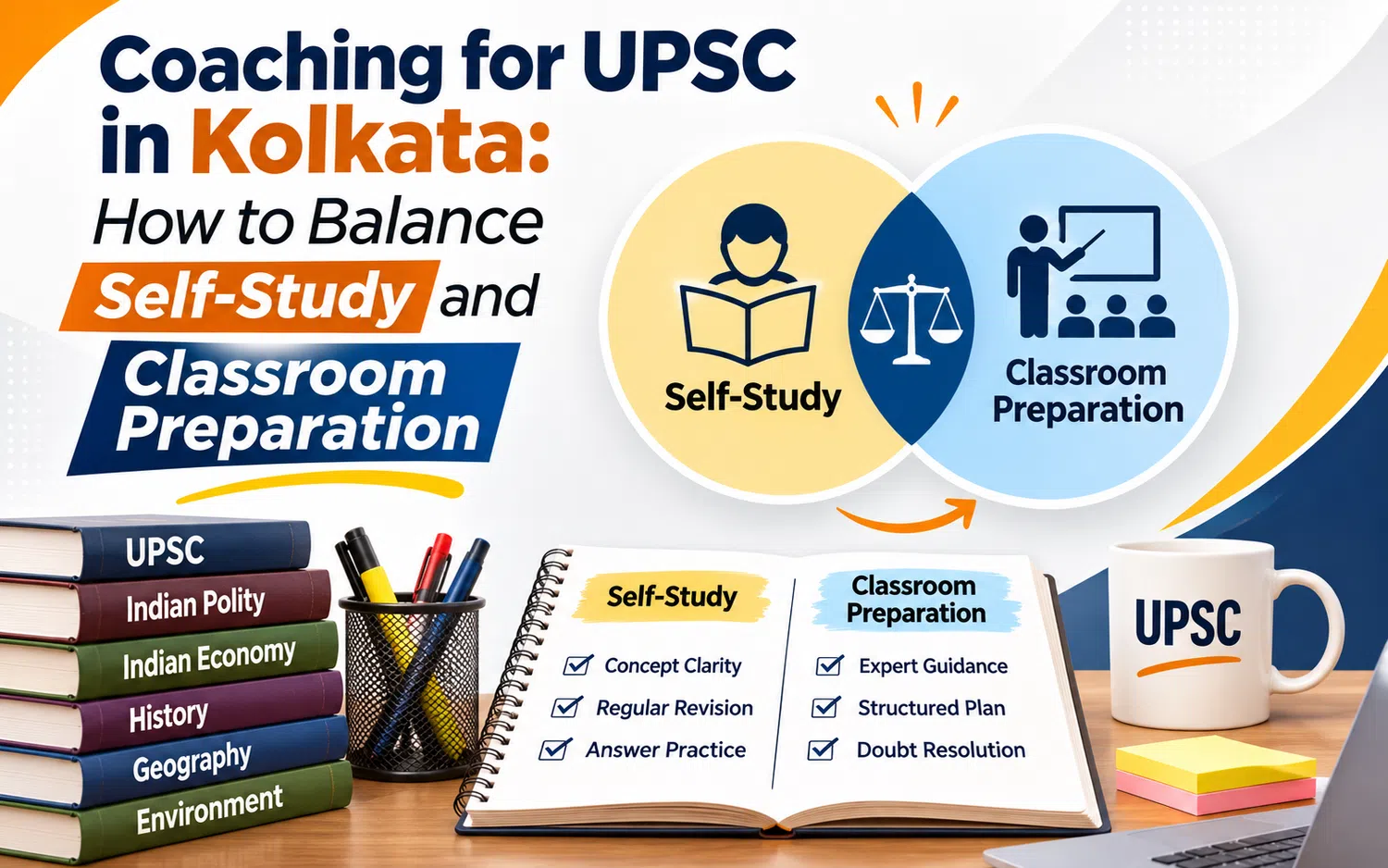
Civil Services preparation requires guided learning and independent effort. Classroom sessions explain difficult concepts, provide a syllabus plan and offer academic guidance. Self-study gives aspirants time to read, revise, practise and develop their own understanding.
Neither method can replace the other. Depending only on classes leaves little time for revision, while studying alone can make doubts harder to resolve. Coaching for UPSC in Kolkata can provide a framework, but students must turn classroom lessons into regular individual study.
Use Classroom Time for Conceptual Clarity
Participate actively in every session. Make concise notes, listen for key concepts and identify topics that need further attention. Focus on understanding rather than writing down every sentence.
Use class time to:
Understand difficult topics and subject connections
Discuss doubts and correct misconceptions
Relate topics to Prelims and Mains requirements
Understand important current-affairs developments
Get direction on books and practice resources
A good class should make later study more focused. Ask about teaching schedules, faculty access and doubt-clearing arrangements. Coaching for UPSC in Kolkata should support learning beyond the lecture itself.
Create a Realistic Daily Self-Study Routine
Self-study turns classroom knowledge into lasting understanding. Set aside regular time for standard books, class-note revision, current affairs and question practice. Build a timetable around your available hours and preparation level rather than copying another aspirant’s routine.
Divide the day into manageable blocks. Give demanding subjects your most focused hours and include short breaks. Set a few daily priorities, but leave room for revision and unexpected tasks. At the end of each week, review progress and adjust the plan where necessary. Coaching for UPSC in Kolkata should leave enough time for this independent routine.
Connect Classroom Notes with Independent Reading
Class notes should guide reading, not replace it. After a lecture, revisit the topic using recommended books or reliable reference material. Add essential definitions, examples, constitutional provisions or data to your notes.
This prevents the collection of disconnected information. It also helps you understand topics from different perspectives. Connect current affairs with static subjects: a policy announcement, for example, may relate to governance, the economy or social justice.
Students enrolled in Coaching for UPSC in Kolkata should review class topics on the same day or the next day. Timely revision strengthens memory and makes it easier to identify doubts while the lesson is fresh.
Balance Prelims Practice and Mains Answer Writing
Prelims and Mains require different forms of practice. For Prelims, solve objective questions and analyse why each option is right or wrong. This improves understanding, accuracy and question selection.
For Mains, practise within the expected time and word limit. Focus on the question’s demand, logical organisation and relevant examples. Begin with a few answers each week and increase practice as your knowledge develops.
Classroom guidance can introduce techniques, but improvement comes through independent practice and review. Use test feedback to identify recurring mistakes. Assess progress through accuracy, clarity and time management, not marks alone.
Make Revision a Shared Responsibility
Rather than waiting until the entire syllabus is finished, make revision a continuous habit. Review each class topic briefly, revisit important concepts at the end of the week and test your recall without looking at notes. Monthly revision can connect related subjects.
Use concise summaries or topic lists if they suit your learning style. Track subjects that need another review. A revision calendar helps prevent older topics from being forgotten as you move forward.
A structured Coaching for UPSC in Kolkata programme may offer revision sessions and tests, but students should maintain a personal revision schedule too. Independent recall reveals what you genuinely remember.
Avoid Common Time-Management Mistakes
A common mistake is treating attendance as completed study. A lecture explains a topic, but reading and revision are still necessary. Another is collecting too many books and online resources without completing them.
Keep resources limited and follow a consistent plan. Avoid comparing your progress with others because starting points and schedules differ. If you fall behind, identify why and reset weekly targets instead of abandoning the routine.
IMPULSE IAS promotes a structured, preparation-focused approach to civil services learning. Understand the course plan and available support, then combine them with disciplined independent study. Compare how each Coaching for UPSC in Kolkata option balances classes with personal study time.
Conclusion
Balancing classroom preparation and self-study is essential for an effective UPSC strategy. Classes provide explanation and direction, while independent work builds understanding through reading, revision and practice.
Choose Coaching for UPSC in Kolkata that supports clear learning goals, doubt resolution and meaningful assessment. Make the most of every class, revise promptly and protect time for self-study. Realistic planning and consistent effort help aspirants use both methods effectively as they prepare for the Civil Services Examination.