The Civil Services Examination covers many subjects, and aspirants must retain information over an extended period. Completing the syllabus once does not guarantee recall during the examination. Regular revision strengthens memory, connects topics and identifies gaps.
Beginners often prioritise new material and postpone revision. This creates pressure near the examination. Best IAS Coaching Centres in Kolkata can help by making revision part of preparation from the beginning.
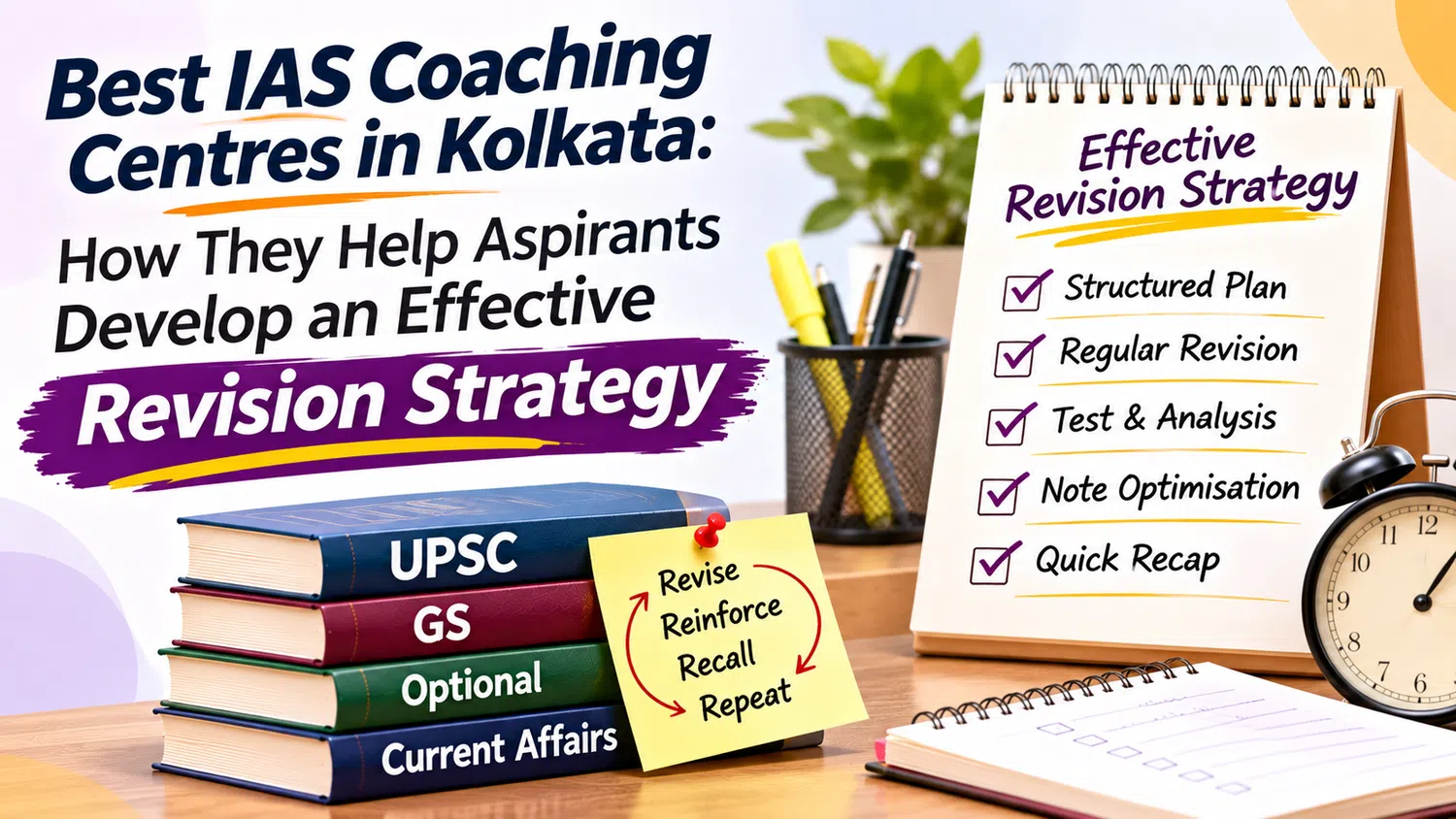
Creating a Structured Revision Timetable
A useful revision strategy needs a realistic timetable. Divide the syllabus into manageable sections and balance new learning with revision, practice questions and answer writing. Faculty can help set weekly and monthly targets. A practical plan may include: IMPULSE IAS can reinforce this approach by helping learners organise their preparation from the outset.
Coaching faculty can help students set weekly and monthly targets based on the syllabus and their current level of preparation. A practical timetable may include:
Revising recently completed classroom topics at the end of each week.
Reviewing important concepts and notes at regular intervals.
Allocating separate sessions for static subjects and current affairs.
Attempting topic-wise questions after completing each revision cycle.
Keeping time for mock tests and analysis of mistakes.
Best IAS Coaching Centres in Kolkata can help students follow a consistent routine while adjusting targets when a subject requires additional attention.
Prioritising Important Topics Without Ignoring the Syllabus
Previous years' papers help aspirants understand recurring themes and question styles. However, focusing only on frequently asked topics can leave gaps.
Teachers can identify foundational concepts and connect topics across subjects. For example, federalism links constitutional provisions, centre-state relations, current affairs and governance. Revising themes together builds broader understanding. The Best IAS Coaching Centres in Kolkata should make these connections clear to beginners.
A balanced strategy gives priority to core concepts while ensuring that the entire syllabus receives appropriate attention.
Using Short Notes and Revision Materials Effectively
Concise notes make revision easier. Summarise key facts, definitions, constitutional articles, examples and data instead of rewriting entire chapters. Keep notes clear enough for quick recall.
Mind maps, timelines, tables and flowcharts help explain sequences and relationships. Current-affairs notes should connect events with static syllabus topics.
Best IAS Coaching Centres in Kolkata can guide note-making, but students should create their own materials to improve understanding.
Combining Revision with Mock Tests
Test what you remember through topic quizzes and full-length Prelims mocks. These reveal forgotten facts, conceptual confusion and time-management issues. Review every mistake to understand its cause.
For Mains, practise writing answers after revising a topic. Review relevance, structure, examples and time management. Record recurring errors and revisit them in the next cycle.
Coaching support is valuable when tests are followed by detailed explanations and practical suggestions. Aspirants should record recurring mistakes and revisit those areas during the next revision cycle.
Connecting Current Affairs with Static Subjects
Current affairs should connect with static subjects. A Supreme Court judgment may relate to constitutional provisions and fundamental rights, while environmental news may link to ecology and government policy.
Teachers can demonstrate these connections through classroom discussions and topic-based revision exercises. Students can organise current-affairs notes under syllabus headings so that relevant examples are easy to recall during Prelims and Mains.
Best IAS Coaching Centres in Kolkata can encourage this integrated approach, helping aspirants understand issues rather than memorise isolated headlines.
Tracking Progress and Addressing Weak Areas
A revision plan should change as preparation develops. Periodic assessments reveal which subjects need more attention and prevent weak areas from being overlooked.
Track topics revised, test performance, common errors and upcoming review dates. Mentors can use this record to suggest focused practice. Adjust missed targets realistically rather than abandoning the plan.
An effective strategy remains flexible. If a target is missed, students should adjust the schedule realistically rather than abandon the plan.
Building Consistency and Avoiding Revision Fatigue
Long study hours do not always produce better retention. Revision sessions should have clear objectives and manageable durations. Short breaks, adequate sleep and a balanced routine support concentration and help students maintain consistency.
Alternate reading, active recall, practice questions and answer writing. Reproducing key points without looking at notes helps reveal whether a topic is understood.
Regular, focused sessions are generally more sustainable than attempting to revise an entire subject in one sitting just before a test.
Conclusion
An effective revision strategy combines a realistic timetable, concise notes, syllabus-based priorities, mock tests, current-affairs integration and progress reviews. Best IAS Coaching Centres in Kolkatacan support these habits through guidance, assessment and feedback. Results depend on consistent self-study and honest evaluation. Regular revision strengthens recall, builds confidence and helps aspirants approach the Civil Services Examination with better organisation. Aspirants choosing among Best IAS Coaching Centres in Kolkata should also ask how revision progress is monitored.