Pharmacies play an essential role in healthcare, and pharmacy technicians help keep many daily operations organized and accurate. They may assist pharmacists with preparing medications, managing prescriptions, maintaining inventory, communicating with patients, and completing important pharmacy-related tasks. For people who are interested in healthcare and want a practical career path, the right pharmacy technician training can provide a strong foundation of knowledge and professional skills.
Pharmacy technicians can work in community pharmacies, hospitals, long-term care facilities, mail-order pharmacies, and other healthcare environments. Their responsibilities can vary according to the workplace, state regulations, employer policies, and level of training. Because medication-related work requires accuracy and careful attention to detail, quality education is an important part of preparing for this profession.
What Does a Pharmacy Technician Do?
A pharmacy technician works under the direction and supervision of a licensed pharmacist, with responsibilities determined by applicable laws and workplace policies. Depending on the setting, common duties may include:
Receiving and processing prescription information
Preparing medication orders for pharmacist review
Measuring or counting medications when permitted
Labeling medication containers according to established procedures
Organizing pharmacy inventory
Checking expiration dates and maintaining supplies
Entering information into pharmacy computer systems
Communicating with patients about routine pharmacy matters
Supporting pharmacists with day-to-day workflow
Accuracy is especially important in this role. Pharmacy technicians must follow established procedures and understand when a question or concern should be referred to the pharmacist.
Why Is Pharmacy Technician Training Important?
Working in a pharmacy involves more than learning medication names. Students need to understand terminology, calculations, prescription processing, safety practices, inventory procedures, and professional responsibilities.
A structured pharmacy technician program can help learners develop foundational knowledge before pursuing employment or additional credentials. Training may also help students understand how pharmacy teams operate and why careful procedures are important when handling medication-related information and products.
For beginners, organized education can make complex subjects easier to understand. Instead of trying to learn everything independently, students can follow a structured curriculum and gradually build their knowledge.
What Can You Learn in a Pharmacy Technician Program?
A comprehensive program may cover several subjects relevant to pharmacy technician responsibilities.
Pharmacy Terminology
Students can become familiar with commonly used pharmacy and healthcare terms. Understanding terminology supports clearer communication within a pharmacy team.
Medication and Dosage Fundamentals
Learners may study basic medication concepts and dosage-related principles. Accuracy is essential, and students should understand that pharmacists remain responsible for professional clinical decisions.
Prescription Processing
Training can introduce learners to the general process of receiving, entering, preparing, and organizing prescription information while following applicable procedures.
Pharmacy Calculations
Basic mathematical skills can be important for pharmacy technicians. Training may cover calculations commonly encountered in pharmacy environments, depending on the curriculum and applicable requirements.
Inventory Management
Pharmacies need organized inventory systems. Students may learn about receiving supplies, tracking stock, checking expiration dates, and maintaining an orderly workspace.
Patient Communication and Safety
Pharmacy technicians often interact directly with patients. Professional communication, privacy awareness, attention to detail, and knowing when to refer questions to the pharmacist are important workplace skills.
How to Choose Pharmacy Technician Training
Choosing an educational program deserves careful consideration. Before enrolling, prospective students should review:
Course curriculum and learning objectives
Training format and schedule
Topics included in the program
Instructor qualifications and educational resources
Student support options
Certification requirements in the intended state or location
Employer expectations for pharmacy technician positions
Whether hands-on experience or additional requirements apply
Students should also check current requirements with the appropriate state board of pharmacy and relevant certification organizations. Requirements can differ by location and may change over time.
Build Your Healthcare Knowledge with ImmerseLearn
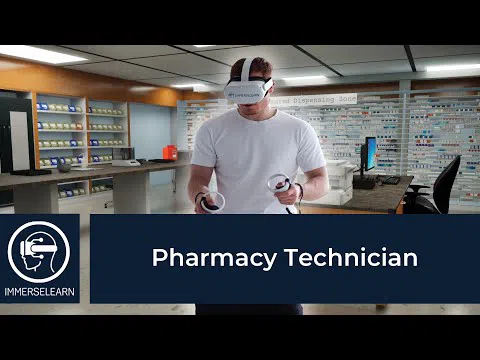
ImmerseLearn offers career-focused healthcare education designed to help learners explore practical professional pathways. Its pharmacy technician program can be considered by individuals who want to develop foundational knowledge related to pharmacy operations and technician responsibilities.
Before choosing any program, take time to understand what the course covers and compare its learning objectives with your career goals. A thoughtful approach can help you select education that matches your needs rather than choosing solely because of a course title.
Pharmacy technicians can become an important part of a healthcare team by supporting pharmacists and helping pharmacy operations run smoothly. Developing strong knowledge, accuracy, communication skills, and a commitment to safe procedures can provide a valuable foundation for future opportunities. For motivated learners, starting with structured education can be an effective step toward exploring a career in the pharmacy field.