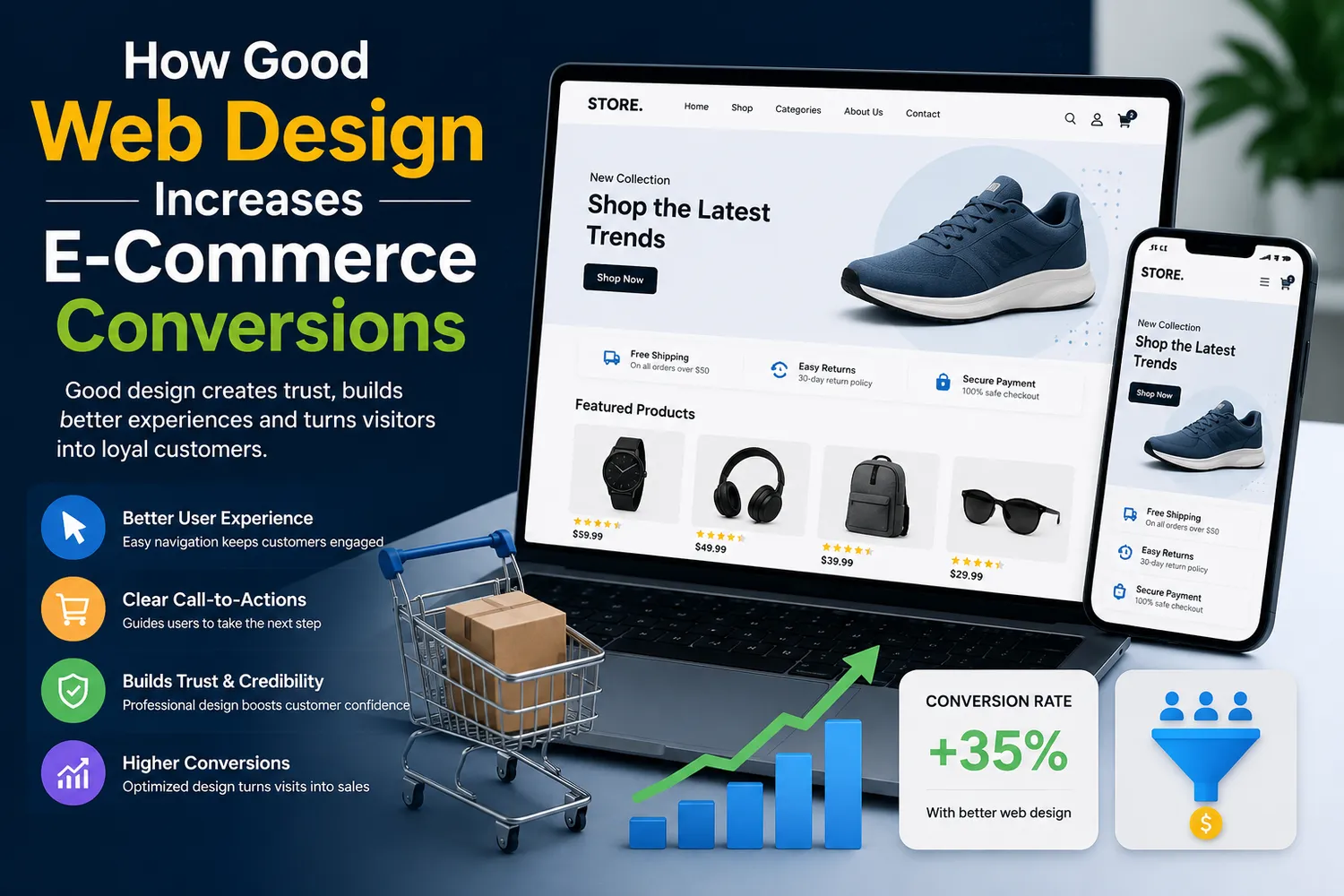
Why First Impressions Matter in E-Commerce
The first five seconds on an online store decide more than most businesses realize. Visitors instantly judge whether the site feels trustworthy, modern, and easy to use. If the homepage looks cluttered or outdated, people assume the business itself is unreliable.
A clean homepage with organized spacing, readable typography, and clear product categories performs far better than a homepage overloaded with sliders, animations, and competing banners.
How Website Design Influences Buying Decisions
Customers rarely buy products based on logic alone. Design influences how people feel while browsing, and those emotions shape buying decisions.
Strong e-commerce web design guides users naturally toward action without making the experience feel forced. Product placement, spacing, button visibility, and visual hierarchy all play a role in encouraging purchases.
Clear pricing
Large product images
Visible reviews
Strong call-to-action buttons
The Role of User Experience in E-Commerce Conversions
User experience inside ecommerce stores is not abstract. It is practical. It means how easily someone can search for products, compare options, and complete checkout using one hand on a phone while commuting.
Strong e-commerce web design removes obstacles from the buying journey. Navigation should feel obvious. Product filters should work smoothly. Search functions should return accurate results quickly.
A customer should not need multiple clicks to:
- Find product categories
- View shipping information
- Check product availability
Why Mobile-Friendly E-Commerce Design Is Essential
Most ecommerce traffic now comes from mobile devices. Yet many online stores are still designed desktop-first, then awkwardly compressed for smaller screens afterward.
Mobile-friendly e-commerce web design focuses on thumb-friendly navigation, fast-loading product pages, and simplified checkout experiences. Buttons should be large enough to tap comfortably. Product images should scale properly without breaking layouts. Menus should open instantly without lag.
How Fast Website Speed Improves Online Sales
Speed affects ecommerce revenue more than most businesses realize.
A one-second delay during checkout can reduce conversions significantly because customers become uncertain when pages hesitate to load. This is especially true during payment processing. People interpret slow loading as a security risk, even if the issue is simply poor optimization.
One overlooked issue in Shopify and WooCommerce stores is app overload. Businesses install multiple marketing apps, review widgets, popup systems, and tracking tools until the frontend becomes overloaded with scripts.
Product Page Design Best Practices
Product pages are where conversions happen. Every design choice on these pages affects whether customers continue toward checkout or leave the site.
High-performing product pages usually include:
- Large high-quality product images
- Zoom functionality
- Clear product titles
- Short scannable descriptions
- Visible pricing
- Stock availability
- Customer reviews
- Delivery estimates
- Simple CTA buttons
Trust Signals That Increase E-Commerce Sales
Customers are constantly evaluating whether an online store feels legitimate before entering payment details. Good e-commerce web design reinforces trust visually and structurally across the entire site.
SSL certificates
Secure payment icons
Real contact information
Common E-Commerce Web Design Mistakes That Hurt Conversions
Many online stores lose customers because of simple design mistakes that make shopping frustrating. Slow-loading pages, cluttered layouts, confusing navigation, aggressive popups, and complicated checkout processes often push users away before they complete a purchase.
Poor mobile responsiveness is another major issue, especially when buttons are hard to tap or product pages break on smaller screens.
Weak product images, unclear calls-to-action, and forcing users to create accounts before checkout also reduce trust and increase cart abandonment. Good e-commerce web design removes these obstacles and creates a smoother buying experience that helps improve conversions naturally.
How Good Web Design Supports Long-Term Business Growth
Strong e-commerce web design does more than increase short-term sales. It builds customer trust, repeat purchases, and long-term brand loyalty
Organic SEO visibility
Customer retention
Paid ad performance
Mobile conversions
Brand credibility
When customers can browse smoothly, trust the checkout process, and complete purchases without frustration, the website becomes a revenue-generating asset instead of a constant source of lost opportunities.