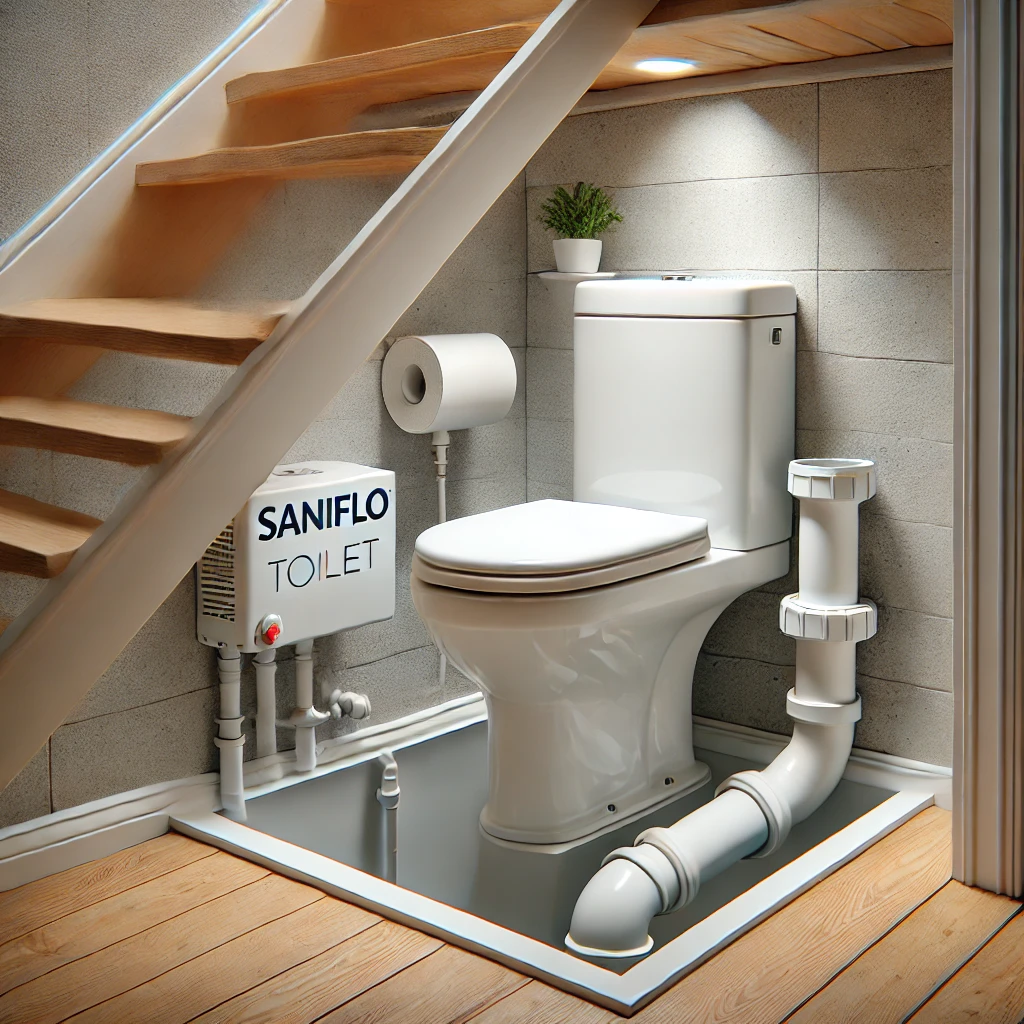
Utilizing every inch of available space in a home can be a game-changer, especially when it comes to installing an additional bathroom. One of the most effective ways to do this is by fitting a Saniflo toilet under the stairs. Since traditional plumbing may not always be an option, a water pump helps ensure smooth waste disposal. In this guide, we’ll go over the benefits of a Saniflo toilet, the steps to install it under a staircase, and essential factors to consider.
Why Install a Saniflo Toilet Under the Stairs?
A Saniflo toilet is a macerating system that grinds waste and pumps it through a small-diameter pipe to the main drainage line. This innovative solution allows homeowners to install a toilet in spaces where conventional gravity-based plumbing would be difficult or costly. The compact design and flexibility make it ideal for under-the-stairs installations.
Key Benefits
- Space Optimization: Makes use of an area that is often underutilized.
- Minimal Plumbing Work: Avoids the need for major drainage modifications.
- Flexible Placement: Can be installed at a distance from the main sewage line.
- Quick and Easy Installation: Requires fewer resources compared to traditional toilets.
Important Considerations Before Installation
Before setting up a Saniflo toilet under stairs, here are some crucial aspects to keep in mind:
- Space Availability: Make sure the area under the stairs has sufficient headroom and accessibility.
- Ventilation: Proper airflow is necessary to prevent moisture buildup and odors.
- Electrical Supply: The macerator and water pump need a reliable power source to function.
- Drainage Connection: Ensure an easy route for waste disposal to the main sewage system.
- Water Supply: Confirm a consistent water connection for flushing.
Step-by-Step Guide to Installing a Saniflo Toilet Under Stairs
Step 1: Gather Necessary Tools and Materials
Before starting, you will need the following:
- A Saniflo macerating toilet system
- Water supply pipes
- PVC pipes for drainage
- A water pump (if needed for additional pressure)
- Electrical wiring and outlets
- Pipe sealant, wrench, drill, and saw
Step 2: Position the Toilet
- Choose a suitable spot under the stairs with enough room for comfortable use.
- Leave space around the unit for maintenance access.
Step 3: Install the Macerator Unit
- Attach the macerator behind the toilet.
- Connect the discharge pipe to the main drainage line using small-diameter PVC piping.
- Secure all connections with clamps and sealants to prevent leaks.
Step 4: Set Up the Water Pump (If Required)
- If the waste needs to be transported over a longer distance or uphill, a water pump can be installed.
- Connect it to the macerator outlet for effective waste removal.
Step 5: Connect the Water Supply
- Attach the water supply line to the toilet’s inlet.
- Install a shut-off valve to control water flow when necessary.
Step 6: Wire the Electrical Components
- Plug the Saniflo macerator into an electrical outlet.
- If using a water pump, ensure it has a stable power connection.
Step 7: Test the System
- Flush the toilet multiple times to check for leaks or blockages.
- Listen for proper activation of the macerator and water pump.
- Confirm that waste is being efficiently pumped to the drainage system.
Maintenance Tips for Long-Term Efficiency
To ensure your Saniflo toilet functions optimally:
- Use macerator-friendly cleaning agents to prevent buildup.
- Avoid flushing non-degradable materials like wipes or sanitary products.
- Inspect the unit regularly for any signs of leaks or unusual noises.
- Clean the macerator system periodically to prevent clogs and ensure smooth operation.
Conclusion
installing toilet under stairs a practical way to add a bathroom without requiring extensive plumbing work. With the help of a water pump, waste can be effectively transported, making this setup suitable for unconventional spaces. By following the installation steps and maintaining the system properly, homeowners can enjoy a functional and efficient additional bathroom.