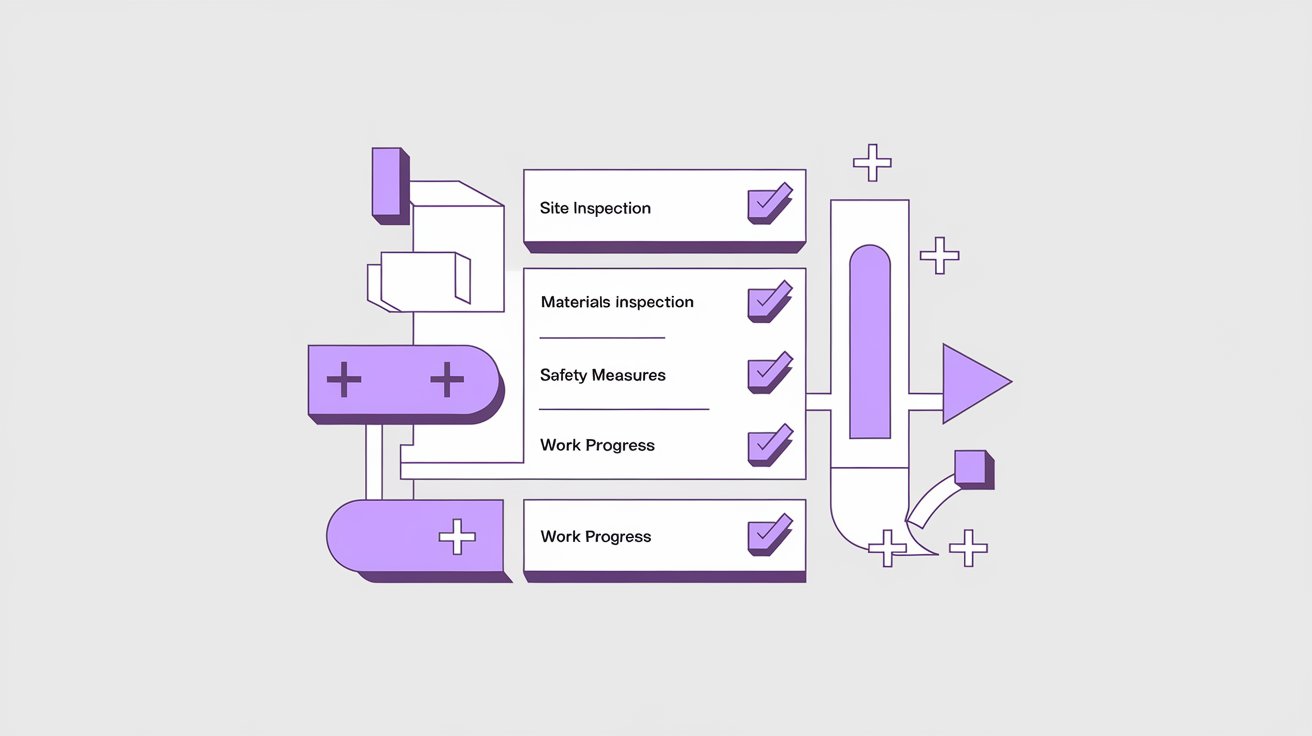
Intricate, multi-stage, and dependent construction projects necessitate constant oversight. For safety, longevity, and structural integrity in the long run, it is critical to ensure quality at every stage. Construction managers and teams can benefit greatly from using a well-organized quality control checklist. It allows them to see possible problems early on, stay in line with industry standards, and provide outstanding outcomes. To help you expedite inspections and achieve superior outcomes across all of your projects, this article presents a comprehensive quality control checklist.
Getting Things Started: Making Sure Everything Is Ready for Construction
A building project's success starts way before the first brick is placed. In order to prevent expensive errors during construction, pre-construction quality control places an emphasis on planning and preparation.
Firstly, ensure that the site conditions align with the design specifications. To determine the stability of the soil, the state of the topography, and the best ways to access equipment and supplies, it is necessary to conduct thorough surveys. Foundation issues could jeopardize the overall structure if the site analysis is inconsistent.
Material approval is another crucial checkpoint at this stage. The project must use steel, cement, and aggregates that meet all applicable codes. Before construction starts, it is helpful to study the design plans, permits, and compliance documents thoroughly to find any mistakes or missing information.
By removing potential problems at an early stage, this step prepares the way for quality control and lessens the possibility of further structural failures or rework.
The Groundwork Stage: Establishing a Solid Base
In architectural terms, the foundation is the very core of a building. The building's ability to resist loads, environmental conditions, and the passage of time is checked during this phase of quality control.
Preventing uneven settlement requires proper soil compaction. The foundation might be undermined by soil that has any imperfections or holes in it when compacted. Reinforcement checks also make sure the steel bars or mesh are properly positioned, lined up, and secured tightly; otherwise, the foundation's structural stability could be jeopardized.
Accuracy is paramount when dealing with concrete. Consistency in concrete quality, from mix proportions to curing procedures, helps prevent cracks or deformities. Concrete is ensured to meet the required load-bearing capability through regular strength testing.
If thorough inspections are not performed during this phase, construction defects could go undetected until later phases, when they are much more difficult to fix.
Discover How We Simplify App Development: https://axonator.com/request-for-demo/
Constructing the Foundation
Building on top of a solid foundation is the next step. Formwork, columns, beams, and slabs—the building blocks of a sturdy framework—are constructed during this stage.
As part of quality control measures for structural construction, formwork installation must be closely monitored to guarantee accurate dimensions and alignment. A small mistake in this area can cause the entire framework to malfunction.
Strict supervision is also required when pouring concrete. Surface flaws or lower strength can be prevented by following proper curing processes. Beams and slabs, which hold the weight of the building and any external loads like wind or seismic pressures, must be inspected to ensure they are capable of withstanding these stresses.
Consistent and precise structural work yields a long-lasting core that supports the structure as a whole.
Paying Close Attention to Detail in Masonry and Finishing
Masonry and plastering are the structural elements that move the project closer to completion. But these steps can bring noticeable defects that affect the look and longevity if quality control isn't in place.
To guarantee adequate bonding and load distribution, masonry work must adhere to specific standards, such as wall alignment, mortar strength, and joint thickness. Cracks, water seepage, or even collapse under pressure are all symptoms of a poorly built wall.
Paying close attention to detail is also necessary when plastering. To get a polished appearance, surfaces should be completely flat, crack-free, and adequately cured. Teams can save time and effort by using a quality control checklist to find problems early on.
Installing Electrical and Plumbing Systems: Making Sure They Work
The utility systems of a structure are indispensable. To guarantee safety and performance, quality control must be exercised meticulously during electrical and plumbing installations.
Verify that the wiring layouts adhere to the design standards before beginning any electrical work. All insulation, fixtures, and connections must meet the necessary codes to prevent fire or short circuit risks. Testing the voltage capacity and system performance is crucial prior to installation.
In plumbing quality control, the emphasis is on making sure all of the pipes, valves, and fittings are properly aligned and connected. Finding potential weak points that could lead to water damage later on is why leak tests are so important. Making sure the building's utility systems work properly without endangering occupants or the building's beauty is the job of a thorough checklist.
The Last Steps: Flooring, Painting, and Handover Inspections
At this last stage before project completion, quality control is of the utmost importance for both the project's aesthetics and its functionality. Checking the installation of flooring, whether it be wood, stones, or tiles, is essential to ensure quality, levelness, and alignment. Inadequately laid materials or flooring can lead to slips, trips, and falls as well as premature wear and tear.
Checking for flaws, uneven coverage, and consistency is essential when it comes to painting and finishing touches. The general impression of quality is susceptible to errors at this point.
Lastly, make sure you walk through the entire project thoroughly. To avoid missing anything important, double-check everything on the quality control checklist. By doing so, we may find any small problems that need fixing before handing over the project, ensuring that both the client and the project are happy.
About Axonator Inc.:
At Axonator, our vision is simple yet powerful: to enable the world on mobile. We envision a future where every aspect of business and society is seamlessly connected through mobile devices. Our mission is to empower businesses worldwide to leverage the full potential of mobile technology, transforming the way they operate, communicate, and collaborate.
Contact:
Axonator Inc. (The World On Mobile)
Austin, TX, USA
USA: +1-716-274-8885
India: +91-8600-032-635
Email: support@axonator.com
Website: https://axonator.com/