Parents play one of the most powerful roles in shaping a child’s confidence and creativity. Long before children encounter teachers, classmates, or society, they learn how to see themselves through their parents’ words, reactions, and emotional responses. Confidence and creativity do not develop in isolation; they grow from daily interactions that teach children whether their ideas matter, whether mistakes are safe, and whether curiosity is welcomed or discouraged.
A confident and creative child is not necessarily louder, more talented, or more outgoing. Rather, they are children who feel secure enough to try, explore, express ideas, and trust their inner voice. Parents influence this inner confidence every day—sometimes without realizing it—through how they respond to questions, handle emotions, and support independence. Understanding this influence helps parents create environments where confidence and creativity can thrive naturally.
Understanding Confidence and Creativity in Childhood
Confidence in childhood refers to a child’s belief in their ability to handle challenges, express themselves, and try new things. It is not arrogance or fearlessness, but a quiet trust in oneself. Creativity, on the other hand, is the ability to think flexibly, imagine possibilities, and approach problems with originality. To explore deeper insights on how these qualities develop together, read more here. These two qualities are deeply connected.
Creative children often require confidence to express ideas that may be different or unconventional. At the same time, creative expression strengthens confidence by allowing children to see the value of their own thinking. Parents influence both by shaping how safe children feel expressing who they are.
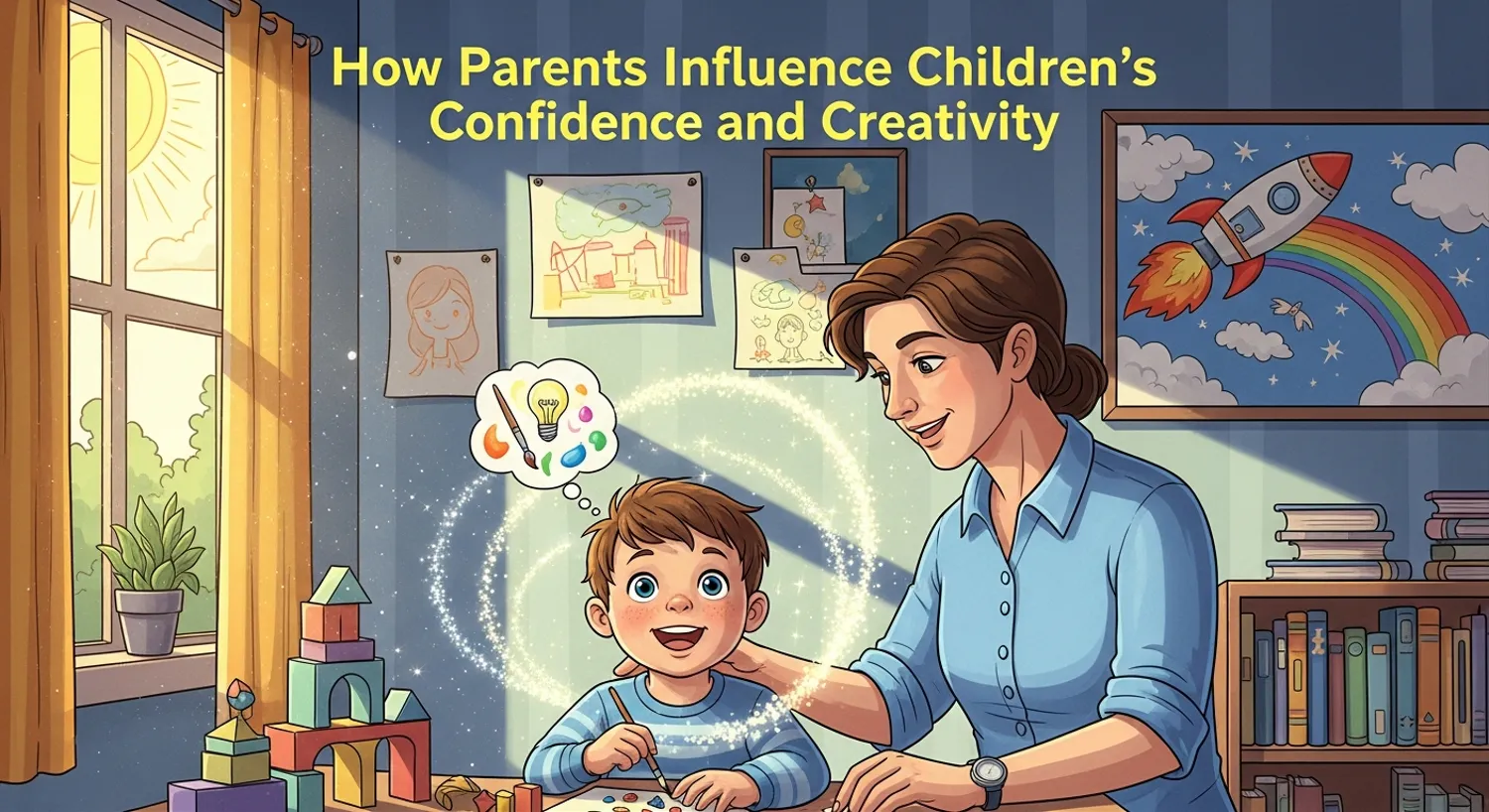
The Power of Parental Response on Self-Belief
Children constantly look to their parents for cues about how to interpret the world. When a child shares an idea, asks a question, or tries something new, the parental response becomes a mirror through which the child evaluates their own worth and ability.
Supportive responses—such as listening attentively, showing interest, and encouraging effort—tell children that their ideas matter. Dismissive, impatient, or overly critical responses can quietly erode confidence. Over time, children internalize these reactions, forming beliefs about whether they should speak up, explore, or stay silent.
How Emotional Safety Builds Confidence and Creativity
Emotional safety is essential for both confidence and creativity. Children need to feel emotionally secure to take risks, ask questions, and express ideas without fear of embarrassment or rejection. Parents create emotional safety through consistent empathy, patience, and understanding.
When children feel safe, they are more likely to experiment and explore. They learn that mistakes are part of learning rather than sources of shame. Emotional safety allows creativity to flourish and confidence to grow steadily.
Encouragement vs Pressure: Finding the Right Balance
Encouragement supports confidence; pressure undermines it. Parents who encourage effort, curiosity, and persistence help children develop intrinsic motivation. In contrast, excessive pressure to perform, achieve, or meet expectations can lead to fear of failure and reduced creativity.
Creative confidence grows when children are praised for trying, thinking, and exploring—not just for results. Parents who focus on effort rather than outcomes teach children that growth matters more than perfection.
The Role of Parental Language in Shaping Creativity
Language has a powerful influence on how children think about themselves. Words such as “try,” “explore,” and “what do you think?” invite creativity. Words that shut down exploration—such as “that’s wrong” or “don’t do it that way”—can limit creative thinking.
Parents who use open-ended language encourage children to reflect, imagine, and problem-solve. This language builds creative habits and strengthens confidence in one’s own thinking.
Supporting Independence to Build Confidence
Confidence grows when children are trusted with responsibility and decision-making. Parents who allow age-appropriate independence help children learn that they are capable.
Simple opportunities—choosing activities, solving small problems, or managing tasks—build self-trust. Overprotection, while well-intentioned, can send the message that children are not capable. Independence nurtured with support strengthens both confidence and creativity.
How Parents Model Confidence and Creative Thinking
Children learn more from what parents do than from what they say. Parents who model confidence, curiosity, and flexibility teach these qualities naturally. When parents show openness to learning, problem-solving, and adapting, children learn that growth is a lifelong process.
Modeling creative thinking—such as trying new ideas, thinking aloud, or handling mistakes calmly—gives children permission to do the same. Parents become role models for confidence and creativity through everyday behavior.
Handling Mistakes in Ways That Build Self-Belief
Mistakes are powerful learning moments. How parents respond to mistakes strongly influences a child’s confidence. Supportive responses teach children that mistakes are opportunities for growth. Harsh reactions or punishment can create fear and self-doubt.
When parents normalize mistakes and guide reflection, children learn resilience. This approach strengthens confidence and encourages creative problem-solving rather than avoidance.
Creativity Thrives When Children Feel Heard
Children who feel heard develop stronger self-worth. Listening attentively to children’s thoughts, ideas, and emotions reinforces their sense of value. Creative expression depends on feeling understood.
Parents who listen without interrupting or judging help children develop confidence in communication. Feeling heard encourages children to express ideas freely and explore creativity without hesitation.
Play as a Foundation for Creative Confidence
Play is one of the most important ways children develop creativity and confidence. Through play, children experiment, imagine, and test ideas in a low-pressure environment. Parents who support play without controlling it encourage independent thinking.
Creative play strengthens problem-solving, emotional expression, and self-belief. When parents participate with curiosity rather than direction, children feel supported rather than evaluated.
How Parental Expectations Shape Self-Image
Expectations influence how children see themselves. Healthy expectations encourage growth while respecting individuality. Unrealistic or rigid expectations can lead children to feel inadequate or fearful of failure.
Parents who appreciate effort, individuality, and progress help children develop a positive self-image. Confidence and creativity flourish when children feel accepted for who they are, not just for what they achieve.
Encouraging Curiosity Without Judgment
Curiosity is at the heart of creativity. Parents influence curiosity by how they respond to questions and exploration. Encouraging curiosity without judgment helps children feel safe thinking differently.
When children are allowed to ask questions freely and explore ideas without ridicule, they develop confidence in their thinking. Curiosity nurtured at home becomes a lifelong habit.
Emotional Support and Creative Expression
Creativity often involves emotional expression. Parents who validate emotions help children express themselves creatively. Suppressing emotions can limit creativity and confidence.
Emotional support teaches children that feelings are normal and manageable. This understanding supports both emotional intelligence and creative self-expression.
Long-Term Impact of Parental Influence
The influence parents have on confidence and creativity extends far beyond childhood. Children who grow up with supportive, encouraging parents are more likely to become adaptable, confident adults.
These children are better equipped to face challenges, think independently, and express ideas confidently. Parental influence leaves a lasting imprint on how individuals approach learning, relationships, and self-growth.
Frequently Asked Questions (FAQ)
How do parents influence a child’s confidence?
Parents influence confidence through emotional support, encouragement, and consistent responses. When children feel valued and supported, they develop self-belief.
Can creativity be nurtured at home?
Yes. Creativity is nurtured through open-ended play, curiosity, and supportive communication. Parents play a key role in creating creative environments.
Does overprotection affect confidence?
Overprotection can limit confidence by reducing opportunities for independence. Balanced support helps children develop self-trust.
How does parental language affect creativity?
Language that encourages exploration supports creativity, while judgmental language can limit expression and confidence.
Are mistakes important for building confidence?
Yes. Mistakes teach resilience and problem-solving. Supportive responses to mistakes strengthen confidence and creativity.
Conclusion
Parents influence children’s confidence and creativity through daily actions, words, and emotional presence. By creating emotionally safe environments, encouraging exploration, and supporting independence, parents help children develop a strong sense of self.
Confidence and creativity do not come from pressure or perfection. They grow from trust, encouragement, and understanding. When parents nurture these qualities, they give children tools that support success, resilience, and lifelong growth.