There's a moment most CEOs know well. It's late. The numbers don't quite add up. Three advisors have given three different answers. And somewhere between the board meeting that ended an hour ago and the one starting tomorrow morning, you have to decide — and mean it.
That moment doesn't reveal a gap in your strategy. It reveals something quieter: a mind that has been running too loud for too long.
This is exactly where executive coaching steps in — not to add more frameworks to an already crowded mental space, but to help you find the kind of clarity that was always there, buried underneath the noise.
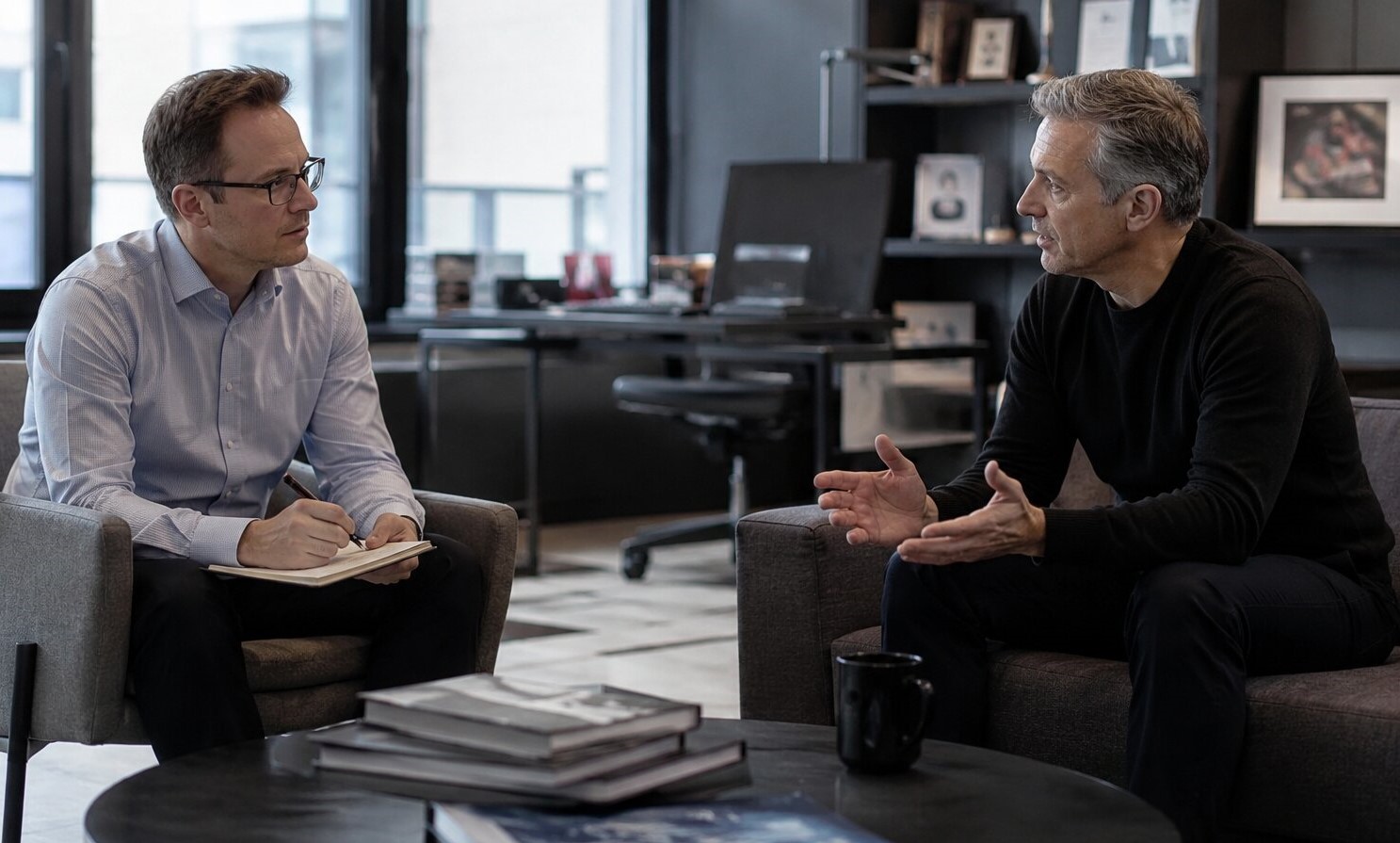
The Real Problem Isn't a Lack of Information
Ask any CEO about their biggest challenge in 2026, and most will mention something like this: too much data, too many opinions, and not enough certainty. The business environment has grown more complex — geopolitical shifts, AI-driven disruption, hybrid teams, and market volatility that changes week to week.
But here's the uncomfortable truth: the sheer volume of information was never the problem.
Leaders who consistently make good decisions under pressure aren't doing so because they processed more data than everyone else. They're doing it because they've learned to trust a different kind of intelligence — one that cuts through analysis paralysis and lands on what actually matters.
Executive coaching, when done well, is the process that gets you there.
What Executive Coaching Actually Does for Decision-Making
Most people think of coaching as a kind of motivational exercise — someone in your corner cheering you on. That's a shallow version of what real executive coaching delivers.
At its core, executive coaching works by addressing the underlying mental patterns that distort how a leader perceives challenges. It doesn't ask, "What should you do?" It asks something more fundamental: "How are you thinking about this?"
That distinction matters enormously.
When a CEO operates from a place of mental clutter — constant urgency, second-guessing, scanning for threats — their decisions tend to reflect that state. They become reactive rather than strategic. They optimize for short-term relief rather than long-term direction. They confuse speed with clarity.
Coaching interrupts that cycle. It creates conditions where a leader can step out of the noise long enough to access something steadier. And from that steadier place, decisions become less effortful — not because the problems are smaller, but because the thinking is cleaner.
The approach developed by Swier Miedema, Strategic Advisor and Executive Coach, draws on exactly this principle. Rather than offering yet another leadership framework, the work focuses on helping executives recognize where their best decisions actually come from — and how to get there more reliably.
Why 2026 Is Testing Leaders Differently
The pressures on CEOs have always been significant. But 2026 presents a particular set of challenges that are pushing even experienced leaders to their limits.
Artificial intelligence integration has moved from a future consideration to an immediate operational demand. Leaders are making daily calls about technology adoption, workforce restructuring, and competitive positioning — in domains that didn't exist in the way they do now just three years ago.
Team fragmentation remains a persistent issue. Managing distributed teams across time zones and work arrangements requires a different kind of attentiveness — one that relies less on in-person instinct and more on deliberate, values-driven communication.
Stakeholder complexity has increased. Boards, investors, regulators, and employees often want different things at the same time. Navigating this requires a clarity of purpose that can't be manufactured through better slide decks.
In each of these areas, the limiting factor isn't access to information. It's the quality of thinking available in the moment the decision is made. That's the asset executive coaching directly builds.
The Difference Between Busy and Effective
One of the most counterintuitive insights that emerges from serious executive coaching work is this: the feeling of being productive and the reality of effective leadership are often completely disconnected.
CEOs are, almost by definition, extremely busy. Full calendars. Constant communication. Rapid iteration on priorities. This activity can masquerade as leadership, and for a long time it can produce decent results — until it doesn't.
The leaders who sustain high performance over years and decades aren't the ones who work the hardest. They're the ones who have developed a relationship with stillness. With the pause before the response. With the ability to let a situation settle before acting on it.
This isn't passivity. It's precision.
When a leader operates from that place — what might be called strategic clarity — their decisions tend to carry more weight, more confidence, and more alignment with what actually matters to the organization. People around them feel it. Teams move differently when their leader is genuinely clear, rather than performatively decisive.
What Happens Inside an Executive Coaching Engagement
People are sometimes surprised by what executive coaching looks like in practice. They expect a series of goal-setting exercises, competency assessments, or performance reviews. What they often find instead is something more like a conversation that gradually changes the quality of all their other conversations.
Good coaching creates a rare environment: one where a senior leader can think out loud without the political or relational weight that follows them everywhere else. There's no agenda to protect. No direct reports to manage. No investors to impress.
In that space, something loosens. Leaders start to hear themselves differently. Assumptions they've carried for years surface and get examined. Patterns that drove smart decisions early in their career get recognized as the same patterns creating friction now.
The result isn't a new CEO. It's the same person operating with more of themselves available — less defended, less reactive, more genuinely present to what each situation actually calls for.
The work at swiermiedema.com is built around this principle. Coaching isn't about installing new behaviors. It's about removing the interference that prevents natural, confident leadership from coming through.
How to Know If You're Ready for Executive Coaching
Not every leader is in a position to benefit from coaching — not because they're not capable, but because the timing has to be right. Coaching works best when a leader is genuinely curious rather than just looking for validation, and when they're willing to sit with discomfort long enough to learn from it.
Some signals that coaching might be particularly valuable right now:
You find yourself making decisions you're not fully behind — saying yes in the meeting and feeling uncertain an hour later. You notice that the same kinds of conflicts keep surfacing in different forms. You feel less energized by your work than you used to, even when things are going reasonably well on the outside. You know what you should do but keep hesitating to act on it.
These aren't signs of failure. They're signs of a leader whose capacity has grown beyond their current operating model — someone who is ready for a different kind of development.
The Long View on Clarity
There's a version of executive coaching that promises quick wins and measurable ROI within a quarter. That version has its place. But the leaders who report the most significant and lasting change from coaching tend to describe something different — a shift in how they experience themselves at work, not just what they produce.
That shift doesn't happen in a single session. It happens through repeated exposure to a different quality of thinking, over enough time that it starts to feel natural rather than practiced.
The payoff isn't just better decisions on the big calls. It's a quieter mind day to day. Less second-guessing. More willingness to trust what you already know. A leadership presence that's grounded rather than performed.
In a business environment that will keep getting more complex and more demanding, that kind of clarity isn't a luxury. For the leaders who intend to stay effective — and sane — over the long term, it's the most important capability they can develop.
If you're a CEO or senior leader exploring what it means to lead from a place of genuine clarity rather than constant pressure, the work of executive coaching might be worth a closer look. The best decisions you've ever made didn't come from overthinking. They came from somewhere quieter — and that place is always available.