Building a Workday HCM career as a fresher can feel difficult when there is no experience with a live implementation. However, candidates can still create a convincing professional profile by demonstrating their understanding of Workday functionality, HR operations, business processes, reporting, security, and configuration concepts. Instead of relying entirely on previous employment experience, freshers can use realistic practice scenarios and well-presented projects to show how they would approach common organizational requirements in a Workday environment. Workday Training in Chennai provides practical expertise in employee management, talent processes, business workflows, and cloud-based HR solutions.
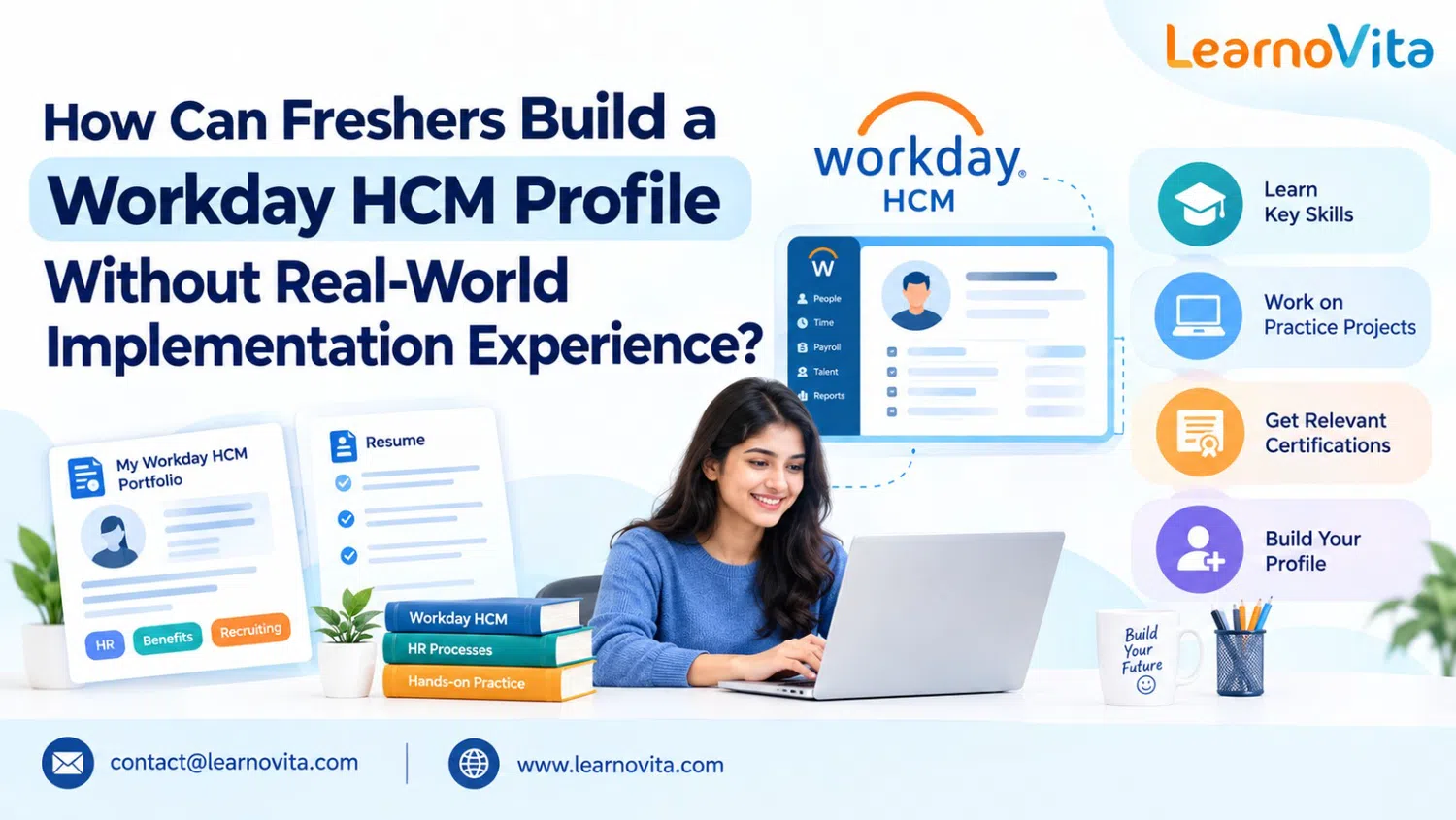
Understand Workday HCM
Freshers should first develop a strong foundation in Workday HCM and understand how its capabilities support everyday HR activities. Important areas can include staffing, organizations, business processes, security, reporting, calculated fields, employee data management, and integrations. Learning how processes such as hiring, onboarding, transfers, promotions, and terminations are handled can make it easier to connect technical concepts with actual business requirements. A candidate who can clearly explain these relationships can demonstrate practical understanding even without having worked on a client implementation.
Create Practice Scenarios
Design a fictional company's organizational hierarchy.
Create a sample employee hiring workflow.
Develop scenarios for promotions and employee transfers.
Prepare sample HR reports and dashboards.
Practice calculated-field use cases.
Define security requirements for different HR roles.
Document employee lifecycle processes.
Create business-process diagrams for common HR activities.
Build a Workday Portfolio
A structured portfolio can help freshers demonstrate their abilities beyond what is shown on a resume. Candidates can create fictional business cases based on common HR challenges and explain how Workday HCM concepts could address them. A project might involve designing an employee onboarding process, defining organizational structures, identifying security requirements, and preparing management reports. Each project can include the business requirement, proposed approach, relevant Workday concepts, expected result, and key learning points. This gives recruiters a clearer view of how the candidate applies knowledge to practical situations. Professionals can strengthen their HR technology and Workday skills through industry-focused Workday Training in Bangalore.
Learn HR Business Processes
Workday HCM knowledge becomes more valuable when it is connected with an understanding of HR operations. Freshers can study employee lifecycle activities such as recruitment, onboarding, compensation, benefits, absence management, performance management, and organizational changes. They should also learn how business requirements influence Workday processes and reporting needs. Understanding the relationship between HR operations and Workday functionality can help candidates communicate more effectively with business users and explain their approach during interviews. Workday Training in Hyderabad is a useful choice for individuals aiming to build careers in Workday HCM, HR technology, functional consulting, and business process management.
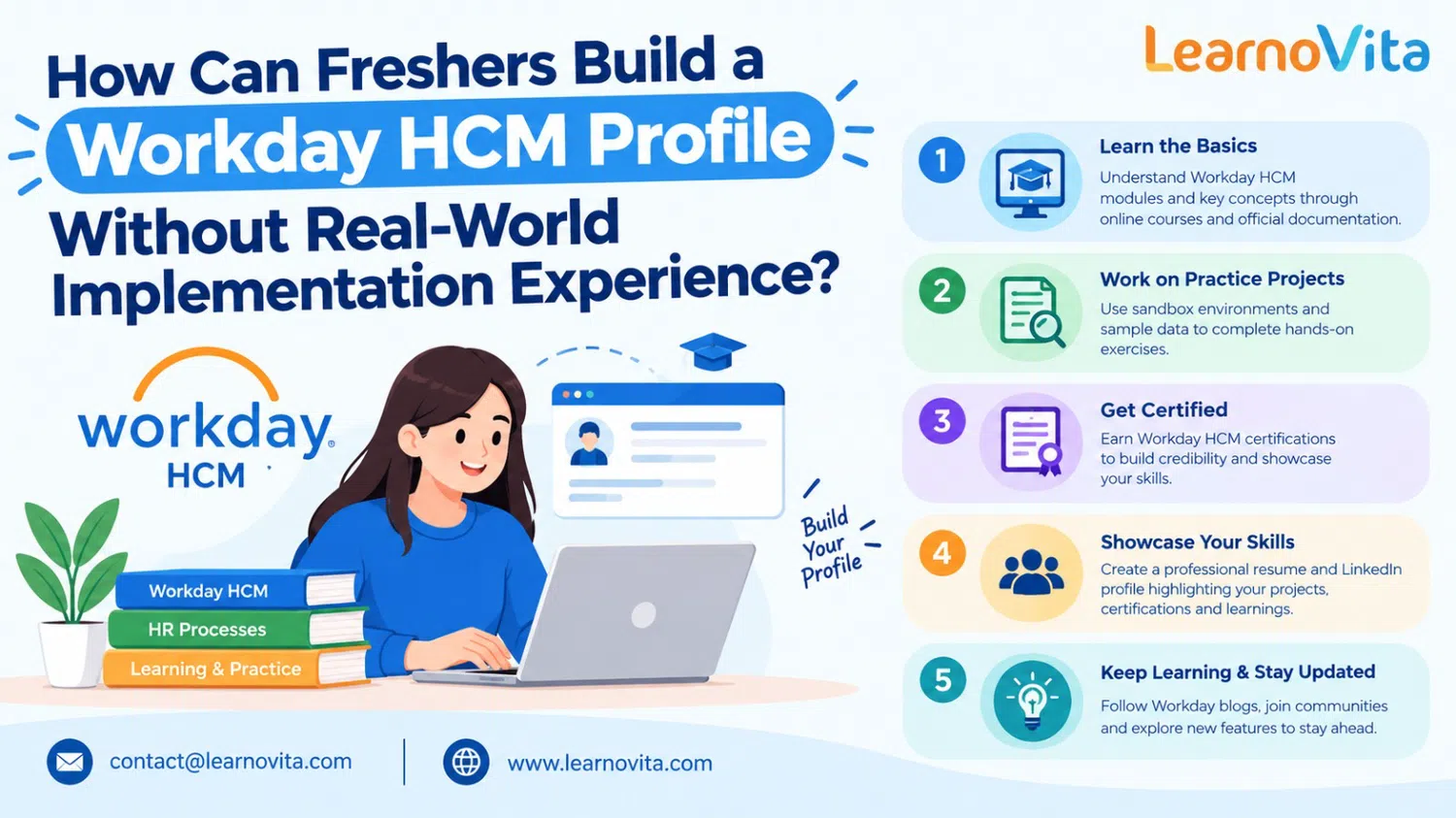
Improve Your Resume
Mention relevant Workday HCM areas and concepts.
Highlight practical assignments and simulated projects.
Include knowledge of business processes and reporting.
Showcase security and configuration concepts you understand.
Describe projects through business requirements and outcomes.
Add relevant HR process knowledge to your skills section.
Include documentation or portfolio work where appropriate.
Keep your resume and professional profile consistent.
Practice Interview Scenarios
Workday interviews can involve practical situations rather than questions based only on terminology. Freshers should practice explaining how they would approach requirements involving hiring, employee movement, organizational changes, reporting, security, or business processes. Practice projects can provide useful examples when answering these questions. Candidates should clearly distinguish simulated learning from actual implementation experience while explaining the reasoning behind their proposed solutions. This approach can demonstrate structured thinking, communication ability, and familiarity with Workday HCM concepts. Workday HCM Online Training helps learners develop practical skills in human capital management, employee management, payroll, and HR processes.
Conclusion
Freshers do not need to leave their Workday HCM profile empty simply because they have not participated in a live implementation. Building strong product knowledge, understanding HR processes, creating realistic practice projects, developing a portfolio, and preparing for scenario-based interviews can provide meaningful evidence of capability. By presenting practical learning clearly and continuing to develop relevant Workday skills, candidates can create a professional profile that reflects their readiness to pursue entry-level opportunities in the Workday HCM domain.