Artificial intelligence is becoming an important part of enterprise technology, influencing how organizations automate processes, manage services, and handle large volumes of information. ServiceNow is also incorporating AI capabilities into its platform, creating changes in the way professionals approach workflows and service operations. For people planning a career in the ServiceNow ecosystem, this raises an important question: will AI reduce traditional responsibilities, or will it lead to new types of work? The answer depends on how organizations adopt AI and how professionals develop skills that complement these technologies. ServiceNow Training in Chennai helps learners develop practical skills in IT service management, workflows, automation, and ServiceNow platform administration.
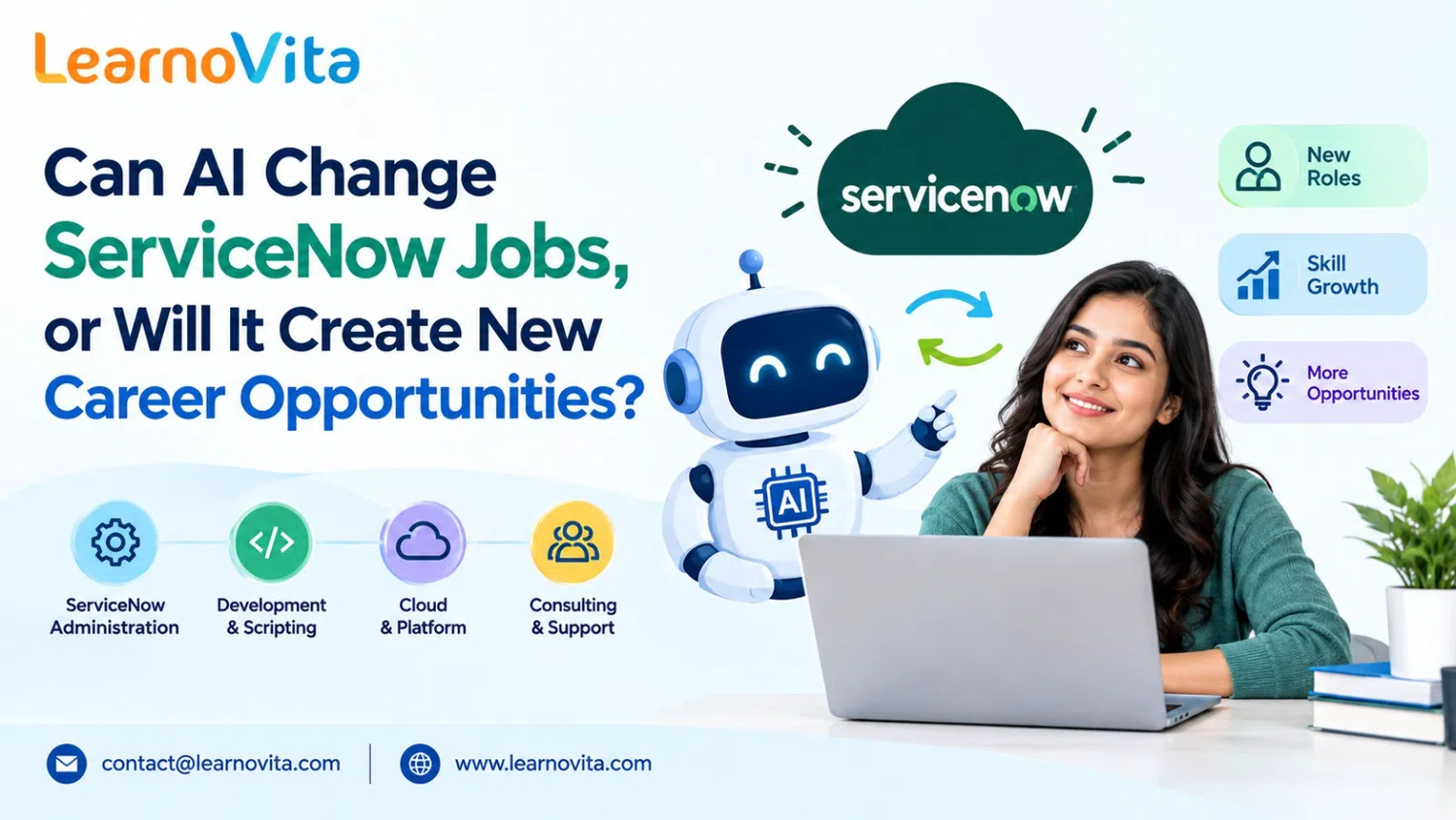
AI and ServiceNow
AI can assist ServiceNow users with activities such as information retrieval, task automation, content summarization, workflow assistance, and pattern identification. These capabilities can reduce manual effort in certain processes and allow teams to handle routine activities more efficiently. However, organizations still need professionals who can understand business requirements, configure the platform, design workflows, manage integrations, and oversee automated processes. As AI becomes more integrated into ServiceNow environments, professionals may increasingly combine traditional platform expertise with automation and AI knowledge.
Important Skills
ServiceNow administration and platform configuration
Workflow automation and optimization
IT service management knowledge
AI-assisted service management
Data analysis and reporting
Application and system integrations
Security and access management
Business process analysis
Changing ServiceNow Responsibilities
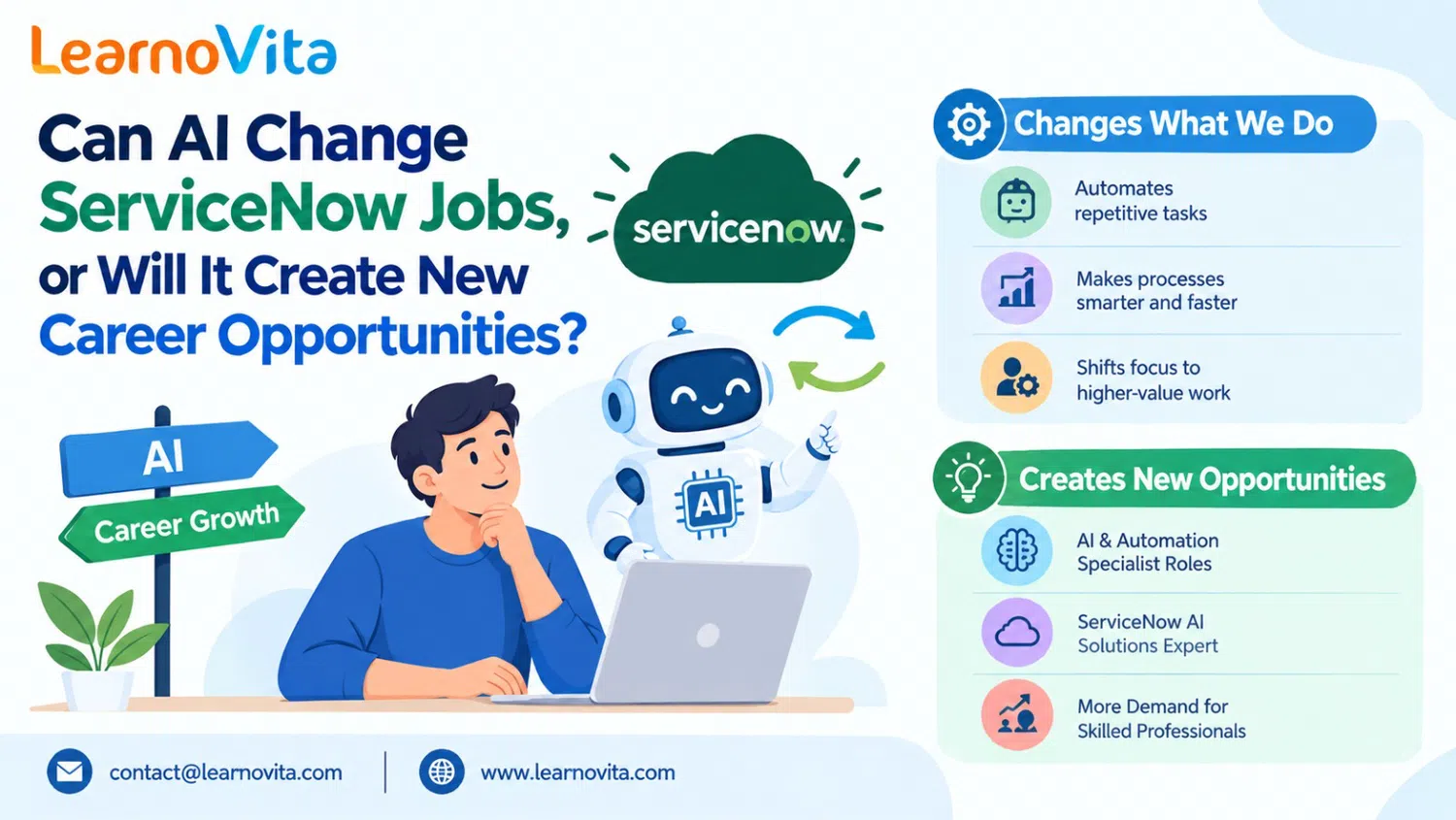
AI can alter the way professionals handle repetitive ServiceNow activities. Tasks such as ticket categorization, information searches, summarization, routine responses, and certain workflow actions can increasingly be supported by automation. This can shift professional responsibilities toward activities that require greater analysis and decision-making. ServiceNow specialists may spend more time designing efficient workflows, reviewing automated results, resolving complex cases, improving processes, and collaborating with business teams. The actual impact will depend on the organization's technology environment, implementation strategy, and level of AI adoption. Enrolling in a ServiceNow Course in Bangalore enables professionals to gain hands-on knowledge of incident management, service workflows, configuration, and automation.
Emerging Career Areas
The combination of ServiceNow and AI can create opportunities for professionals who understand how intelligent technologies can be applied to enterprise workflows. Businesses may require specialists who can identify suitable automation opportunities, configure AI-supported processes, integrate applications, manage information, and monitor system performance. ServiceNow professionals can potentially expand their expertise into intelligent automation, AI-enabled workflow development, platform integration, service operations, and technology governance. These areas require both technical understanding and the ability to connect technology capabilities with business requirements. Get industry-focused ServiceNow training in Hyderabad with hands-on projects and expert guidance to boost your IT career.
Skills to Develop
Strengthen ServiceNow administration and development fundamentals.
Learn core ITSM processes and enterprise workflows.
Explore AI and automation features available within ServiceNow.
Develop knowledge of APIs and application integrations.
Practice identifying repetitive processes suitable for automation.
Improve data analysis and reporting capabilities.
Learn about platform security and AI governance.
Build projects that demonstrate workflow automation.
Building an AI-Ready Career
Professionals can prepare for changes in the ServiceNow job market by developing capabilities that work alongside AI. Strong knowledge of platform fundamentals remains important, while skills in automation, integrations, data, and process analysis can broaden career possibilities. Candidates can gain practical experience by creating projects that automate service workflows, analyze operational information, or demonstrate AI-assisted processes. Keeping up with platform developments and continuously applying new capabilities to practical scenarios can also help professionals understand how their existing ServiceNow knowledge can evolve.
Conclusion
AI is changing how enterprise platforms are used, and ServiceNow careers are likely to evolve as organizations adopt more intelligent automation. Some repetitive responsibilities may become increasingly automated, while new requirements can emerge around workflow design, AI-enabled processes, integrations, data, and governance. The impact will vary between organizations and roles rather than following a single pattern. Professionals who continue developing ServiceNow fundamentals while adding relevant AI, automation, and analytical skills can be better prepared to participate in the changing enterprise technology landscape.