Artificial intelligence is becoming increasingly relevant to the way organizations manage recruitment, employee information, learning, performance, and workforce planning. As AI capabilities become part of modern HR technology, SAP SuccessFactors professionals may see changes in their daily responsibilities, workflows, and required skills. Some repetitive activities can become automated, while new work can emerge around intelligent HR processes, data management, system configuration, analytics, and technology governance. Understanding these changes can help professionals prepare for an HR technology environment where traditional SuccessFactors expertise works alongside newer digital capabilities. SAP SuccessFactors Training in Chennai provides hands-on knowledge of employee management, talent management, recruitment, and HR analytics.
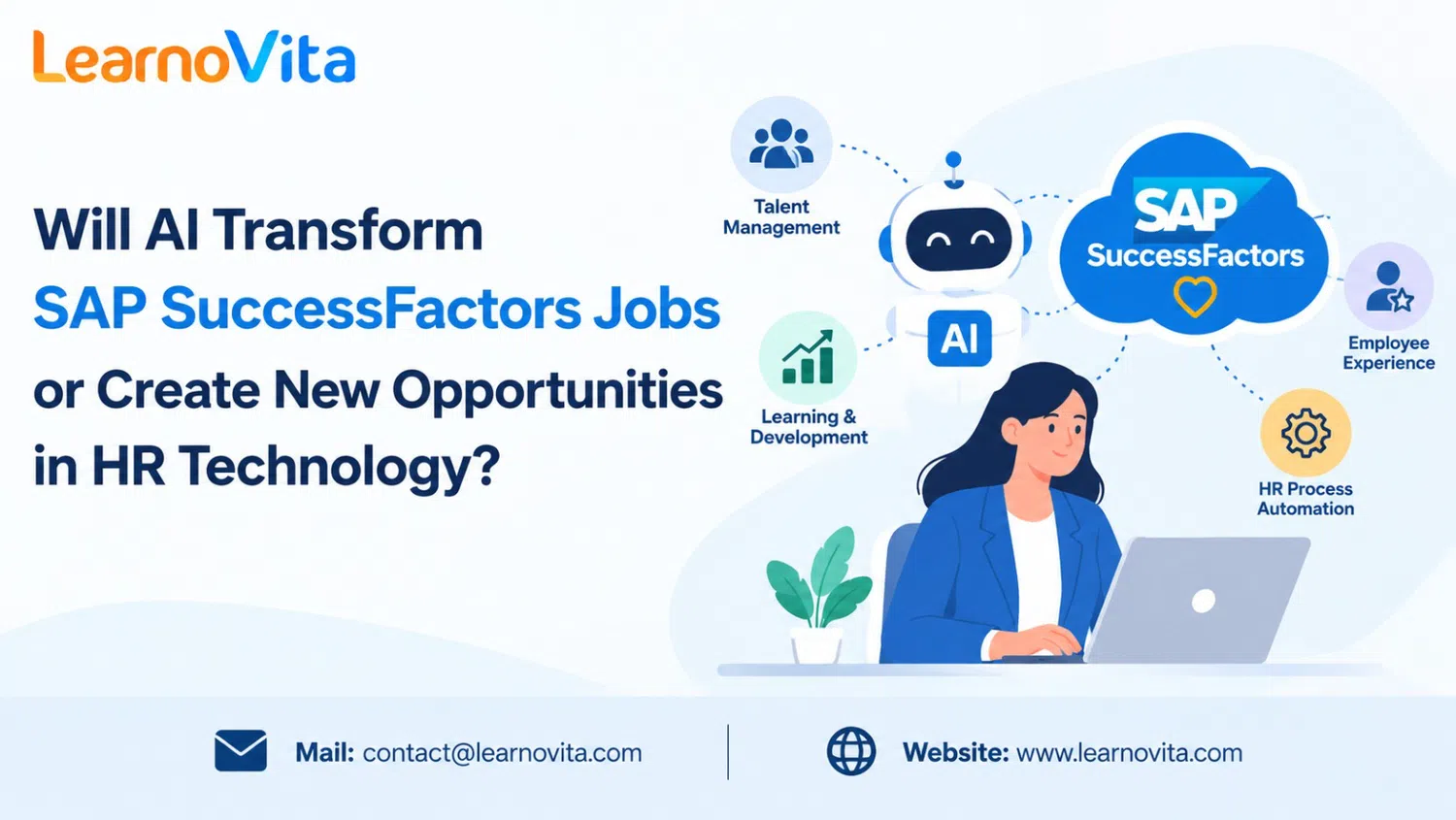
AI and SuccessFactors
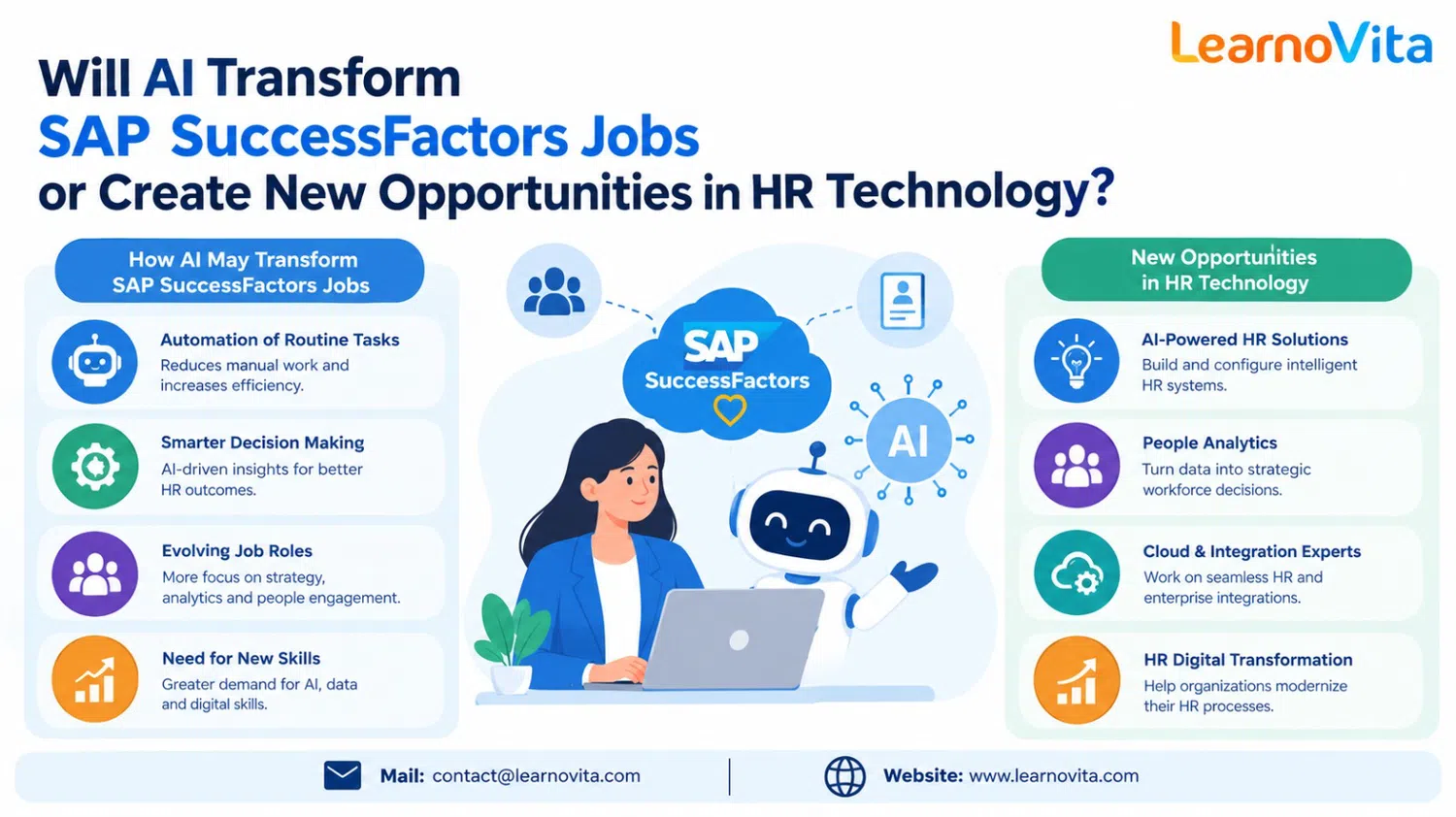
AI can assist organizations with different HR activities by reducing manual effort and supporting data-driven processes. Within SAP SuccessFactors environments, intelligent capabilities can be applied to areas such as recruiting, employee development, performance management, workforce insights, and employee services. As certain routine tasks become automated, professionals may spend more time on process design, configuration, data quality, integration, and business requirements. The impact will vary depending on the AI capabilities adopted by each organization and how those features are incorporated into existing HR processes.
Emerging Career Areas
AI-enabled HR solution configuration
Intelligent recruitment process support
Workforce analytics and reporting
HR workflow automation
Employee experience technology
AI-supported learning solutions
HR data management
AI and HR system integration
Responsible AI governance
Digital HR transformation support
Changing Consultant Roles
The introduction of AI can expand the responsibilities of SAP SuccessFactors consultants. Instead of focusing only on traditional configuration tasks, consultants may need to understand how intelligent capabilities can be incorporated into existing HR workflows. They may participate in requirements gathering, process redesign, integration planning, output validation, and data preparation. Consultants may also work with HR teams to determine where automation can be introduced while maintaining appropriate controls. A combination of SuccessFactors expertise and knowledge of emerging technologies can therefore become useful for professionals involved in HR system transformation projects. Professionals can enhance their HR technology expertise through industry-focused SAP SuccessFactors Training in Bangalore.
Developing Relevant Skills
Professionals preparing for an AI-enabled HR technology environment can build on their existing SuccessFactors knowledge while developing complementary skills. Familiarity with modules such as Employee Central, Recruiting, Learning, Compensation, and Performance & Goals can provide a strong functional foundation. Knowledge of analytics, integrations, automation, data management, and fundamental AI concepts can further expand a professional's capabilities. Communication and problem-solving skills are also valuable because HR technology specialists often need to translate business requirements into practical system solutions and explain technology-driven changes to stakeholders. SAP SuccessFactors Training in Hyderabad provides hands-on knowledge of talent management, recruitment, employee management, and HR analytics.
Potential Career Opportunities
SAP SuccessFactors functional consultant
HR technology consultant
People analytics specialist
HR automation specialist
SuccessFactors integration professional
HR data analyst
Digital HR transformation specialist
HR technology governance professional
Employee experience technology specialist
Intelligent HR solutions consultant
Preparing for AI Adoption
Professionals can prepare for changes in SAP SuccessFactors by combining functional HR knowledge with technology awareness. Understanding how HR departments manage employees, recruitment, performance, learning, and workforce information remains important because AI solutions still need to address clearly defined business requirements. Professionals can additionally explore automation, analytics, integrations, data governance, and AI fundamentals through practical exercises and projects. Staying familiar with platform updates and experimenting with realistic HR scenarios can help learners understand how intelligent features may influence system configuration and business processes. Learners can understand modern digital HR processes and cloud-based workforce management through SAP SuccessFactors Online Training.
Conclusion
AI can change the way SAP SuccessFactors professionals work by increasing automation and introducing new requirements around intelligent HR processes, analytics, integrations, data, and governance. While some repetitive activities may require less manual effort, organizations can also need professionals who understand how AI-enabled capabilities fit into HR systems and business workflows. Building strong SuccessFactors expertise alongside knowledge of modern HR technology can help professionals prepare for evolving responsibilities. The extent of these changes will depend on organizational adoption, platform capabilities, business requirements, and the development of AI technologies within the HR technology sector.