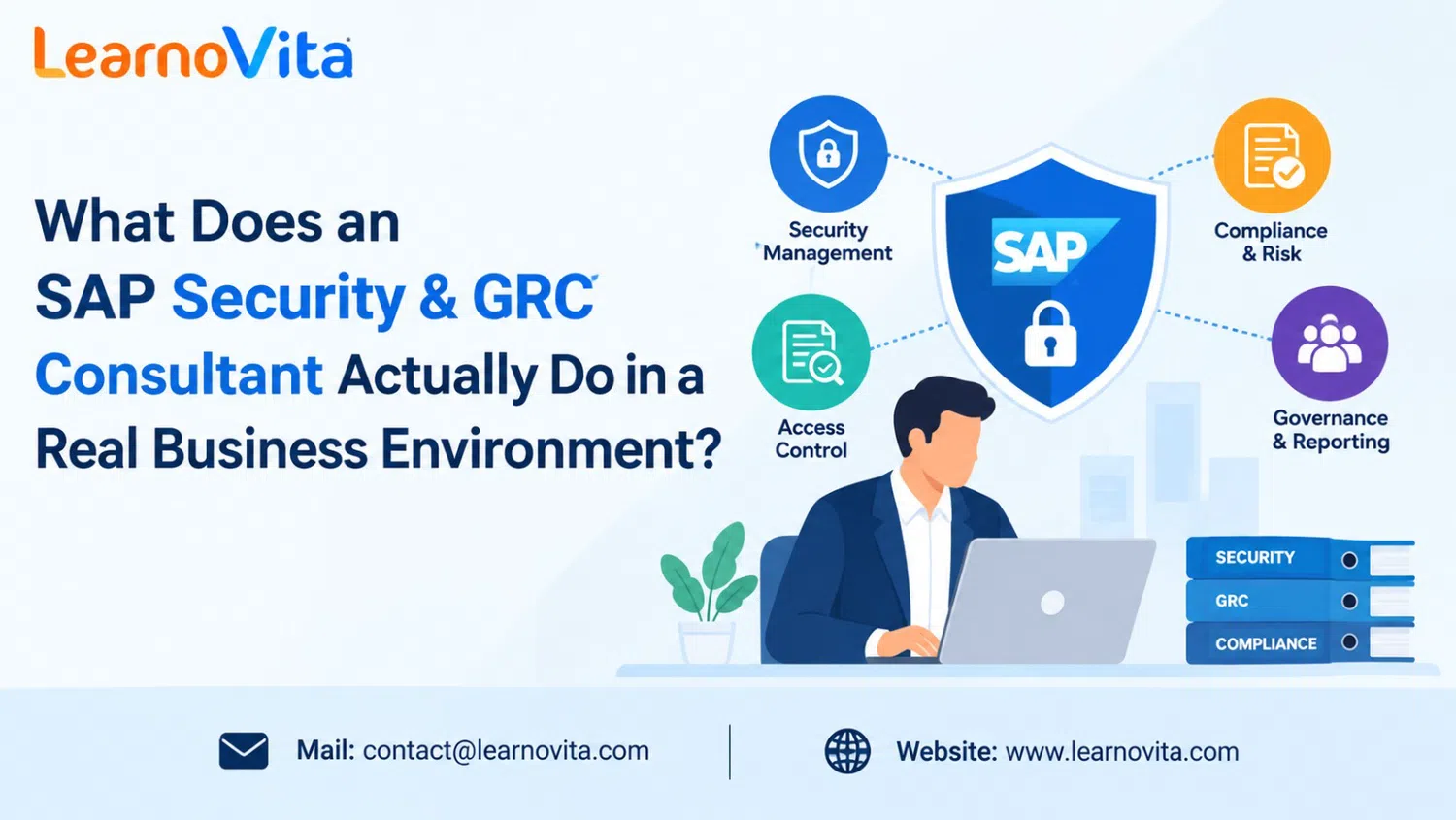
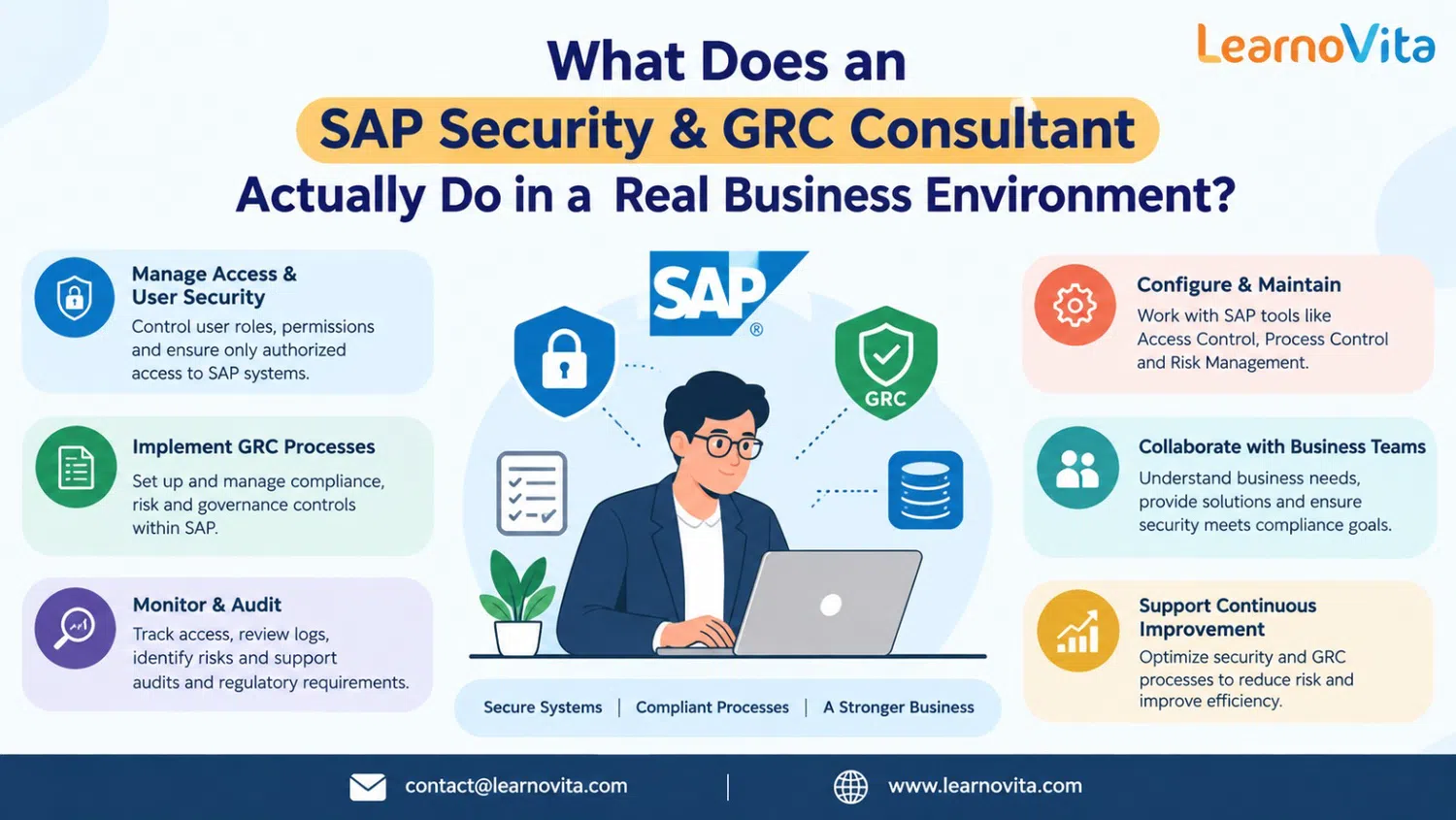
An SAP Security & GRC Consultant helps organizations manage SAP access while maintaining security, governance, and compliance requirements. Their responsibilities can include user access administration, role creation, authorization management, risk assessment, and security monitoring. They work with business users, functional consultants, technical teams, and auditors to understand access requirements and establish suitable controls. In a real business environment, the consultant must ensure that employees receive the permissions necessary for their responsibilities while unnecessary or conflicting access is identified and controlled. Enrolling in SAP Security GRC Training in Chennai enables professionals to gain hands-on knowledge of access control, risk analysis, and SAP security processes.
Managing User Roles
User and role management is a fundamental part of SAP Security. Consultants examine an employee’s responsibilities and determine which SAP transactions, applications, and data are required for the job. They can create new roles, modify existing authorization structures, assign roles, and remove outdated permissions. They also review access requests according to organizational approval procedures. When users encounter authorization errors, consultants investigate the assigned roles and authorization settings to determine whether the issue is related to missing or incorrect access.
Essential Security Work
Create and maintain SAP security roles
Assign appropriate authorizations to users
Review existing user-role assignments
Evaluate incoming access requests
Investigate authorization errors
Check access to sensitive transactions
Remove unnecessary permissions
Maintain role and authorization documentation
Conduct periodic access assessments
Assist with security testing
Managing Access Risks
SAP GRC helps organizations evaluate and control risks associated with user access. Consultants can work with capabilities such as Access Risk Analysis, Access Request Management, Business Role Management, and emergency access management. When employees request additional permissions, the consultant can assess whether the requested access may result in segregation-of-duties conflicts or other risks. The results are reviewed with appropriate business stakeholders, who can determine how the request should be handled. This creates a controlled process for managing access rather than relying on unrestricted permission changes. SAP Security GRC Training in Bangalore is a valuable choice for individuals aiming to build careers in SAP security, governance, risk, and compliance.
Understanding Business Functions
Security roles need to reflect the actual activities performed by employees. Procurement teams may need purchasing transactions, finance professionals may require financial processing access, and warehouse employees may work with inventory-related functions. An SAP Security & GRC Consultant communicates with these teams to understand their requirements before developing or modifying roles. They assess existing permissions, identify missing access, and align authorizations with job responsibilities. Understanding business processes allows consultants to build access structures that support operational needs while maintaining appropriate controls. SAP Security GRC Training in Hyderabad helps learners develop practical skills in SAP security, governance, risk management, and compliance.
Governance And Compliance
Review segregation-of-duties conflicts
Perform periodic user access certifications
Support internal and external audits
Review privileged user access
Monitor critical authorization assignments
Maintain security control documentation
Track access-related risks
Support risk remediation activities
Prepare evidence for compliance reviews
Monitor emergency access usage
Handling Authorization Issues
Authorization problems can occur when users are unable to perform legitimate SAP activities. Consultants investigate these issues by checking role assignments, authorization objects, organizational restrictions, and available system error details. They then determine whether the user genuinely requires additional permissions or whether an existing role needs adjustment. Rather than providing excessive access simply to resolve an error, the consultant considers the specific business requirement and applies a controlled solution. This approach helps maintain a balance between user productivity and system security. Learners can build expertise in user access management, authorization, compliance, and risk mitigation through SAP Security GRC Online Training.
Conclusion
An SAP Security & GRC Consultant contributes to secure SAP operations by managing roles, controlling user access, analyzing authorization risks, supporting governance, and resolving security-related issues. The position requires knowledge of SAP authorization concepts along with an understanding of business processes and compliance requirements. Learners can develop practical familiarity by practicing scenarios involving role creation, access requests, authorization errors, segregation-of-duties analysis, and audit preparation. These exercises can help demonstrate how SAP Security and GRC activities are applied within real organizational processes.