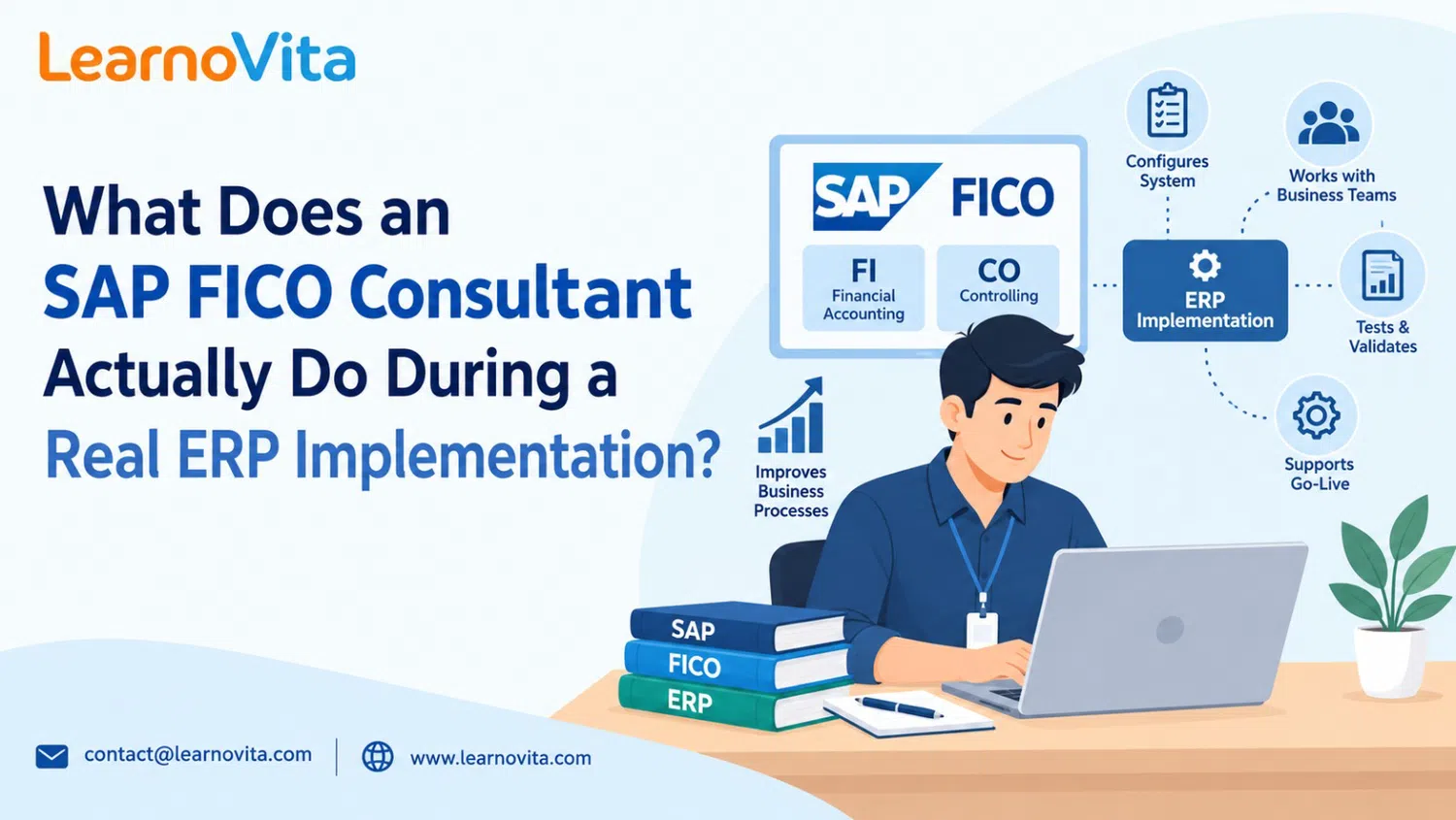
An SAP FICO Consultant helps organizations transform their financial operations by implementing SAP-based processes that support accounting, reporting, and controlling activities. During an ERP implementation, the consultant collaborates with finance professionals, business stakeholders, technical specialists, and other SAP teams to understand requirements and develop suitable solutions. The responsibilities can extend from analyzing existing processes and configuring the system to testing, data migration, training, deployment, and post-go-live support. This makes the consultant an important link between business requirements and the final SAP environment. Enrolling in SAP FICO Training in Chennai can help aspiring finance professionals gain hands-on knowledge of SAP FICO processes and tools.
Analyze Business Processes
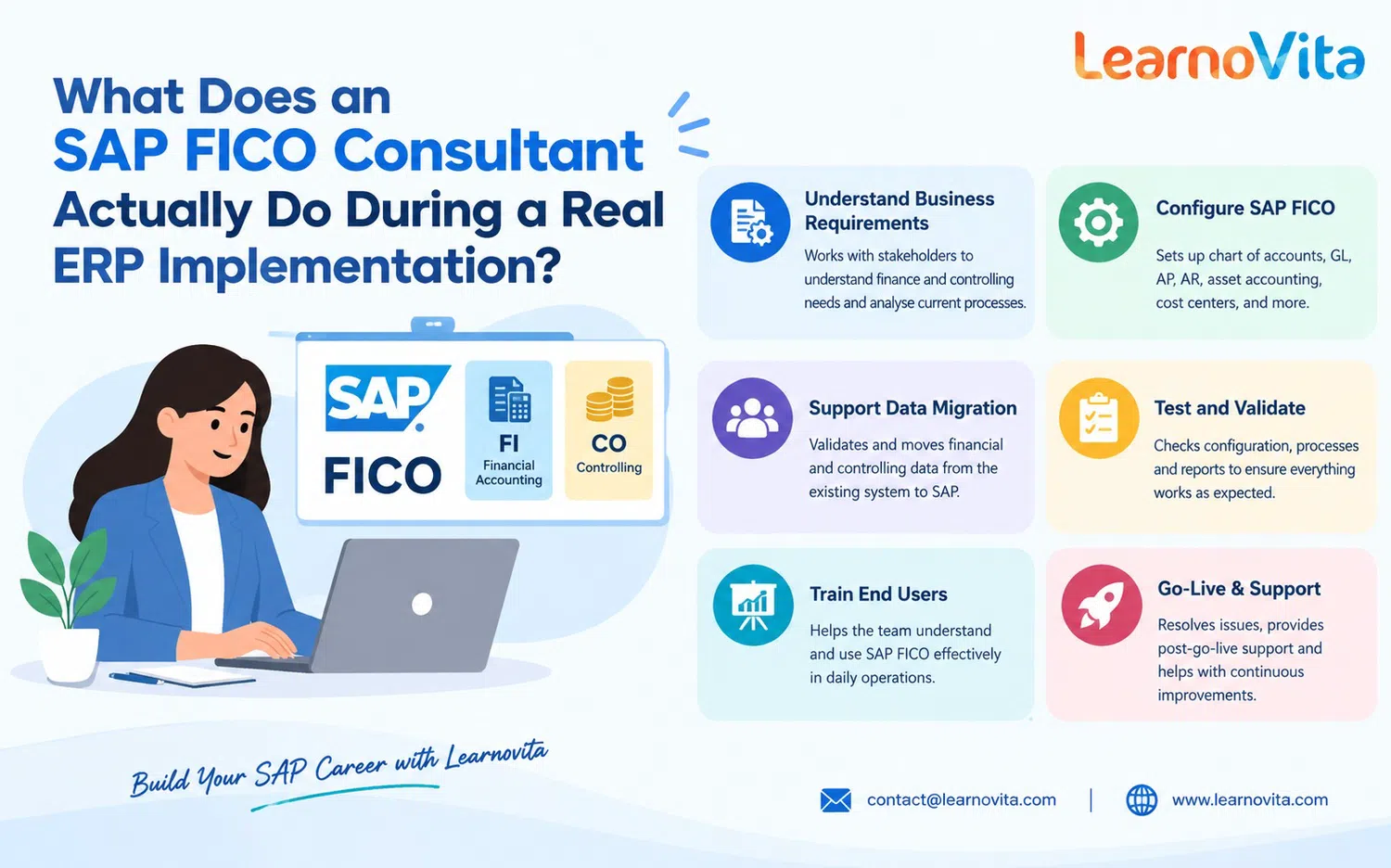
The consultant begins by understanding how the organization currently manages its financial operations. This involves interacting with finance teams to examine general ledger accounting, accounts payable, accounts receivable, asset accounting, taxation, banking, cost management, and financial reporting. Existing workflows are reviewed to identify requirements, process gaps, and areas that may need improvement. The consultant then converts these findings into functional requirements that can be addressed through SAP FICO while maintaining alignment with the organization's financial processes.
Handle Key Activities
Gather requirements from finance teams and business stakeholders.
Document existing processes and proposed workflows.
Identify gaps between current operations and SAP functionality.
Configure required SAP FICO components.
Establish relevant financial organizational structures.
Coordinate financial master data preparation.
Collaborate with other SAP teams on integration requirements.
Prepare functional specifications when required.
Participate in testing and defect resolution.
Support training and project documentation.
Configure SAP FICO
After requirements are finalized, the consultant configures SAP FICO according to the organization's financial structure and operational needs. This may include setting up company codes, charts of accounts, fiscal years, posting periods, document types, tax procedures, payment processes, accounts payable, accounts receivable, asset accounting, cost centers, profit centers, and internal orders. The consultant validates the configuration through different financial scenarios to confirm that transactions are processed correctly. Configuration decisions also need to support the organization's reporting requirements and established accounting processes. An SAP FICO Course in Bangalore is a valuable option for individuals looking to develop skills for careers in SAP finance and accounting.
Manage Integration
SAP FICO interacts with several other business areas, making integration an important part of implementation work. The consultant coordinates with teams working on procurement, sales, inventory, production, and other relevant processes to ensure that operational transactions create the correct financial impact. Purchasing, goods movements, sales activities, and production transactions can all result in accounting entries. The consultant helps define integration requirements, checks financial postings, investigates errors, and works with other teams to resolve issues affecting end-to-end processes. SAP FICO Training in Hyderabad offers comprehensive, hands-on instruction to help professionals build strong financial accounting and controlling skills using SAP.
Conduct Testing
Prepare test cases based on approved business requirements.
Perform configuration and integration testing.
Verify accounting documents and financial postings.
Test complete business scenarios from start to finish.
Record defects and track their resolution.
Coordinate with relevant teams to correct issues.
Support user acceptance testing.
Retest processes after corrections are implemented.
Manage Data Migration
Financial data needs to be prepared carefully before an organization moves from its existing systems to SAP. The consultant works with business users and migration teams to identify the information that must be transferred. This can include general ledger balances, customer and vendor records, asset details, cost centers, profit centers, and other relevant financial information. The consultant helps establish data requirements and validates migrated records against approved source data. Checking balances and financial reports before deployment helps ensure that the new system starts with reliable financial information. Professionals can strengthen their finance and accounting expertise through industry-focused SAP FICO Online Training.
Support Go-Live
As the implementation approaches go-live, the SAP FICO Consultant helps confirm that configuration, integrations, testing, data migration, and user preparation are ready. The consultant may assist with cutover activities, final system checks, training, documentation, and resolution of outstanding issues. After deployment, users may require assistance with transaction errors, configuration questions, or process-related concerns. The consultant provides post-go-live support and helps identify areas where additional adjustments or improvements may be required as the organization begins using the new ERP system.
Conclusion
An SAP FICO Consultant participates in many stages of an ERP implementation, from analyzing financial requirements to supporting the system after deployment. The role combines business process knowledge with SAP configuration, integration, testing, data migration, training, and problem-solving responsibilities. Professionals who develop both SAP FICO expertise and a practical understanding of finance operations can better prepare for the demands of real-world implementation projects.