Building a Full Stack development career in six months is challenging, but a focused learning plan can make the journey more structured and achievable. Instead of trying to learn every programming technology available, freshers should concentrate on core development skills, practical projects, version control, deployment, and interview preparation. A six-month roadmap can gradually move a learner from programming fundamentals to building complete web applications and preparing for internships or entry-level roles. Full Stack Course in Chennai helps learners build practical skills in frontend and backend development, databases, APIs, and modern web technologies for full-stack development careers.
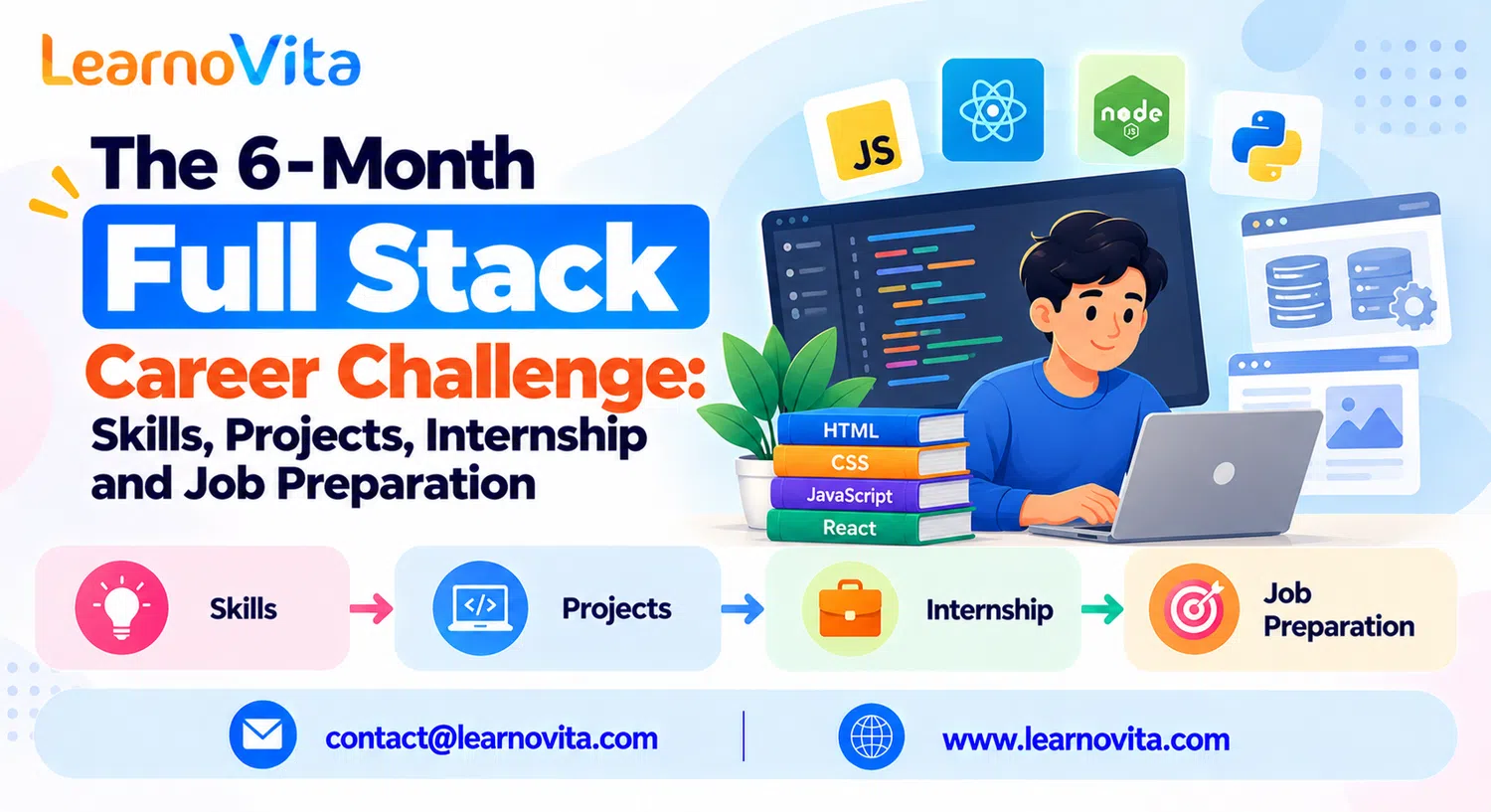
Master the Core Skills
The first stage should focus on developing a strong foundation in programming and web development. Learners can begin with HTML, CSS, JavaScript, and a programming language such as JavaScript, Java, or Python based on their career goals. They should understand variables, functions, arrays, objects, conditions, loops, error handling, and basic problem-solving. Once these concepts become comfortable, learners can move toward responsive web design, DOM manipulation, APIs, asynchronous programming, and database fundamentals. Building small exercises while learning each concept can make the transition to advanced development easier.
Follow a Practical Roadmap
Month One: Learn programming fundamentals, HTML, CSS, JavaScript, and Git basics.
Month Two: Strengthen JavaScript skills and learn responsive design, APIs, and frontend development concepts.
Month Three: Learn a frontend framework such as React and build interactive applications.
Month Four: Study backend development, server-side programming, REST APIs, authentication, and databases.
Month Five: Build full stack projects, practice deployment, improve GitHub repositories, and start applying for internships.
Month Six: Focus on portfolio improvement, coding practice, technical interviews, resume preparation, and job applications.
Build Portfolio Projects
Projects should become a major part of the learning journey because they demonstrate whether a candidate can apply development concepts to practical problems. Instead of creating several very small applications, learners can build two or three well-developed projects such as an e-commerce platform, task management application, learning portal, expense tracker, or appointment booking system. A strong project should include frontend functionality, backend APIs, database operations, authentication, validation, and responsive design. Candidates should also document the technologies used, their contribution, important features, challenges, and solutions so recruiters can quickly understand the project. Full Stack Developer Course in Bangalore helps learners develop practical skills in frontend and backend development, databases, APIs, and modern web technologies for full-stack development careers.
Prepare for Internship Opportunities
Internship preparation should begin before the final month rather than after completing the entire roadmap. Learners can create a professional GitHub profile, maintain active repositories, prepare a concise resume, and apply for relevant internships while continuing to improve their skills. Contributing to small open-source projects or collaborating with classmates can also provide experience with teamwork, version control, issue tracking, and code reviews. Even when an internship application does not result in selection, the process can help candidates understand the skills companies expect from entry-level developers. Kickstart your tech career with a comprehensive Full Stack Developer course in Hyderabad, designed for real-world projects.
Strengthen Your Job Profile
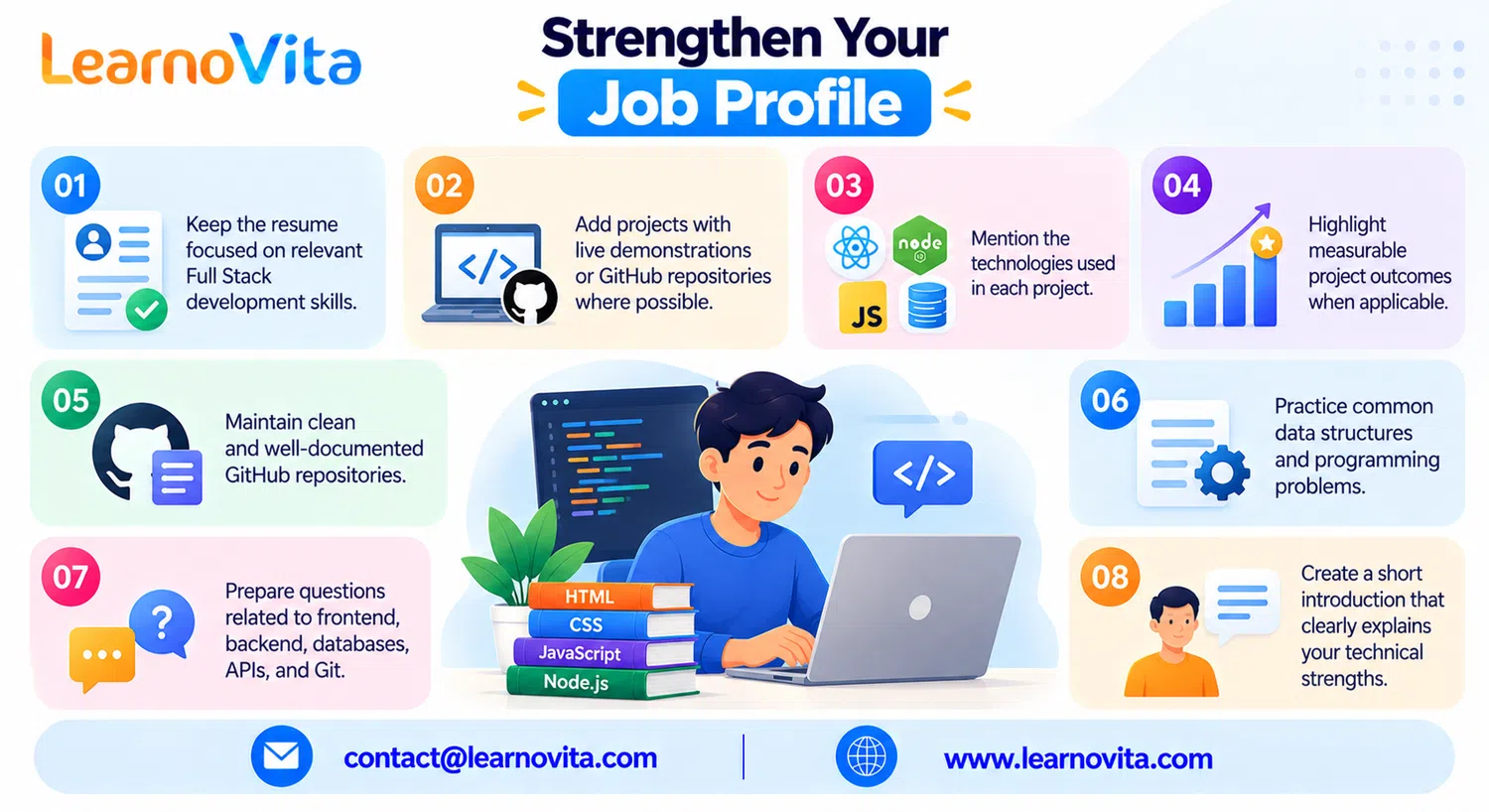
Keep the resume focused on relevant Full Stack development skills.
Add projects with live demonstrations or GitHub repositories where possible.
Mention the technologies used in each project.
Highlight measurable project outcomes when applicable.
Maintain clean and well-documented GitHub repositories.
Practice common data structures and programming problems.
Prepare questions related to frontend, backend, databases, APIs, and Git.
Create a short introduction that clearly explains your technical strengths.
Practice Interviews and Applications
During the final stage, learners should combine technical preparation with consistent job applications. Interview practice can cover JavaScript fundamentals, frontend frameworks, backend concepts, databases, REST APIs, authentication, debugging, Git, and basic system design. Candidates should also practice explaining their projects because recruiters may ask why a particular technology was selected, how the application works, what challenges were encountered, and how those challenges were solved. Applying regularly to internships and entry-level positions while improving based on interview feedback can make the job search more productive. Full Stack Developer Online Training helps learners gain practical skills in frontend and backend development, databases, APIs, and modern web technologies from anywhere.
Conclusion
A six-month Full Stack career challenge can provide a clear path from foundational learning to practical development and job preparation. The key is to avoid spending the entire period watching tutorials without building anything. By learning core technologies, developing meaningful projects, gaining internship exposure, maintaining a strong portfolio, practicing coding problems, and preparing for technical interviews, freshers can create a stronger profile for entry-level opportunities. Consistent practice and project-based learning can ultimately be more valuable than simply completing a long list of courses.