Artificial intelligence is becoming an important part of modern technology, creating career opportunities across data analysis, machine learning, software engineering, and intelligent application development. Data Scientist, ML Engineer, and AI Engineer are three prominent career options for people interested in this field. Although these roles often use related technologies, they differ in their responsibilities, technical priorities, and project requirements. Understanding these differences can help aspiring professionals plan their learning journey more effectively. Data Science Course in Chennai helps learners develop practical skills in Python, SQL, statistics, machine learning, data analysis, and visualization for data-driven careers.
Understanding the Career Roles
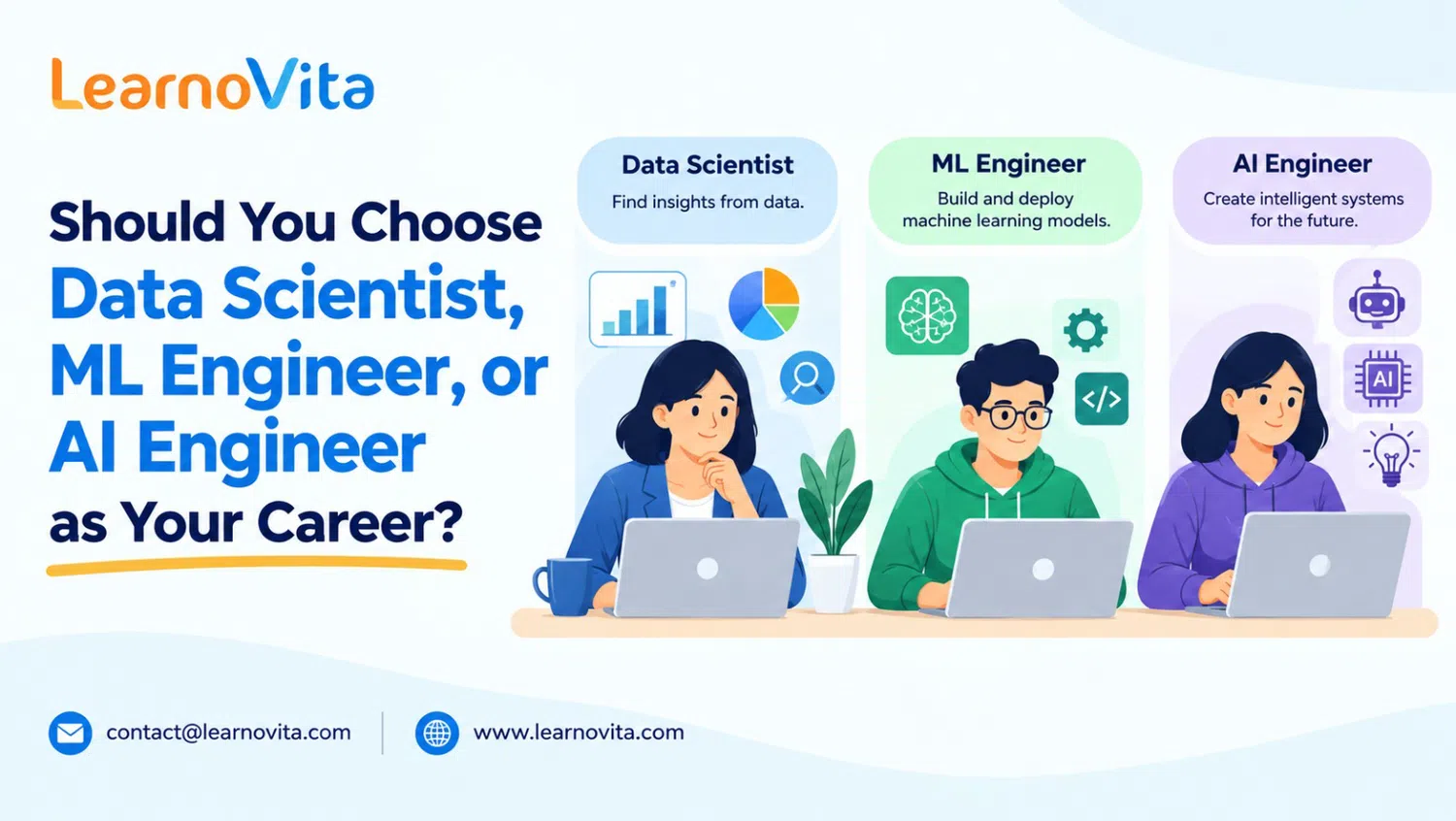
A Data Scientist primarily works with datasets to identify patterns, generate insights, and develop models that can support organizational decisions. An ML Engineer is more focused on building, deploying, and maintaining machine learning systems that can operate within real-world software environments. An AI Engineer typically combines software development with artificial intelligence technologies to create intelligent applications and features. The responsibilities can overlap between companies, so looking at the actual skills and duties listed for a position is useful when comparing these career paths.
Skills for Different Paths
Data Scientist: Python, SQL, statistics, data visualization, data analysis, machine learning, and predictive modeling.
ML Engineer: Python, machine learning frameworks, software development, APIs, cloud computing, deployment, and MLOps.
AI Engineer: Python, deep learning, NLP, computer vision, generative AI, AI APIs, and model integration.
Common skills: Programming, logical reasoning, data preparation, machine learning fundamentals, and problem-solving.
Practical capabilities: Portfolio projects, experimentation, model development, and real-world application building can strengthen technical experience.
Building a Data Science Career
Data Science centers on using data to understand problems and produce useful insights. Data Scientists may prepare datasets, conduct exploratory analysis, apply statistical techniques, build predictive models, evaluate results, and create visual reports. They can also work with business and technical teams to determine which questions should be answered through data. Individuals who enjoy analyzing information, working with statistics, investigating patterns, and communicating findings may be interested in developing a career in Data Science. Data Science Course in Bangalore helps learners build practical skills in Python, SQL, statistics, machine learning, data analysis, and visualization for data science careers.
Developing as an ML Engineer
Machine Learning Engineering focuses on implementing machine learning solutions as reliable and scalable software systems. ML Engineers may design data pipelines, train and optimize models, develop APIs, deploy models, monitor their performance, and improve system efficiency. Their work often requires knowledge of software engineering, cloud platforms, automation, containers, and MLOps practices. This career can be relevant to people who enjoy programming and want to combine machine learning concepts with the development of production-ready systems. Join the leading Data Science Course in Hyderabad and master analytics, machine learning, and data visualization with practical training and placement support.
Comparing the Work Focus
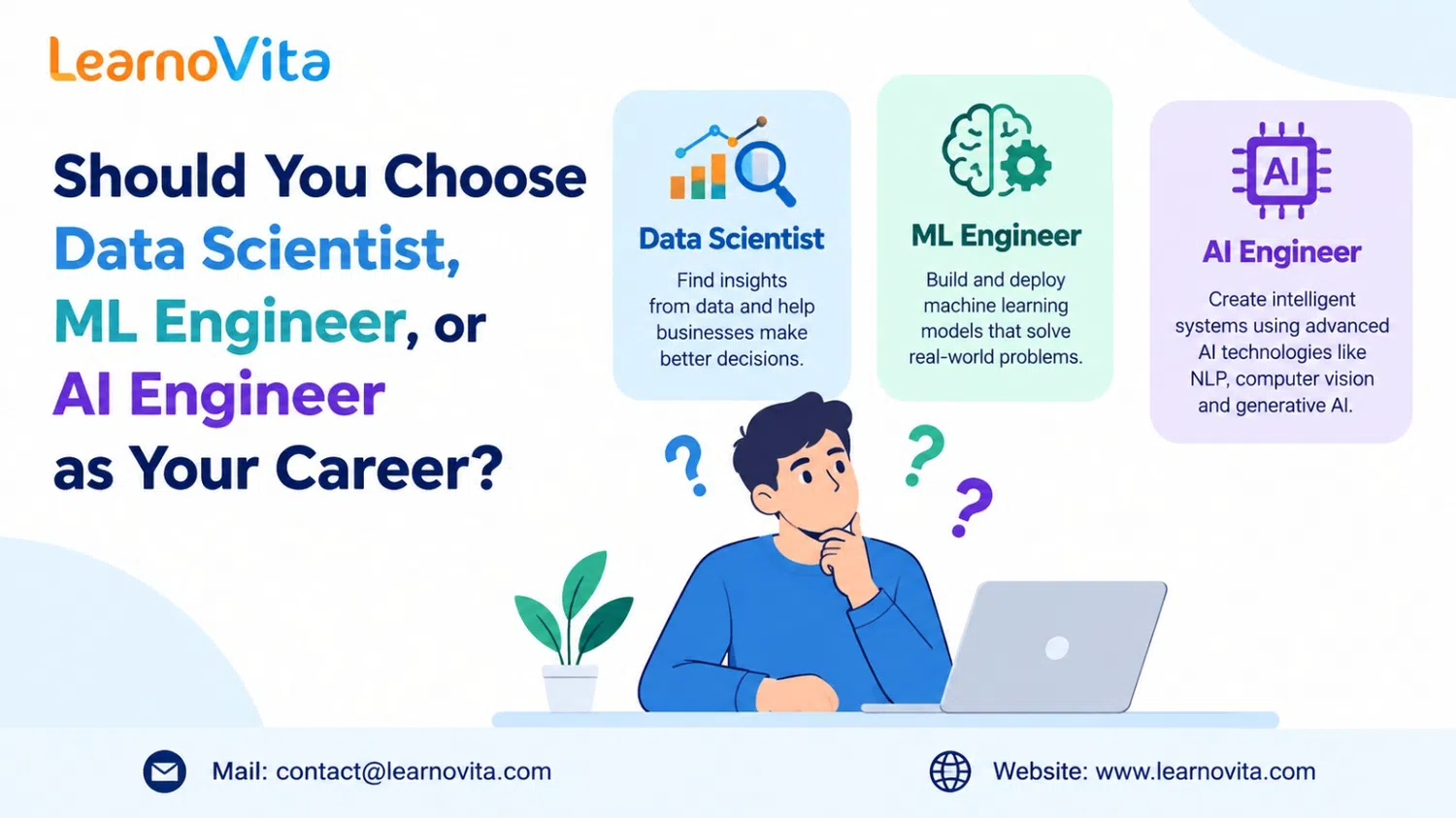
Data Scientist: Emphasizes data analysis, statistics, experimentation, predictive modeling, and insights.
ML Engineer: Emphasizes model development, deployment, scalability, automation, and infrastructure.
AI Engineer: Emphasizes AI-powered applications, generative AI, deep learning, and model integration.
Data-centric responsibilities: Data Scientists often focus heavily on understanding and interpreting datasets.
Application-centric responsibilities: ML and AI Engineers commonly focus more on implementing technologies within software systems.
Exploring AI Engineering
AI Engineering is expanding as organizations adopt generative AI, large language models, intelligent assistants, computer vision, and natural language processing. AI Engineers may work with foundation models, retrieval-augmented generation, embeddings, vector databases, AI agents, and model APIs to create practical applications. Their work can involve connecting AI capabilities with company data, developing intelligent workflows, integrating models into existing products, and improving application performance. Because AI tools and techniques change rapidly, professionals pursuing this field need to continuously develop their knowledge and adapt to new technologies. Data Science Certification Course helps learners develop practical skills in Python, SQL, statistics, machine learning, data analysis, and visualization while preparing for data science careers.
Conclusion
Data Science, ML Engineering, and AI Engineering offer different approaches to building a technology career around artificial intelligence. Data Scientists generally concentrate on analyzing information and producing insights, ML Engineers focus on developing and operating machine learning systems, and AI Engineers work on integrating modern AI capabilities into practical applications. Rather than choosing a path simply because a particular job title is popular, consider the type of work you enjoy, the skills required, and the projects you would like to build. Exploring each area through hands-on projects and structured learning can help you identify the career direction that aligns with your interests and professional plans.