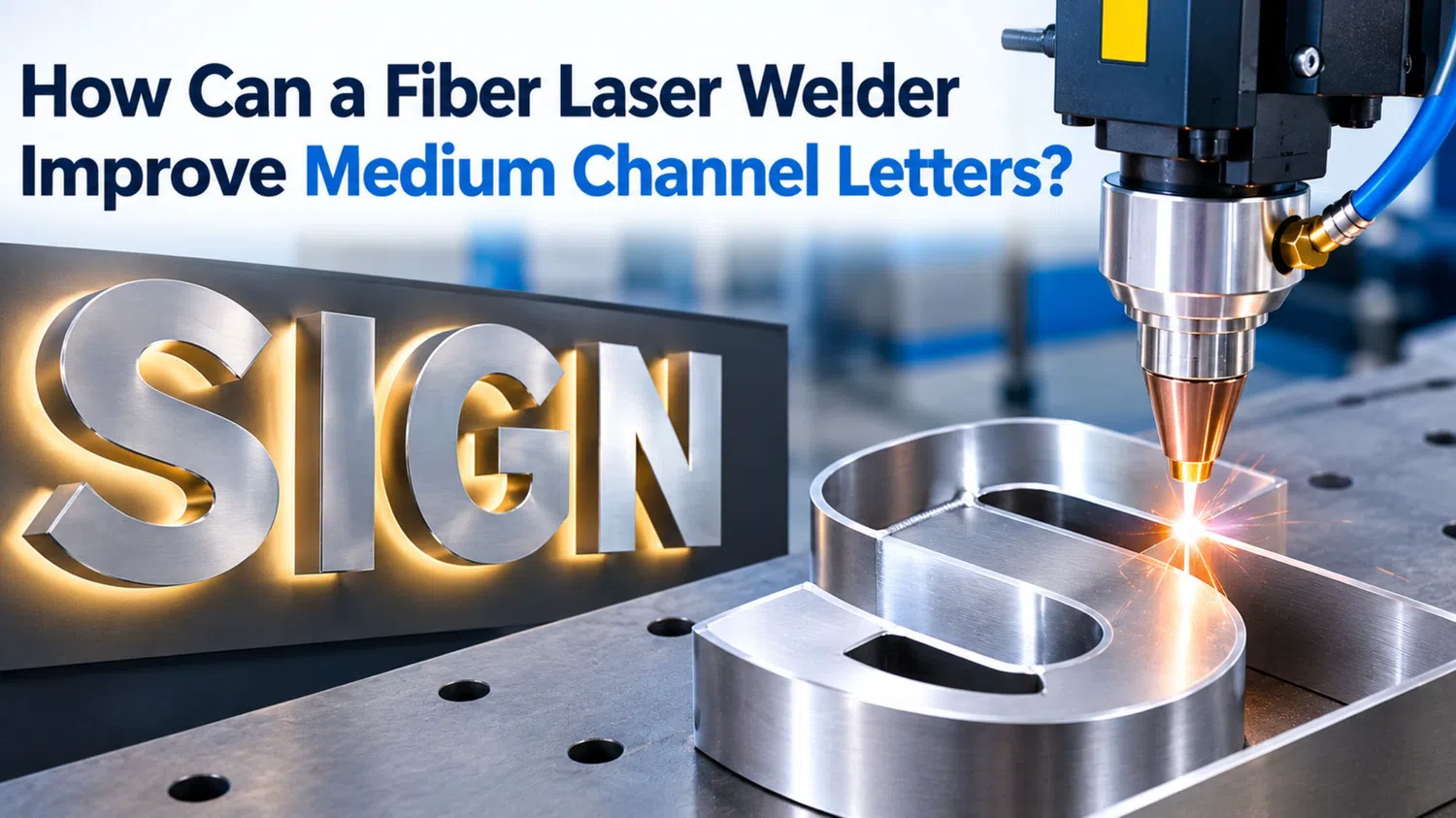
Medium channel letters need more than a good design. They need clean joints, accurate edges, and a professional finish that looks sharp when installed. A fiber Laser welder for medium channel letters can help sign manufacturers achieve these results with greater control. The focused laser beam supports precise welding while helping reduce excess heat, visible weld marks, and finishing work.
Cleaner Welds Create a More Professional Finish
The appearance of a channel letter matters. Uneven welds or rough joints can make even a well-designed sign look unfinished. Fiber laser welding provides a focused heat source that lets you join suitable metal parts with greater precision.
For medium channel letters, this can help create smoother seams along frames and letter edges. You may also spend less time grinding or correcting rough areas after welding. The cleaner the joint, the easier it becomes to achieve the polished look customers expect from professional signage.
Better Heat Control Helps Protect Letter Shape
Channel letters often use thin metal sheets and carefully formed sections. Too much heat can affect these parts and may cause distortion. That can create extra work during assembly and finishing.
Fiber laser welding concentrates energy into a smaller area. This controlled process can help limit unnecessary heat exposure when the machine is correctly set for the material and thickness. As a result, sign manufacturers can maintain better control over the shape and alignment of letter components.
Of course, results depend on material, thickness, settings, joint design, and operator skill. The machine is powerful, but good setup still matters.
Precision Makes Assembly More Consistent
Medium channel letters often contain multiple parts that must fit together accurately. Small alignment problems can become noticeable once the complete letter is assembled and mounted.
Laser welding can support repeatable joints when you use the correct settings and process. This helps your team maintain greater consistency across batches of similar letters. Whether you are producing one custom sign or several letters for a larger project, repeatability can make the workflow easier to manage.
That consistency also helps reduce avoidable rework. Nobody wants to discover that the last letter in a sign set suddenly decided to be different from the others.
Faster Production Can Improve Your Workflow
Time is important in sign fabrication. Cutting, fitting, welding, grinding, and finishing can quickly add up across a large order. A more efficient welding process can help reduce the time required for certain suitable applications.
With handheld fiber laser welding, your operator can move around the workpiece and access different areas without relying on a large fixed welding setup. The process can also reduce some post-welding work because the weld can be cleaner and more controlled.
This does not mean every project will take the same amount of time. However, a streamlined process can help your shop handle orders more efficiently.
Less Finishing Work Can Save Time
Welding is not always finished when the joint is complete. Traditional methods may leave areas that need grinding, polishing, or additional surface work.
A well-controlled fiber laser weld can produce a cleaner joint on suitable materials. That may reduce the amount of finishing required before painting, polishing, or assembling the channel letter.
For sign manufacturers, this can make a noticeable difference. Less finishing means fewer production steps, less manual labor, and a smoother path from fabrication to final installation.
The Same Technology Can Support Smaller Letters
The benefits are not limited to medium-sized signage. Depending on the machine and application, a fiber laser welder for small channel letters can also help sign shops produce precise joints on smaller components.
Smaller letters can require careful handling because their dimensions leave less room for error. A controlled welding process can help manufacturers work with greater precision while maintaining a clean appearance.
The key is choosing suitable equipment and settings for the specific letter size, material, and thickness. Your production requirements should always guide the machine selection.
What Should Sign Manufacturers Consider Before Buying?
The right laser welder should match your actual signage work. Start by looking at the metals you use most often, such as aluminum or stainless steel. Then consider material thickness, letter sizes, production volume, and the types of joints your team creates.
You should also look beyond the machine itself. Training, installation, technical support, maintenance, and ease of operation can affect how quickly your team gets value from the equipment.
A good supplier should help you understand the machine's capabilities and limitations. That makes the buying process more practical and helps you avoid paying for features your shop may never use.
Final Remarks
A fiber Laser Welder for Medium Channel Letters can improve sign production by supporting cleaner welds, better heat control, consistent assembly, and reduced finishing work. These benefits can help your team create professional-looking channel letters while making the fabrication process more efficient.The best results come from matching the welder to your materials, letter sizes, production volume, and workflow. With proper training and the right setup, fiber laser welding can become a valuable tool for modern sign fabrication.