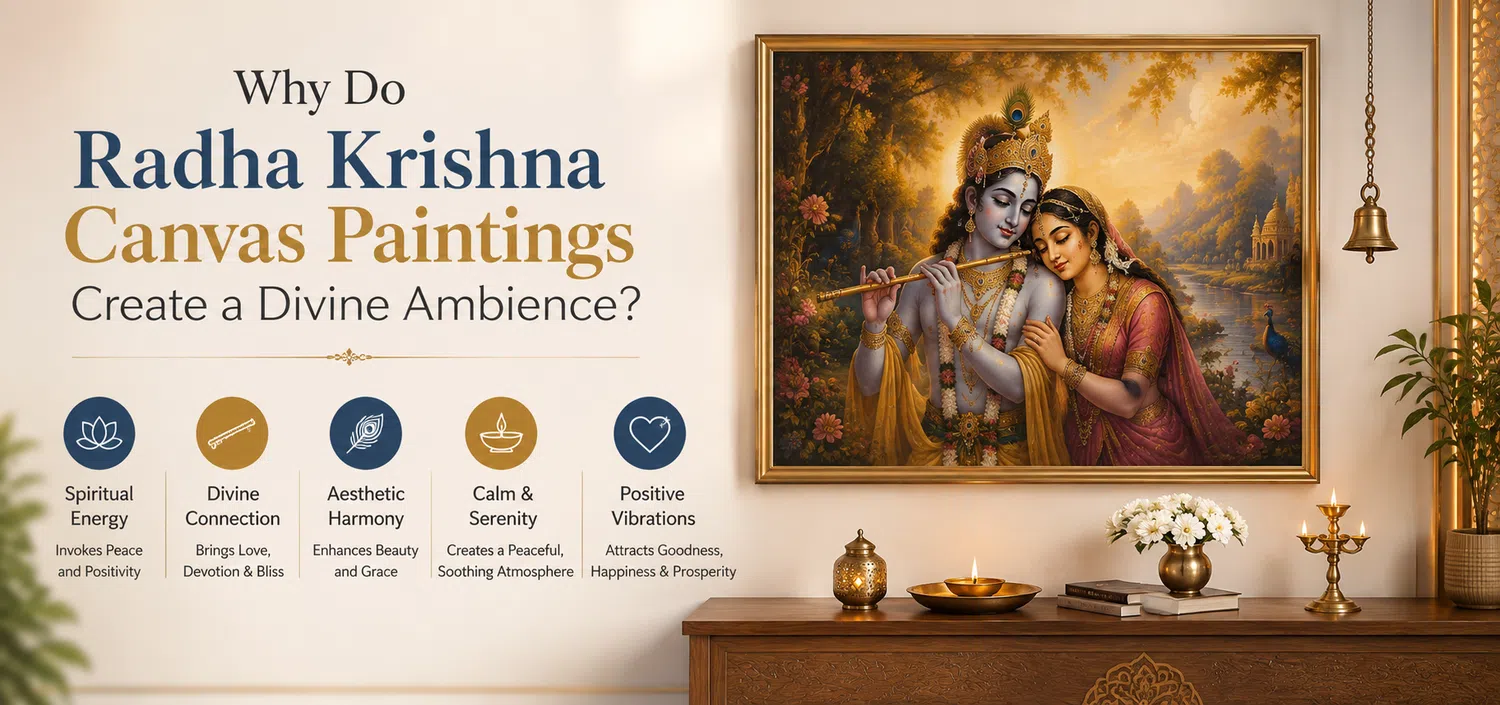
Radha Krishna imagery holds a distinctive place in Indian religious art, combining devotional meaning with visual expression. For many devotees, Radha and Krishna recall themes of divine love, devotion, harmony, and spiritual connection. On canvas, these themes may appear through graceful figures, colours, natural settings, and symbolic motifs. Such artwork can also become an important decorative feature at home. Its perceived divine ambience arises from cultural associations, personal faith, artistic composition, and thoughtful placement rather than any guaranteed supernatural effect.
Devotional Meaning Gives the Artwork Special Character
Radha and Krishna appear together across many devotional and artistic traditions in India. Interpretations vary, but their relationship is often associated with devotion and divine love. Consequently, a painting can carry meaning beyond its decorative role for people who share those associations.
Love and Devotion as Artistic Themes
Artists may portray Radha and Krishna standing together, seated in nature, dancing, or surrounded by symbolic details. Gentle expressions and balanced poses can give the composition graceful visual character.
For many devotees, these images support reflection or devotional attention. However, such responses belong to faith, culture, and individual interpretation. Interior design can assess visual balance and atmosphere, but cannot establish spiritual outcomes as measurable facts.
Traditional Motifs Enrich Visual Storytelling
Radha Krishna paintings often contain recognisable elements with visual and devotional meaning. Their significance can differ according to artistic tradition, regional style, and personal interpretation.
The Flute, Lotus, Peacock, and Natural Settings
Krishna is frequently depicted with a flute, strongly associated with his visual identity in devotional art. Lotus motifs, peacocks, and flowering landscapes can further enrich the scene.
Vrindavan-inspired imagery may include trees, riverbanks, gardens, cows, flowers, or pastoral surroundings. Moreover, artists arrange these details differently, ranging from intricate traditional Indian paintings to simplified contemporary canvas wall paintings.
Common visual elements include flutes, lotus flowers, peacocks, gardens, rivers, ornamental clothing, and architectural details. However, these motifs should be appreciated within the artwork's context rather than treated as guarantees of particular benefits.
Colour Shapes the Interior Presence
Colour influences how devotional wall art interacts with a room. Radha Krishna artwork may feature blues, greens, reds, gold tones, pinks, creams, or softer neutral combinations.
Matching Colour Without Losing Meaning
A colourful composition can become a focal point against a plain wall, while restrained tones may integrate quietly into contemporary home décor. Additionally, shared colours can connect a painting with upholstery, curtains, rugs, wood finishes, or accessories.
Exact matching is unnecessary. Homeowners can instead connect the painting with the broader palette. Nevertheless, devotional meaning may remain the primary consideration, even when the artwork contrasts with surrounding furniture.
Traditional and Contemporary Styles Offer Different Expressions
Radha Krishna paintings can feature detailed traditional styling, painterly realism, stylised figures, modern colour fields, simplified forms, or decorative interpretations.
Choosing a Style for the Interior
Ornate compositions can work with carved furniture, patterned textiles, warm wood tones, and traditionally influenced interiors. In contrast, contemporary Krishna artwork with cleaner backgrounds and restrained detailing may complement modern interiors.
The choice remains personal. A modern home can display traditional sacred artwork, while a classic room can accommodate a simplified composition. Therefore, proportion, colour, framing, and household preferences matter more than rigid styling rules.
Placement Can Strengthen the Visual Focal Point
Religious artwork deserves placement that considers visibility and household beliefs. A prominent wall can give a Radha Krishna canvas enough space to remain distinct.
Living Rooms and Devotional Spaces
Living room wall art may sit above a console or sofa when dimensions allow. Meanwhile, a prayer or meditation space may call for a smaller composition positioned according to household practices.
Respectful placement varies among families and traditions. Consequently, homeowners may follow their religious customs when deciding where sacred artwork belongs.
Scale and Framing Influence Presentation
A small painting can lose presence on an expansive wall, whereas an oversized canvas may overwhelm limited space. Measuring before purchasing helps maintain appropriate proportions.
Framed Versus Unframed Canvas
Frames can connect artwork with furniture or architectural finishes. Decorative frames may suit traditional compositions, while slim frames suit restrained interiors. Unframed canvas can provide a clean presentation when its edges are finished.
Consider wall width, furniture size, ceiling height, and viewing distance. Moreover, leave enough space around artwork to prevent visual competition.
Buying Online Requires Careful Assessment
People who buy radha krishna canvas paintings online in India should consider devotional preferences alongside practical information about size, production method, finish, framing, and delivery.
Check the Artwork Before Ordering
Online photographs can help assess composition and colour, but screen settings may affect how shades appear. Buyers should therefore rely on stated dimensions rather than room mock-ups alone.
Check:
Exact canvas and finished dimensions
Hand-painted, printed, or other stated production method
Framing and hanging arrangements
Surface finish and visible texture
Orientation and number of panels
Product images showing relevant details
Packaging and damage procedures
Applicable return conditions
Additionally, consider whether expressions, imagery, colours, and artistic treatment align with the household's devotional and aesthetic preferences.
Balancing Devotion with Interior Aesthetics
Radha Krishna canvas paintings can function simultaneously as religious artwork and home décor. For many households, however, their devotional significance may carry greater importance than their relationship with furniture or wall colours.
Choose with Respect and Personal Relevance
Select imagery that feels appropriate for the intended setting and household traditions. Avoid choosing sacred artwork merely because its colours match a room if its symbolism or presentation does not feel suitable.
Similarly, decorative coordination need not diminish devotional meaning. Thoughtful scale, lighting, framing, and surrounding space can present sacred artwork respectfully while supporting an organised interior.
Conclusion
Radha Krishna canvas paintings can create a serene, devotionally meaningful ambience through cultural associations, symbolic imagery, expressive composition, and thoughtful placement. Flutes, lotuses, peacocks, pastoral scenery, and graceful figures can strengthen artistic character. However, spiritual significance remains connected to faith and personal interpretation rather than guaranteed effects. By considering style, scale, framing, colour, household traditions, and respectful placement, homeowners can select artwork supporting both devotional purpose and interior aesthetics.