Hospital interiors influence how patients, visitors and healthcare professionals perceive their surroundings. Carefully selected wall paintings can make clinical spaces appear welcoming and visually balanced. Nature-inspired artwork, gentle colours and uncluttered compositions may contribute to a calmer atmosphere. However, visual appeal alone cannot determine suitability. Healthcare facilities must also consider artwork materials, cleaning requirements, installation safety, and departmental needs. Thoughtful selection helps hospitals maintain attractive interiors without compromising practical maintenance responsibilities.
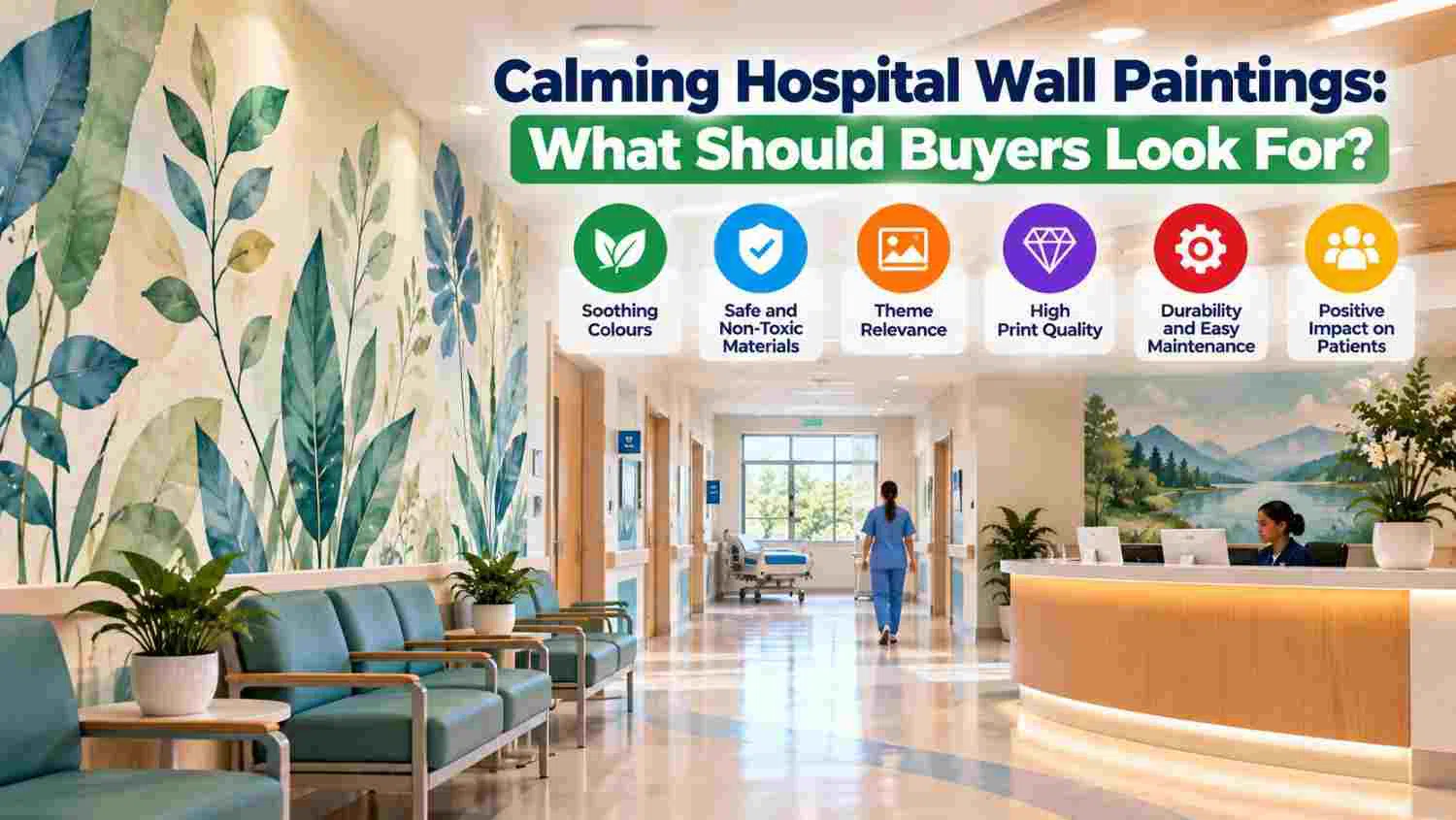
How Hospital Wall Paintings Create a Calming Atmosphere?
Hospital wall paintings contribute to visual comfort through balanced colours, familiar imagery, and thoughtful placement.
For example, landscape artwork featuring open skies can introduce a sense of visual spaciousness into compact waiting areas.
Similarly, botanical compositions provide natural decorative elements without requiring elaborate patterns.
However, paintings cannot replace clinical treatment or guarantee improvements in patient health.
Suitable artwork should complement existing lighting, furniture, and wall colours while avoiding unnecessary visual distractions.
Best Colours for Hospital Wall Paintings
Colour selection influences the visual character of patient-facing environments.
Soft shades often complement healthcare interiors, although individual preferences and lighting conditions affect their appearance.
Consider these colour combinations:
Soft blue: Complements sky landscapes and restrained coastal compositions.
Muted green: Suits botanical illustrations and nature-inspired paintings.
Warm beige: Coordinates with wooden furniture and neutral walls.
Cream: Provides a gentle background for understated decorative artwork.
Earth tones: Introduce natural warmth without excessive contrast.
Pastel combinations: Offer decorative variety through controlled colour differences.
Meanwhile, stronger colours may suit selected paediatric or reception spaces.
Avoid assuming every hospital department requires identical colour schemes.
Nature-Inspired Wall Paintings for Healthcare Interiors
Nature-inspired artwork offers familiar visual subjects that can complement clinical environments.
Landscape and Water Paintings
Landscape paintings featuring distant mountains, open fields and gentle horizons introduce visual depth.
Similarly, calm water scenes can complement waiting rooms featuring neutral furniture and soft lighting.
Botanical and Tree Artwork
Botanical illustrations provide decorative detail through leaves, branches and restrained natural colours.
Tree paintings may suit corridors, consultation rooms and reception areas where sufficient wall space supports their proportions.
Minimalist Abstract Paintings
Minimalist compositions use simple shapes, restrained colours and generous negative space.
However, highly complex patterns may compete with essential hospital signage and surrounding equipment.
Choosing Wall Paintings for Different Hospital Areas
Different hospital departments require artwork that reflects their functions, occupants and maintenance conditions.
Patient Rooms
Choose restrained landscapes or botanical compositions that complement bedding, furniture and wall colours.
Additionally, consider viewing positions from patient beds and nearby seating.
Waiting Areas
Waiting rooms accommodate people with different ages, preferences and healthcare concerns.
Therefore, select broadly suitable imagery and avoid unnecessarily disturbing or visually aggressive subjects.
Hospital Corridors
Corridors require artwork that complements circulation spaces without obstructing movement.
Choose appropriately sized frames and maintain clearance for wheelchairs, trolleys and hospital equipment.
Paediatric Departments
Children's healthcare areas may benefit from friendly animals, colourful landscapes and simple illustrations.
However, balance cheerful colours with visual restraint and practical cleaning requirements.
Reception Areas
Reception artwork should complement seating arrangements, lighting and the hospital's interior colour scheme.
Larger statement paintings may suit spacious entrance walls when their dimensions remain proportionate.
Artwork Materials, Cleaning and Infection Prevention
Healthcare facilities must evaluate decorative materials according to their intended locations.
Ordinary canvas paintings may suit selected administrative or waiting areas but may not meet higher-risk clinical cleaning requirements.
Comparing Artwork Materials
Canvas paintings: Offer decorative texture but may collect dust.
Framed prints: Provide structured presentation and potentially protective glazing.
Smooth decorative panels: May simplify cleaning when materials support suitable procedures.
Textured artwork: Requires careful assessment because uneven surfaces can complicate maintenance.
Protective glazing can reduce direct contact with printed artwork. Nevertheless, frame construction and surface compatibility remain important.
Cleaning and Maintenance Requirements
Hospital maintenance teams should check manufacturer instructions before selecting cleaning products.
Additionally, consider moisture exposure, frame joints, dust accumulation and accessibility.
Infection prevention personnel should assess artwork suitability in clinical areas with heightened hygiene requirements.
Decorative paintings cannot replace established environmental cleaning procedures.
Artwork Size, Placement and Installation Safety
Painting dimensions should complement available wall space without interfering with hospital operations.
Before installation, assess:
Wall width and available height.
Artwork weight and frame construction.
Suitable mounting hardware.
Patient and wheelchair movement.
Medical equipment clearance.
Emergency signage and access routes.
Moreover, avoid positioning fragile artwork near frequently moving equipment.
Select secure fixings according to wall construction and artwork weight.
Where necessary, obtain appropriate installation advice before mounting heavier pieces.
What to Check Before Buying Hospital Wall Paintings Online
Online product photographs provide useful visual references but cannot establish every material characteristic.
Before buyers buy hospital wall painting online in India, they should verify artwork specifications, cleaning compatibility, framing and delivery conditions.
Important purchasing checks include:
Confirm actual artwork and frame dimensions.
Review canvas or printing material specifications.
Examine close-up photographs for print clarity.
Compare displayed colours with existing interiors.
Check cleaning instructions and surface finishes.
Verify mounting accessories and installation requirements.
Review packaging, delivery and replacement conditions.
Screen settings may affect colour representation. Therefore, digital previews cannot guarantee identical physical colours.
Common Hospital Artwork Selection Mistakes
Selecting paintings solely for appearance can create maintenance difficulties.
Similarly, oversized frames may obstruct narrow corridors or interfere with nearby equipment.
Avoid placing difficult-to-clean artwork in areas requiring frequent surface disinfection.
Furthermore, highly detailed compositions may create unnecessary visual clutter in compact patient rooms.
Instead, assess departmental requirements before finalising decorative purchases.
Conclusion
Suitable hospital wall paintings combine balanced colours, appropriate imagery and practical material selection.
Nature-inspired compositions may contribute to welcoming interiors, while department-specific choices support visual consistency.
However, healthcare buyers must prioritise cleaning compatibility, secure installation and operational requirements.
Reviewing product specifications alongside actual hospital conditions helps facilities select appropriate decorative artwork without compromising maintenance responsibilities.