A chemical peel sounds intense, but at its simplest it is a controlled exfoliation: a chosen solution is applied to the skin for a set time, encouraging the outer layers to shed so fresher skin can take their place. Peels have been used in dermatology for decades for dullness, uneven tone, fine lines, mild scarring and sun-related pigmentation. "A peel" is not one treatment, though, its depth changes everything about what it can do, how much downtime it involves, and who it suits. This guide explains the three depth levels and what to expect if you are considering chemical peel treatment in Faisalabad.
How Chemical Peels Work
Healthy skin constantly renews itself, but that process slows with age and sun exposure. A peel speeds up the shedding of the surface layers in a controlled way and, depending on the solution used, can also support collagen renewal in deeper layers over time. Patient information from the American Academy of Dermatology describes peels as a resurfacing option whose results depend heavily on depth, preparation and aftercare, which is why a consultation and skin assessment should always come first.
The Three Depth Levels
Superficial peels work on the outermost layer of skin only. They use milder solutions, are often done in a series of sessions, and are commonly used for mild discoloration, rough texture, dullness and very fine lines. There is typically little or no visible peeling, perhaps light flaking for a day or two, and most people return to normal activities straight away. Because they are gentle, results build gradually over several sessions. Superficial peels are also the category used within many clinic facials; this overview of medicated facials in Faisalabad gives a sense of how lighter resurfacing fits into a wider skincare plan.
Medium peels reach the outer and part of the middle layers of skin. They are used for more noticeable sun damage, pigmentation, moderate fine lines and some shallow scarring. Expect several days of visible peeling, redness and sensitivity while the new skin forms. These peels need proper preparation, careful timing, and structured aftercare, and they are not suitable for every skin tone, in deeper skin tones the risk of pigmentation deepening after treatment is higher, so an experienced clinician may suggest a gentler series instead.
Deep peels reach further into the middle layer and are intended for more significant sun damage and deeper lines. They involve the longest recovery, often one to two weeks of visible healing, and the most significant risks, so they are used selectively, on limited areas, and only after thorough assessment. Many clinics in Pakistan work mainly with superficial and medium peels, reserving deep peels for specific cases.
What Happens During and After a Peel
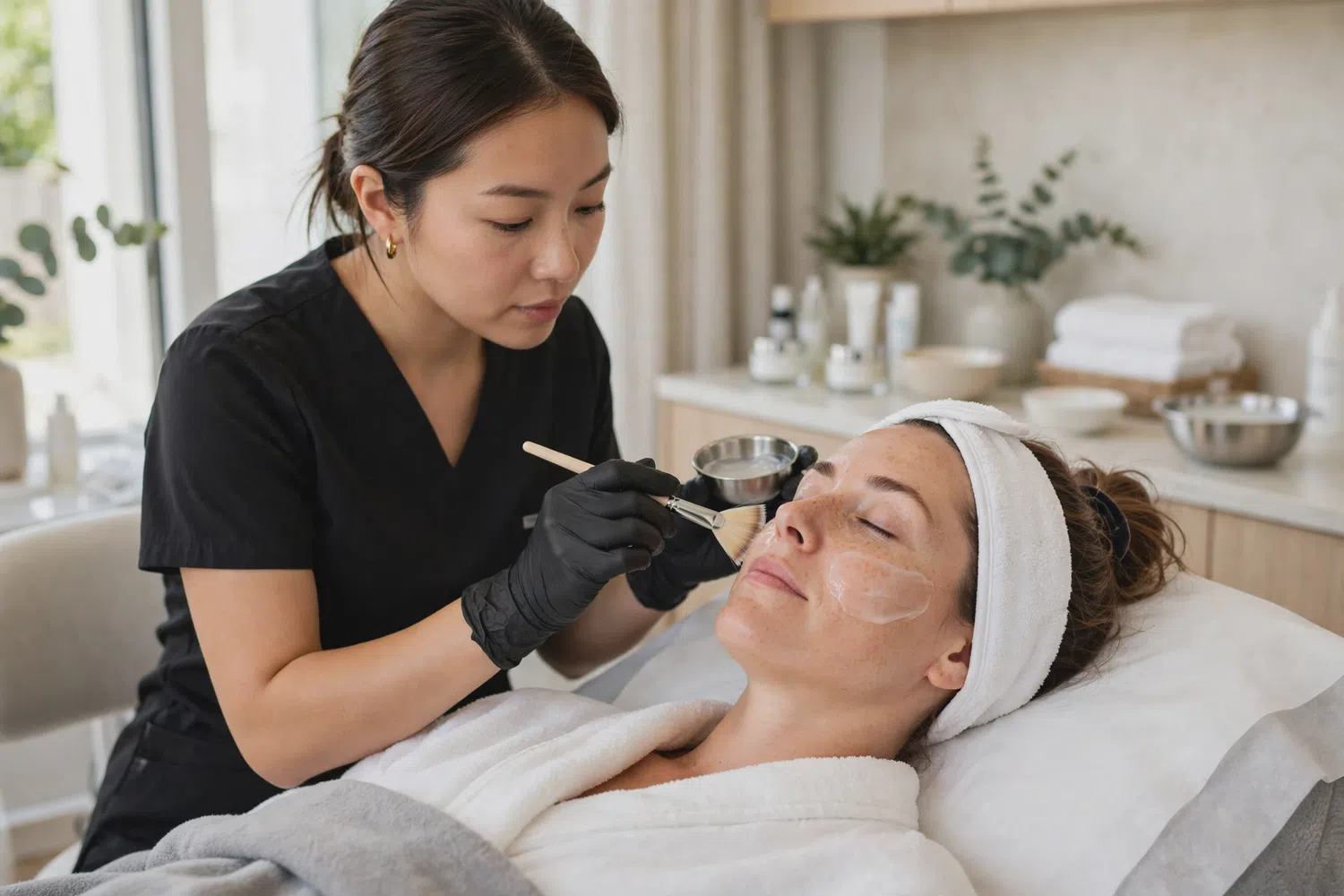
At your appointment, the skin is cleansed and prepared, the solution is applied for a controlled time, and you may feel warmth, tingling or mild stinging that settles once the solution is neutralised or removed. The session itself is usually short. Afterwards, the skin may look slightly flushed or feel tight and dry. With superficial peels this passes quickly; with medium peels the skin typically darkens slightly, then flakes and peels over several days, it is important to let it shed naturally and never pull or pick at it, as interfering can cause marks or infection. The Mayo Clinic advises that healing skin after a peel is more sensitive to the sun, so daily sunscreen and careful sun avoidance during recovery are essential, a point that carries extra weight in Faisalabad, where sun intensity and heat stay high for much of the year.
Who Should Avoid or Postpone a Peel
A peel is not right for everyone, and a reputable clinic will sometimes advise waiting. Reasons to postpone or avoid a peel can include an active skin infection, cold sores in the treatment area, open wounds, eczema or dermatitis flares, recent sunburn, and certain medications. Having taken isotretinoin (a strong acne medicine) in recent months is important to disclose, as it can affect healing. Some peel ingredients are best avoided during pregnancy or breastfeeding, so these must always be discussed openly. A history of keloid scarring or of pigmentation that darkens easily also needs flagging, because it changes which peel, if any, is appropriate. This kind of suitability screening is part of what distinguishes a medical clinic from a purely cosmetic setting, as discussed in this profile of the best clinic in Faisalabad.
Aftercare That Protects Your Results
For the first days, keep skincare simple: a gentle cleanser, a bland moisturiser and sunscreen, unless your clinician directs otherwise. Avoid scrubs and active ingredients such as retinoids until cleared, and skip waxing or threading on the treated area for a while. Do not try to speed up peeling, and contact your clinic if you notice increasing pain, swelling, blistering or signs of infection. Finally, think in terms of a plan, not a single event: for many concerns, a series of superficial peels spaced a few weeks apart delivers steadier improvement than one aggressive session.
Frequently Asked Questions
Does a chemical peel hurt?
Most people feel tingling, warmth or mild stinging during application, which settles quickly. Deeper peels can be more uncomfortable, and your clinician will explain what to expect for the depth chosen for you.
How much downtime should I plan for?
Superficial peels usually involve little or no downtime. Medium peels commonly involve several days of visible peeling, and deep peels one to two weeks or more of healing. Timelines vary with your skin and the peel used.
Can I have a peel if I have a darker skin tone?
Often yes, but the type and depth must be chosen carefully, because deeper peels carry a higher risk of pigmentation changes in darker skin. A conservative series of superficial peels is frequently the safer route, decided at consultation.
How soon will I see results?
Surface brightness can improve within days of a superficial peel, but concerns like pigmentation and fine lines improve gradually over a series of sessions and consistent home care, including daily sunscreen.
This article is general information only and is not a substitute for a professional consultation or diagnosis.