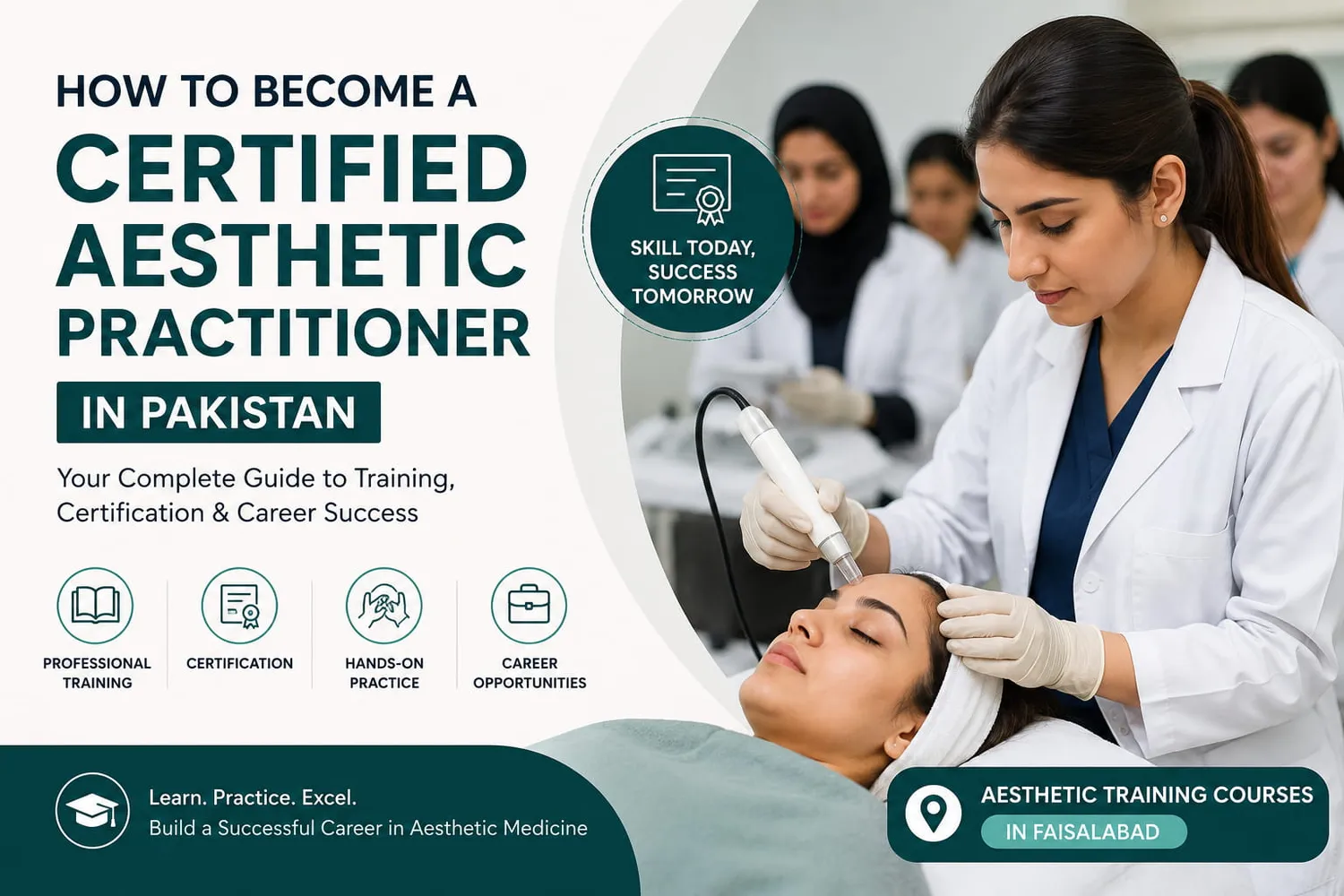
The demand for aesthetic treatments in Pakistan has grown rapidly over the last few years. From laser hair removal and chemical peels to skin rejuvenation and anti-aging procedures, more people are choosing non-surgical cosmetic treatments than ever before. As a result, aesthetic clinics are expanding, creating exciting career opportunities for healthcare professionals.
However, success in this field requires much more than enthusiasm. Patients expect safe, evidence-based treatments performed by trained professionals. That is why proper education, hands-on practice, and continuous learning are essential before offering aesthetic services.
If you are planning to build a career in aesthetic medicine, this guide explains how to become a certified aesthetic practitioner in Pakistan and why choosing the right training program can make all the difference.
Why Professional Aesthetic Training Matters
Aesthetic procedures may appear simple, but they involve detailed knowledge of facial anatomy, skin physiology, infection control, patient assessment, and complication management.
Without structured education, practitioners may increase the risk of poor treatment outcomes or patient dissatisfaction. Regulatory guidance in Pakistan also emphasizes competency-based training and supervised clinical experience for aesthetic practice.
Professional training helps you:
- Build confidence before treating real patients
- Understand treatment indications and contraindications
- Learn proper patient consultation techniques
- Reduce treatment risks and complications
- Improve career opportunities in reputable aesthetic clinics
Who Can Become an Aesthetic Practitioner?
Eligibility depends on the type of procedures you intend to perform and the applicable regulatory requirements.
Many healthcare professionals choose aesthetic medicine as a career path, including:
- Doctors (MBBS)
- Dentists (BDS)
- Dermatologists
- Plastic surgeons
- Nurses (where permitted within their professional scope)
- Allied healthcare professionals seeking supervised aesthetic roles
Always ensure that your qualifications and intended practice comply with the latest professional and regulatory requirements in Pakistan.
Skills Every Successful Aesthetic Practitioner Needs
A successful practitioner combines medical knowledge with practical skills and patient communication.
Important competencies include:
- Skin analysis
- Facial anatomy
- Infection prevention
- Laser safety
- Chemical peel techniques
- PRP fundamentals
- Microneedling procedures
- Patient consultation
- Treatment planning
- Documentation and ethics
- Managing complications
- Aftercare instructions
Developing these skills through supervised practical sessions is far more valuable than learning from theory alone.
Choosing the Right Training Program
Many beginners search online for aesthetic certifications without knowing what separates a quality course from an average one.
Before enrolling, look for a program that offers:
- Comprehensive theoretical education
- Extensive hands-on practical training
- Live patient demonstrations
- Experienced instructors
- Small practical batches
- Modern aesthetic equipment
- Clinical safety protocols
- Post-training guidance
Hands-on learning is particularly important because confidence develops through supervised practice rather than classroom lectures alone.
Why Many Search for Aesthetic Training Courses in Professionals Faisalabad?
As aesthetic medicine continues to grow across Pakistan, many healthcare professionals are looking beyond major metropolitan cities for quality education.
This has increased interest in aesthetic training courses in Faisalabad, where learners can receive practical instruction without the higher costs often associated with larger cities.
If you are looking for structured learning, hands-on experience, and expert mentorship, Health360 offers comprehensive aesthetic training courses in Faisalabad designed to help healthcare professionals strengthen both their theoretical knowledge and practical skills.
These courses focus on real-world clinical learning, enabling participants to gain practical exposure under experienced trainers while building confidence for professional practice.
What You Can Learn During Aesthetic Training
Course content varies between institutes, but a quality program typically covers multiple treatment categories.
Common topics include:
- Laser Hair Removal
- Skin Rejuvenation
- Chemical Peels
- Microneedling
- PRP Therapy
- HydraFacial techniques
- Facial assessment
- Patient consultation
- Infection control
- Treatment planning
- Clinical documentation
- Safety protocols
Advanced programs may also introduce newer technologies and evidence-based treatment approaches as the field continues to evolve.
Career Opportunities After Certification
Qualified practitioners can explore various career paths depending on their professional background and training.
Potential opportunities include:
- Aesthetic clinics
- Dermatology clinics
- Cosmetic surgery centers
- Medical spas
- Wellness clinics
- Laser treatment centers
- Private practice (where legally permitted)
- Clinical educator roles
- Industry training positions
Because aesthetic medicine continues to expand, professionals with quality training often enjoy strong career growth and ongoing learning opportunities.
Keep Learning After Your First Course
Certification should be viewed as the beginning of your professional journey rather than the final destination.
The aesthetic industry evolves rapidly with new technologies, devices, and treatment techniques introduced regularly. Continuing education allows practitioners to stay updated on:
- New treatment protocols
- Advanced laser technologies
- Patient safety recommendations
- Evidence-based procedures
- Ethical practice standards
Organizations such as the World Health Organization (WHO), the American Academy of Dermatology (AAD), and the International Society of Aesthetic Plastic Surgery (ISAPS) regularly publish educational resources that help professionals remain informed about patient safety and best clinical practices.
Final Thoughts
A career in aesthetic medicine can be professionally rewarding, but success depends on proper education, supervised clinical experience, and a commitment to patient safety. Rather than choosing the quickest certification available, invest in training that emphasizes practical skills, ethical practice, and evidence-based care.
Whether you are beginning your journey or planning to expand your clinical expertise, selecting high-quality aesthetic training courses in Faisalabad can provide the knowledge and confidence needed to build a successful long-term career in the growing field of aesthetic medicine.
Expert Tip 💡
The best aesthetic practitioners never stop learning. Choose training that prioritizes supervised hands-on practice over certificates alone, continue updating your skills every year, and always put patient safety ahead of trends. That mindset, not just a certificate, is what builds a trusted and successful aesthetic career.