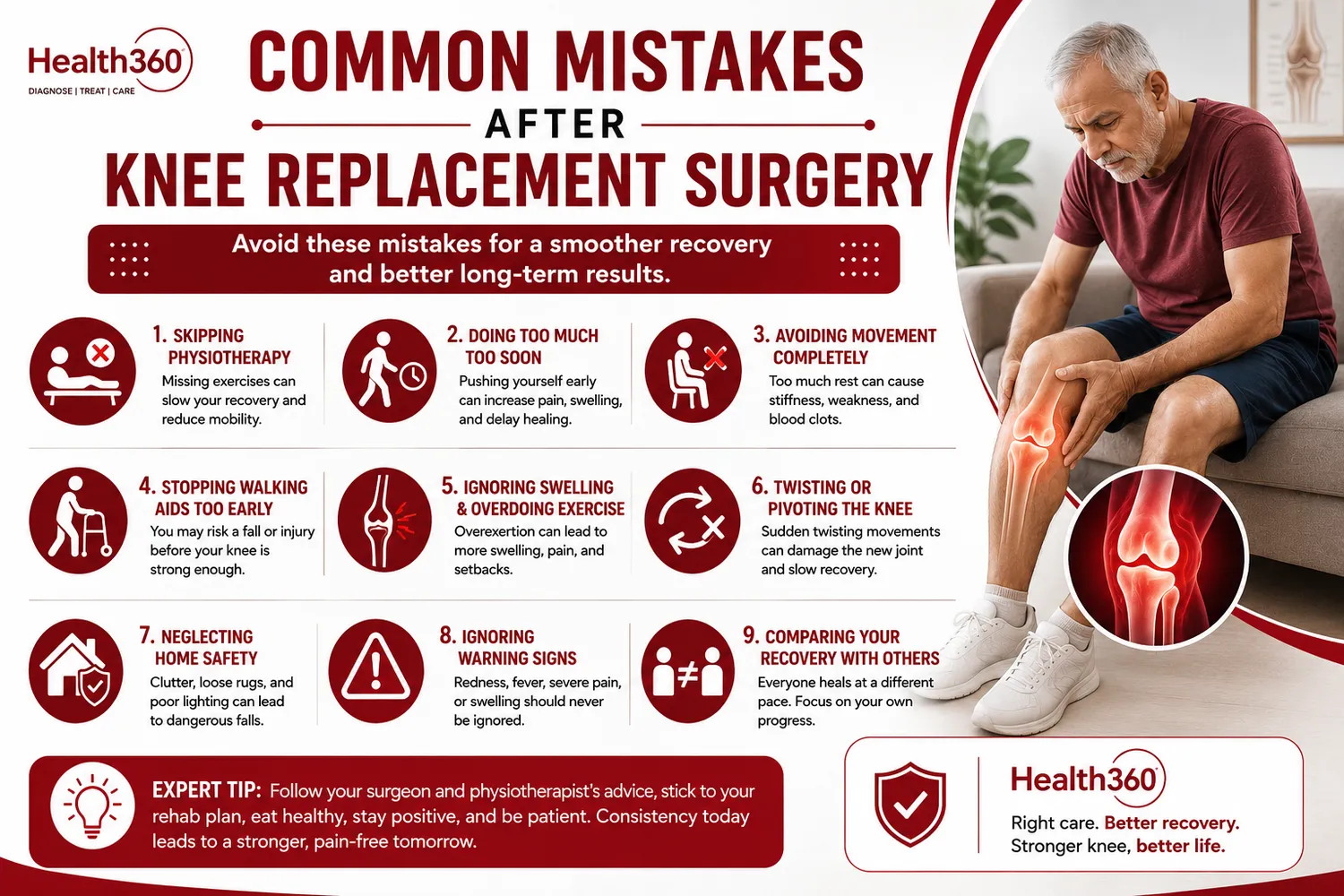
Knee replacement surgery can be life-changing. For many people, it offers a chance to move with less pain, return to everyday activities, and regain confidence. But surgery itself is only one part of the recovery journey. What you do in the weeks and months afterward can have a major effect on how well your knee regains strength and movement.
Unfortunately, some common mistakes after knee replacement surgery can slow recovery or create unnecessary problems. Some patients try to do too much too soon, while others avoid movement because they are afraid of pain. The key is finding the right balance between activity, rest, and professional rehabilitation.
Here are some of the most common mistakes to avoid after knee replacement surgery.
1. Skipping Physiotherapy Exercises
One of the biggest mistakes is treating physiotherapy as optional.
After knee replacement, the muscles around the knee are often weak, and the joint may feel stiff. Your physiotherapist can guide you through exercises designed to gradually improve strength, flexibility, balance, and movement.
The American Academy of Orthopaedic Surgeons recommends regular exercise and a gradual return to everyday activities as important parts of recovery.
Missing sessions or regularly avoiding your prescribed exercises may make it harder to regain normal movement. At the same time, you should not create your own exercise program without professional guidance.
Health360's physiotherapy services https://health360.pk/physiotherapy/ include rehabilitation and post-surgery recovery with personalized therapy plans, making professional guidance especially useful when you need a structured approach to recovery.
2. Doing Too Much Too Soon
After living with knee pain, it is understandable to feel excited when your new knee starts improving. You may want to walk farther, climb stairs, or return to household activities immediately.
However, recovery takes time.
The NHS notes that full recovery after knee replacement can take several months or longer, depending on factors such as age and general health.
Pushing yourself too hard can increase pain and swelling and may interfere with your rehabilitation routine. Increase activity gradually and follow the limits provided by your surgeon and physiotherapist.
3. Avoiding Movement Completely
The opposite mistake is being too inactive.
Some discomfort after surgery is expected, so patients sometimes become afraid to move the operated leg. But appropriate movement is an important part of rehabilitation.
Simple exercises and short walks, when approved by your healthcare team, can help improve circulation, strength, and mobility. The NHS recommends regular movement and following the exercises provided by your physiotherapist.
Instead of staying in bed for most of the day, follow your prescribed activity plan and gradually increase movement as your recovery progresses.
4. Stopping Walking Aids Too Early
Using a walker, crutches, or cane can sometimes feel frustrating. Patients may stop using them because they believe needing assistance means their recovery is slow.
That is not necessarily true.
Walking aids provide support while your strength, balance, and confidence are returning. The American Academy of Orthopaedic Surgeons advises patients to progress gradually and avoid limping or leaning away from the operated knee.
Do not stop using your walking aid simply because you feel impatient. Your surgeon or physiotherapist can tell you when it is safe to reduce or stop using it.
5. Ignoring Swelling and Overdoing Exercise
Swelling is common after knee replacement, especially after activity. However, repeatedly pushing through significant pain or swelling is not a good recovery strategy.
A better approach is to monitor how your knee responds to activity. Elevating the leg and using cold therapy as instructed may help manage swelling. AAOS also recommends discussing persistent problems with your orthopaedic surgeon or physical therapist.
Your rehabilitation program should progress gradually rather than becoming a competition against your previous level of activity.
6. Twisting or Pivoting the Knee
Everyday movements can become surprisingly challenging after surgery. Quickly turning, pivoting, or twisting while standing can place unnecessary stress on the recovering knee.
The NHS advises people recovering from knee replacement to avoid twisting the knee and to follow their healthcare team's instructions for daily activities.
Move slowly, take controlled steps, and use your walking aid correctly when required. Being careful with movement is particularly important during the early stages of recovery.
7. Neglecting Home Safety
A fall can seriously disrupt rehabilitation.
Loose rugs, electrical cords, cluttered walkways, poor lighting, and slippery bathroom surfaces can all increase the risk of falling. MedlinePlus recommends removing tripping hazards and making bathrooms safer during recovery.
Before returning home, prepare your living space. Keep frequently used items within easy reach, use appropriate footwear, and arrange support when necessary.
8. Ignoring Warning Signs
Not every symptom after surgery should simply be considered part of normal recovery.
Patients should contact their healthcare provider if they develop concerning symptoms such as worsening redness or swelling, unusual wound drainage, fever, persistent pain, or significant calf pain or swelling. Some symptoms may indicate infection or a blood clot and require prompt medical assessment.
If you experience chest pain or difficulty breathing after surgery, seek emergency medical attention.
9. Comparing Your Recovery With Someone Else's
It is easy to compare your progress with a friend, family member, or someone online who had knee replacement surgery.
But recovery is individual.
Your age, general health, muscle strength, surgical procedure, activity level, and other factors can influence how quickly you regain mobility. Instead of asking, "Why am I not recovering as quickly as they did?" focus on whether you are making steady progress according to your own rehabilitation plan.
When Should You Consider Professional Physiotherapy?
If you are struggling with stiffness, weakness, balance, walking, or completing your exercises correctly, professional guidance can make the recovery process easier to manage.
This is where choosing the right rehabilitation support becomes important. Rather than searching for quick fixes or copying exercises from social media, choose health360.pk's physiotherapy services for a structured approach to rehabilitation and post-surgical recovery.
Health360's available physiotherapy services include post-surgical rehabilitation and personalized recovery programs.
Final Thoughts
Knee replacement surgery can provide significant improvements in pain and mobility, but recovery requires patience and consistency. Avoiding common mistakes after knee replacement surgery, such as skipping exercises, overdoing activity, avoiding movement, stopping walking aids too early, or ignoring warning signs, can help you stay on a safer recovery path.
Remember that your surgeon's and physiotherapist's instructions should always take priority because every patient's recovery is different.
Expert Tip to Share
Think of knee replacement recovery as a marathon, not a race: move regularly, follow your rehabilitation plan, increase activity gradually, and listen to your body. Consistency, not doing everything at once, is what helps build strength and confidence in your new knee.