Why handmade souvenirs tell a deeper story
Most travelers return from Vietnam with identical lacquerware from a night market, unaware that the real treasure lies hours away in quiet villages where artisans have perfected their craft for generations. The Tinny Travel day trip from Hanoi dismantles the typical souvenir hunt, replacing it with a hands-on journey through living workshops. Instead of observing behind glass displays, you become part of the creative process, transforming raw materials into objects that carry your own fingerprints alongside centuries of tradition.
From raw bamboo to a personal conical hat
The morning begins in a village where the iconic non la has been shaped for over a century. Here, the common misconception that these hats are purely decorative dissolves immediately. You learn that the palm leaf layers are not simply stitched but compressed under wooden molds, creating a waterproof shell that shields farmers from monsoon rains. Under the guidance of a master artisan, your hands press the leaves, tie the silk thread, and adjust the rim. The process feels meditative, and when you lift your finished hat, it weighs less than expected but carries immense cultural weight. This is not a product; it is a dialogue with a craft that has clothed Vietnamese heads through wars, harvests, and festivals.
The lacquer process that hides a thousand layers
The next stop shifts your perception of patience. Lacquer art, known locally as son mai, is often dismissed as glossy decoration, yet the true technique involves up to eleven alternating layers of tree sap and pigment, each dried in humid chambers for days. At the workshop, you apply your first coat, then later, using a fine needle, trace a dragon or lotus onto the black surface before adding gold dust. The artisan explains that a single vase can take three months to complete, which is why cheap imitations crack within years. Your own piece, though modest, now holds a fragment of that disciplined rhythm. As you work, the scent of raw lacquer and wood fills the air, anchoring you to the moment.
By midday, hunger calls, and the tour pivots to a local home where a family meal unfolds. The dishes are not restaurant versions but household recipes—caramelized pork with fresh herbs, a tangy fish soup, and rice steamed in lotus leaves. You eat with your hands, tear the rice paper, and dip everything into a fermented shrimp paste that surprises your palate. This is not a cooking demonstration; it is an invitation into daily life, where the hostess shares how her grandmother fed nine children during the subsidy era. The flavors are honest, and the conversation overflows with laughter that needs no translation.
Photographing the incense village at golden hour
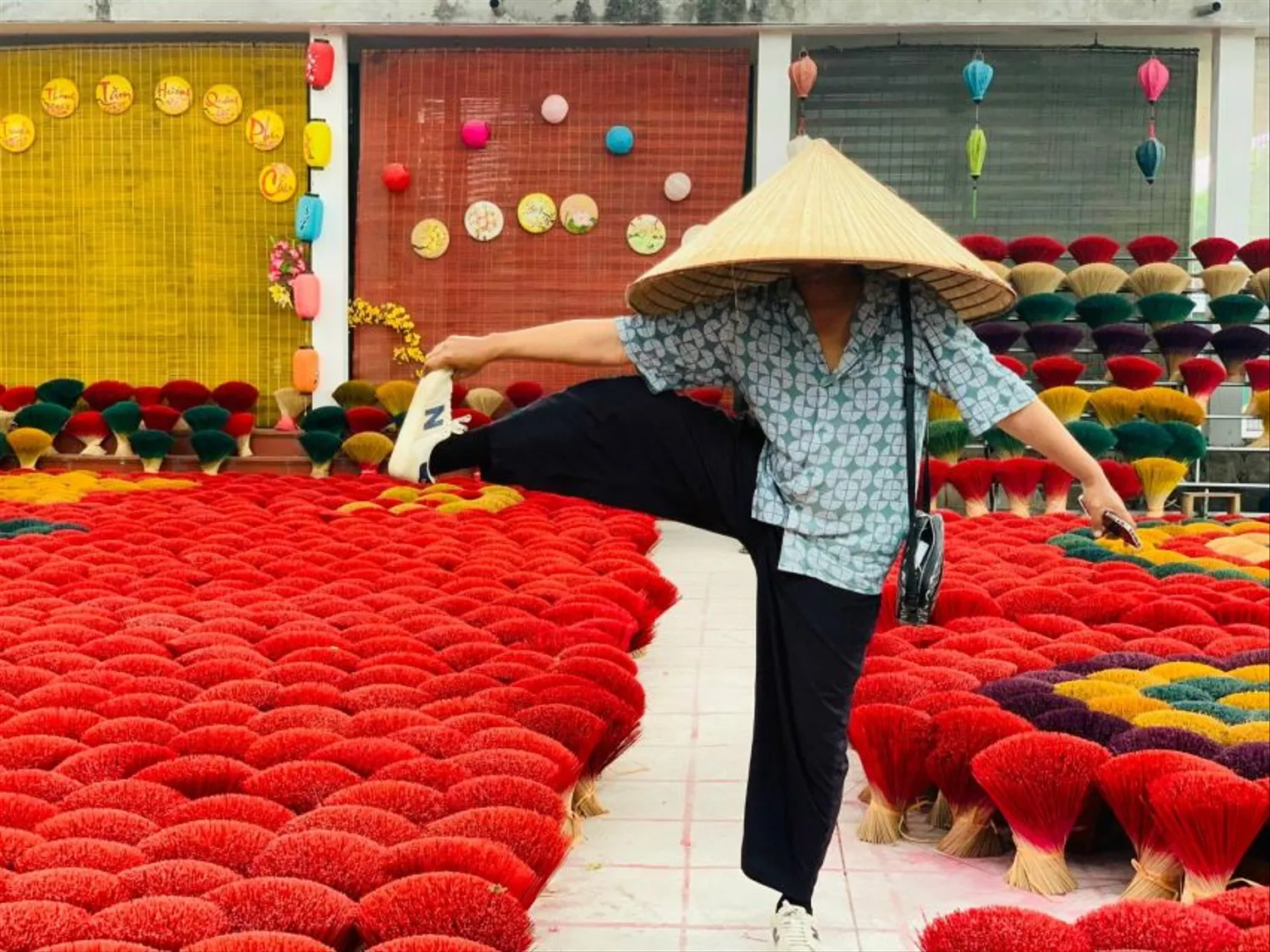
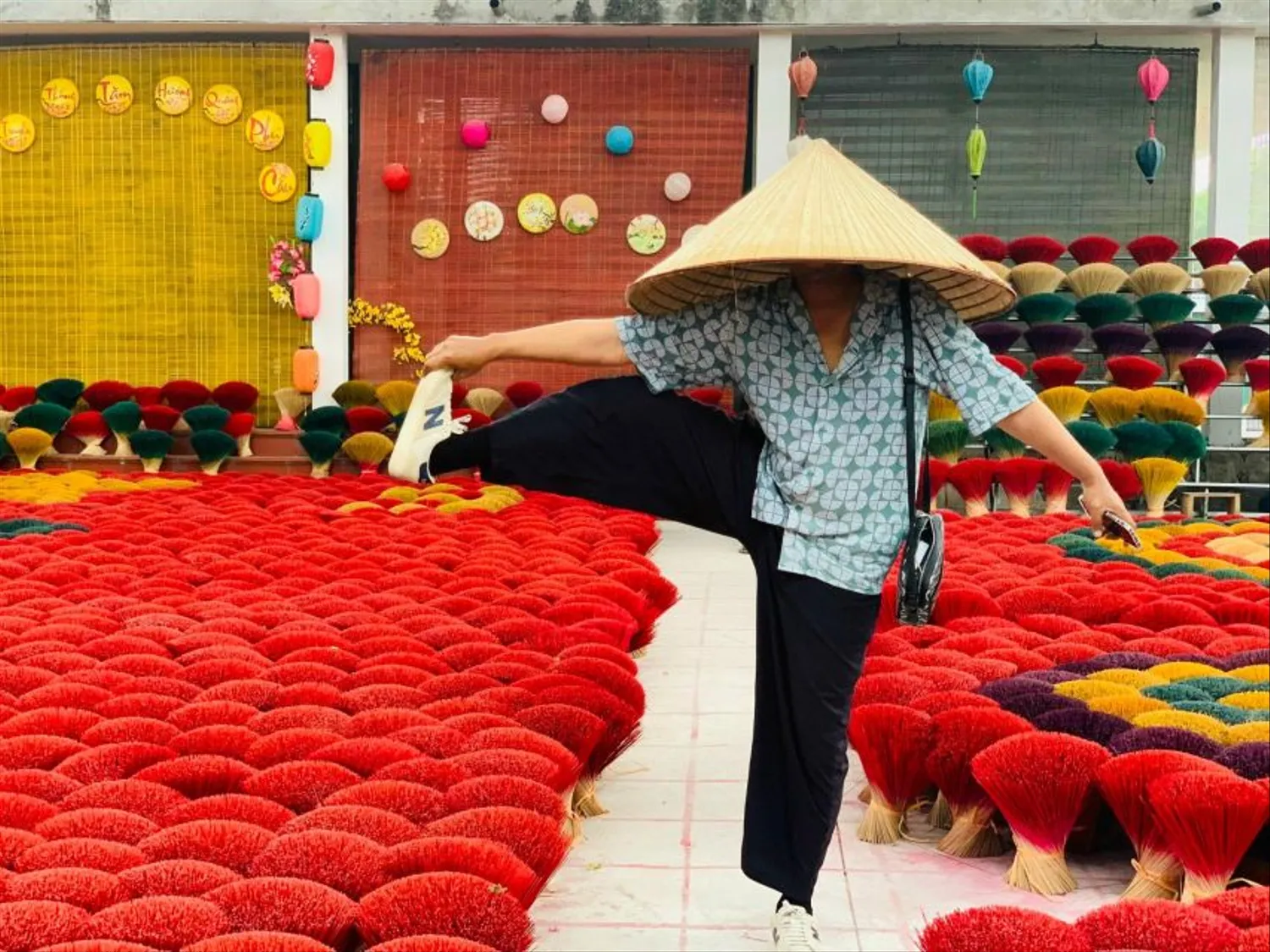
The final destination is the incense village, but the expected cliché of bundles lying flat on the ground is outdated. Instead, you arrive as workers are fanning freshly dyed sticks—crimson, saffron, and vermilion—into circular patterns that resemble giant sunbursts. The low sun catches the pigments, creating a saturated palette that demands your camera. Yet the villagers are not props; they invite you to join the fanning, and soon you are spinning your own radial masterpiece. The scent of aloeswood and cinnamon clings to your clothes, and the resulting photographs capture something more than color—they capture participation. The naked URL for this immersive journey is https://tinnytravel.com/product/from-hanoi-incense-conical-hat-lacquer-art-villages-day-trip/, where the full itinerary awaits.
As the van returns toward Hanoi, your hands are stained with indigo and gold dust, your bag holds a hat you shaped, and your memory card is full of photos that no stock image could replicate. The village artisans waved not as entertainers but as collaborators, and you leave with the quiet certainty that craft is not preserved in museums but in the shared act of making. The night market souvenirs will fade, but the weight of a hat that fits your head, crafted by your own effort, will not.