```html
Most travelers see Vietnam through a lens, but the truest view comes from behind a loom or a pot of lacquer. The journey from Hanoi into the craft villages is not a tour; it is a conversation with hands that have shaped culture for centuries. Tinny Travel designs this day to dissolve the line between observer and maker, letting you step into the rhythm of artisans who treat patience as a material. You will not simply watch. You will sit where they sit, breathe the dust of their workshops, and leave with a piece of Vietnam that your own fingers helped create.
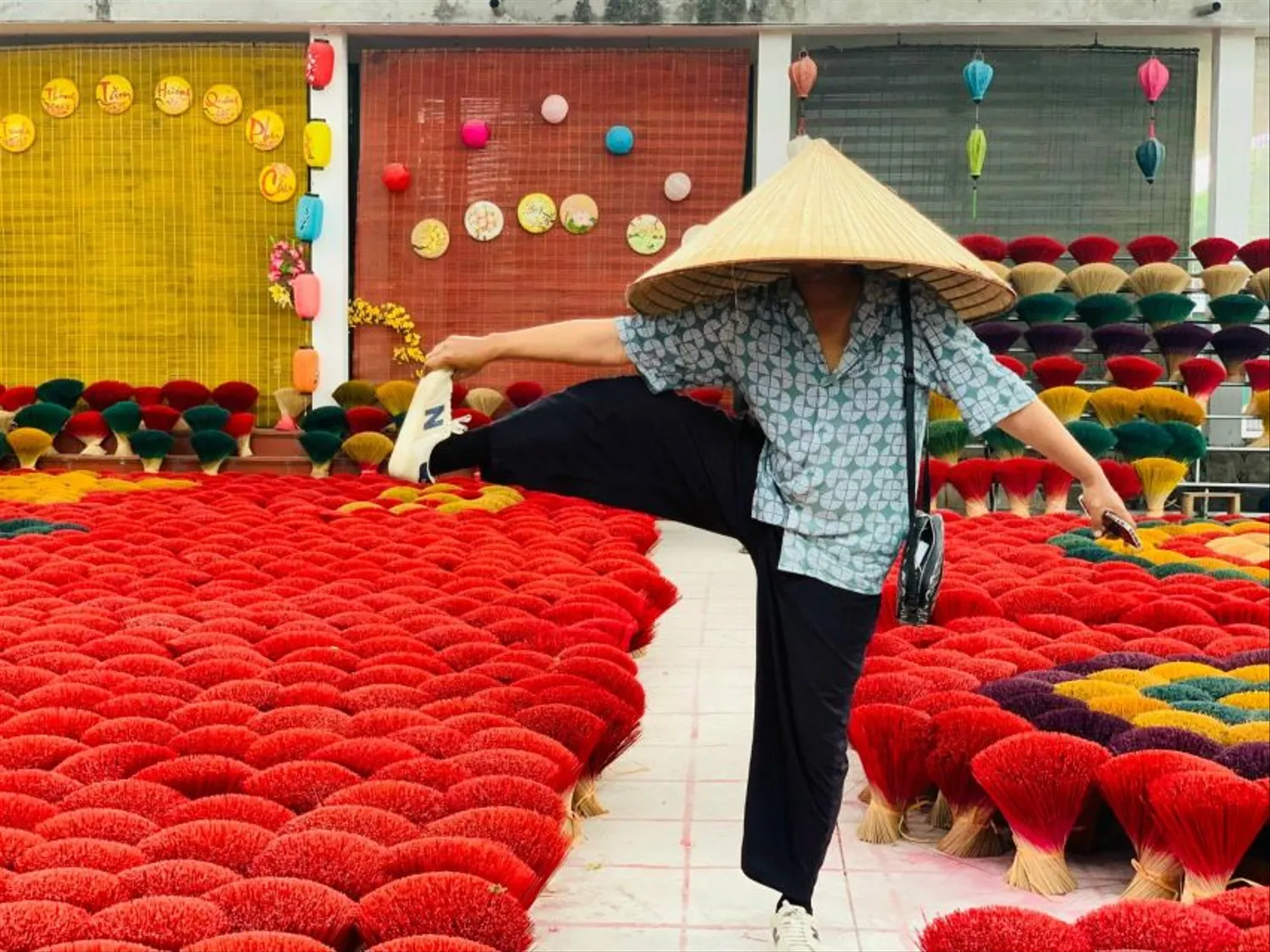
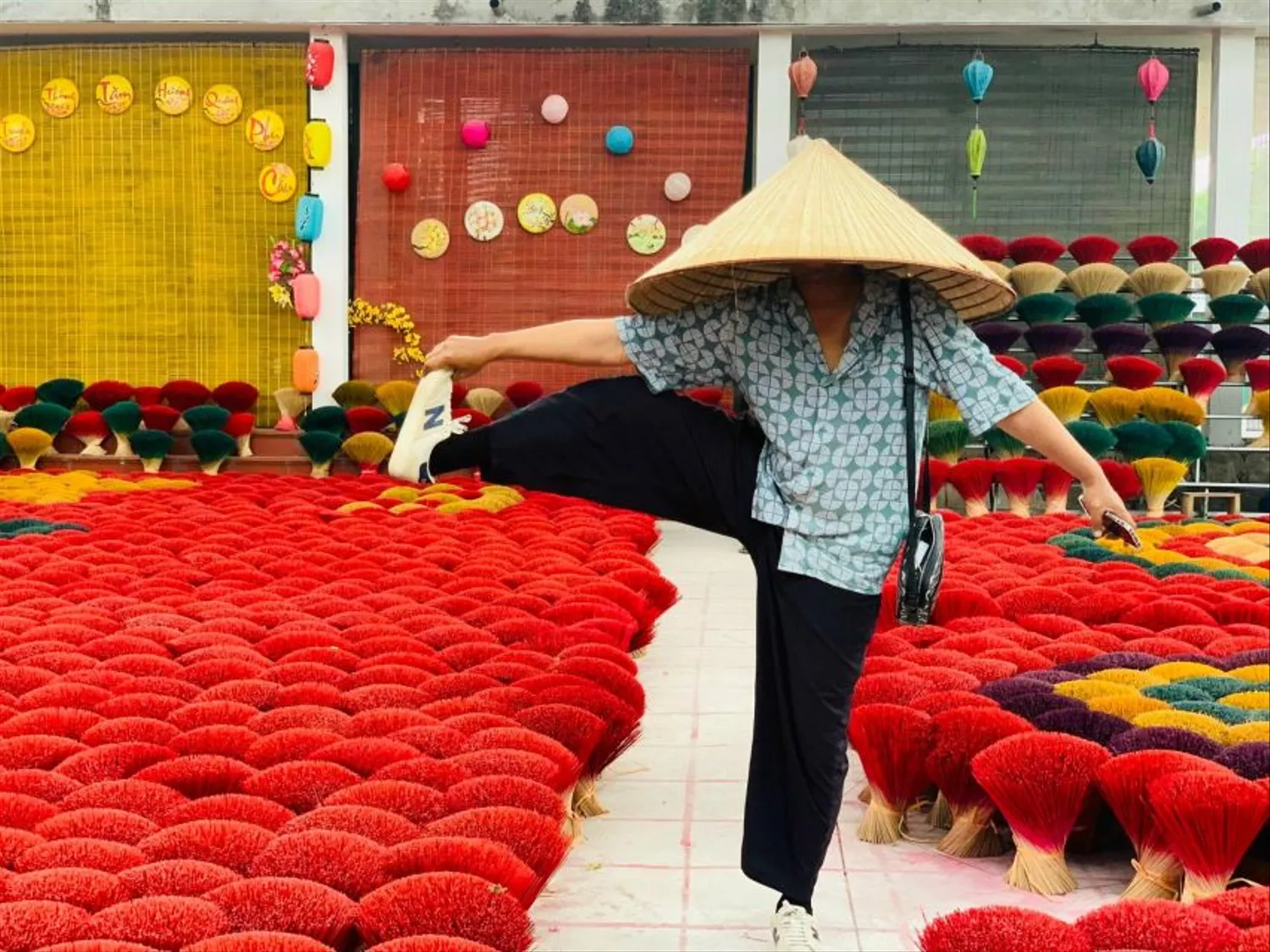
The silence of the incense village
Before the hands-on work begins, the air changes. In Quang Phu Cau, bundles of incense sticks stand like crimson and vermilion fields, drying under a sun that seems to respect their symmetry. The visual impact is staggering, yet the deeper lesson is quiet. Each stick is rolled by a woman who has repeated the motion ten thousand times. When you photograph these vibrant rows, you capture more than color. You capture the economy of a village where no gesture is wasted. The photos here are not posed; they are earned through respect for the craft.
Shaping the conical hat
Your hands will then learn a different kind of memory. The conical hat, or non la, is built from palm leaves pressed between bamboo ribs. An artisan will show you how to stitch the layers, how to make the dome curve without breaking the leaf’s spine. You will fumble. That is the point. The hat you create will be imperfect, but it will hold your effort, your laughter, and the scent of the workshop. That imperfection is a souvenir no shop can sell.
The alchemy of lacquer art
Lacquer art is the opposite of fast. Here, you will paint with resin and eggshell, dusting layers that need hours to dry. The master will show you how Vietnamese lacquer is not paint but a process—each layer a decision, each sanding a correction. You will leave with a small panel that will not be finished for days. That waiting is part of the gift. It teaches you that beauty often arrives after the workshop ends, in the quiet of your own home.
Between the villages, the meal is a revelation. You will eat what the artisans eat: bun cha grilled over charcoal, fresh herbs pulled from nearby gardens, and fish sauce that has been fermented in clay pots for months. This is not a restaurant version. It is the taste of a working day, salty and bright. The table is shared, the conversation flows through gestures, and you understand that Vietnamese cuisine is not a performance but a daily act of care.
The full itinerary, including transport and guidance, is detailed at https://tinnytravel.com/product/from-hanoi-incense-conical-hat-lacquer-art-villages-day-trip/. You will travel in a small group, and the pace respects the artisans’ time as much as your curiosity. You will not be rushed through a checklist. You will be invited into a rhythm where every action has a reason, and every reason is older than you.
When you return to Hanoi, your phone will hold images of scarlet fields and your hands will hold a hat and a lacquer panel. But the real souvenir is the shift inside you—the knowledge that craft is not decoration but devotion. The incense village will fade from your camera roll, but the patience you practiced there will stay. You will walk differently through markets, seeing the hands behind every object. That is the quiet victory of this trip, and it begins the moment you decide to stop watching and start making.
```