The hidden language of Vietnamese craft villages
Most travelers see Vietnam through postcards and food stalls, but the real story lives in the hands of artisans who shape lacquer, weave conical hats, and bundle incense sticks into crimson bouquets. A day trip from Hanoi, guided by Tinny Travel, peels back that surface to reveal a dialogue between material and memory. You do not just watch; you become part of the conversation, with every brushstroke and palm leaf fold carrying centuries of unspoken knowledge.
Why your hands remember what cameras forget
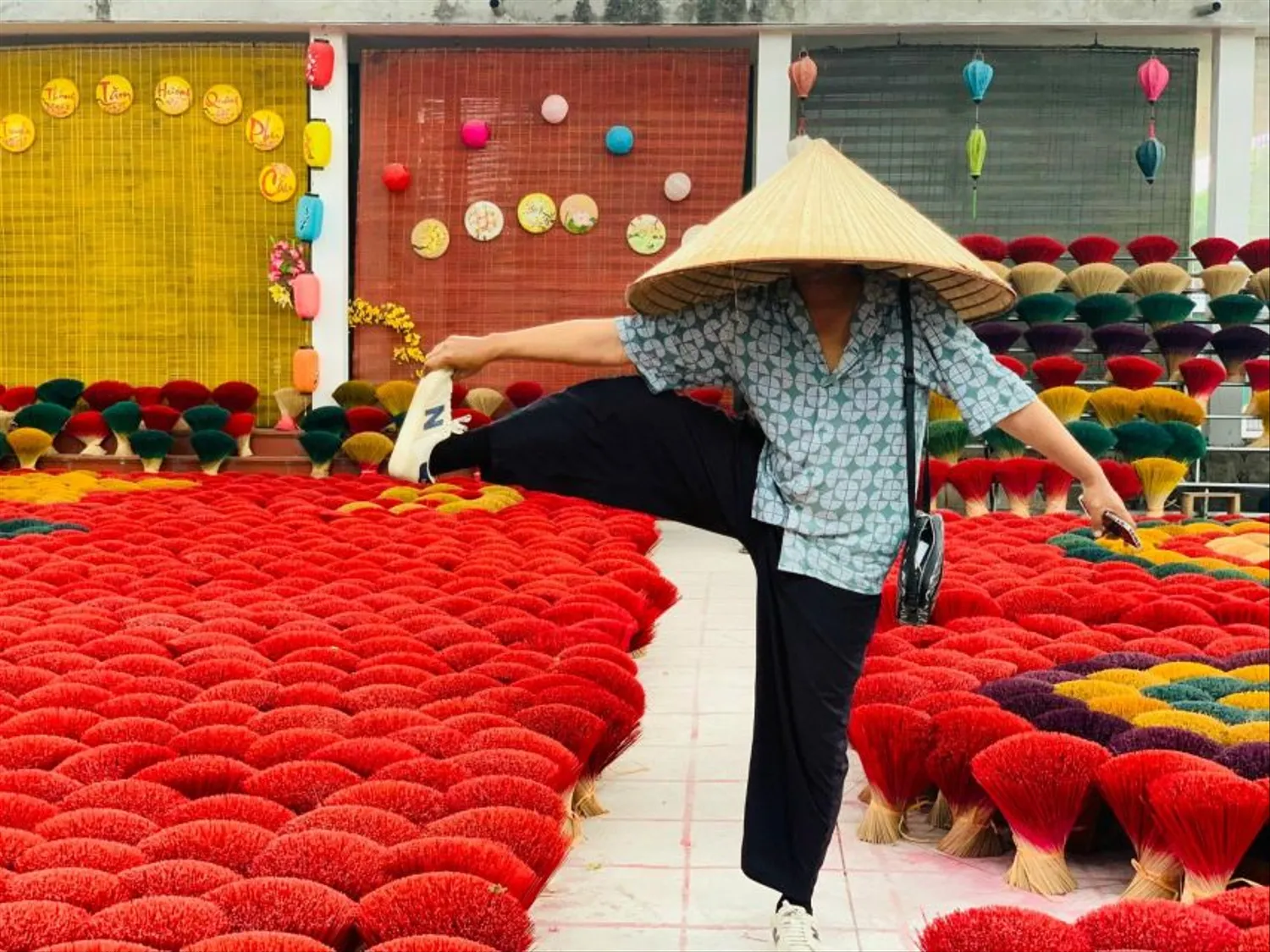
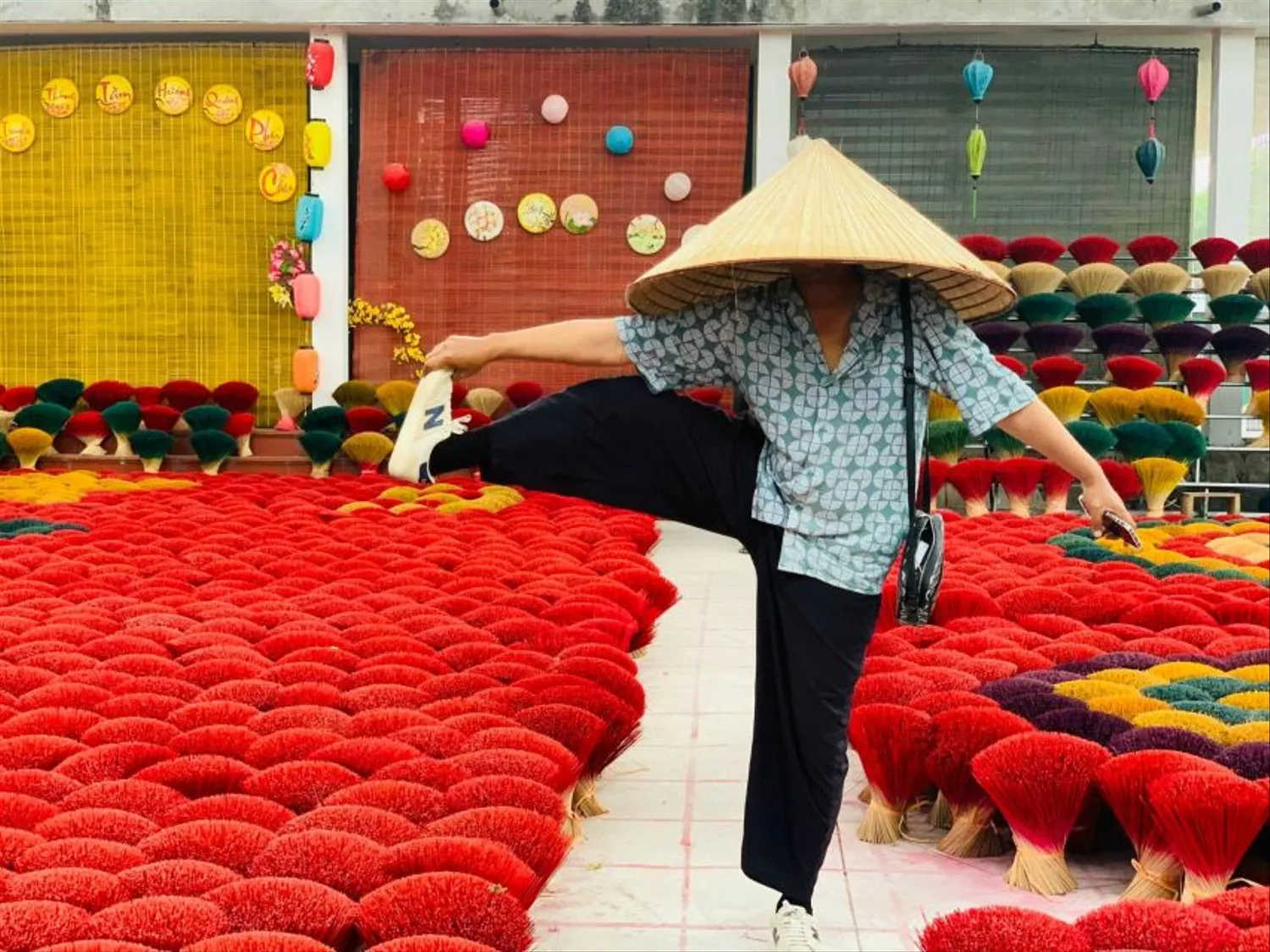
At the incense village of Quang Phu Cau, the bright red and pink bundles drying in the sun create a photographer’s paradise. But the deeper reward comes when you sit beside a farmer and twist bamboo sticks into tight coils, feeling the resin’s tackiness on your fingertips. That tactile memory—sticky, fragrant, precise—anchors the visual splendor in a way no snapshot can. Similarly, when you press a steel stylus into a black lacquer panel at a workshop in Chuong village, dust and grit become your collaborators, turning imperfections into shimmering gold leaf patterns.
Sculpting your own conical hat
Under the thatched roofs of Chuong, where the famous palm-leaf hats originate, you will learn the rhythm of the craft. First, you stretch silk thread over a bamboo frame, then layer fresh leaves, pressing them flat with a hot iron. The artisan shows you how to hold the needle so the stitches stay invisible from the outside. Within an hour, the raw materials transform into a wearable silhouette—light, waterproof, and surprisingly sturdy. Your hat carries a slight tilt, a personal quirk that no machine could replicate.
Lunch pauses the pace, offering local specialties like banh cuon, steamed rice rolls with minced pork and wood-ear mushrooms, served with a dipping fish sauce that tingles the palate. This meal is not just fuel; it is a geography lesson in flavor, blending northern herbs and freshwater ingredients. The artisans share their family stories—how their grandparents survived wartime by selling hats, how lacquer painters now experiment with abstract styles for export. These conversations taste better than any restaurant experience because they come with context.
Back in the lacquer studio, you learn about the slow curing process, how layers of resin and crushed eggshell need days to harden. The instructor demonstrates how to mix natural dyes from betel nut and indigo, then guides your shaky hand as you outline a lotus flower. For a beginner, the result may look naïve, but the pride is genuine. You leave with a small square panel, still slightly sticky to the touch, wrapped in tissue paper like a fragile secret.
The final stop returns to the incense fields at golden hour, when the low sun ignites the crimson bundles into flames of color. You capture silhouettes of women carrying bamboo racks, their hats casting moving shadows. The air thickens with sandalwood and cassia, and you realize that the photo you take here is not the destination—it is the evidence that you once knelt in the dust and learned to listen. For the complete itinerary and booking details, visit https://tinnytravel.com/product/from-hanoi-incense-conical-hat-lacquer-art-villages-day-trip/.
Carrying your handcrafted items back to Hanoi, you feel the weight of a new vocabulary. The hat whispers about palm groves and patient fingers. The lacquer panel hums with layers of time. The incense bundles recall a field that breathes red. These objects are not souvenirs; they are translations of a culture that still believes in the dignity of making things by hand.