Beyond the souvenir shelf
Most travelers leave Hanoi with mass-produced trinkets, never truly touching the soul of Vietnamese craftsmanship. Yet a single day can transform that passive observation into active participation. By joining the hands-on journey offered through Tinny Travel, you step beyond glass displays and into the raw, fragrant workshops where heritage breathes. Here, the dusty road leads not just to sights, but to sensation—the cool slip of lacquer under your brush, the stubborn straw resisting your weaving fingers, and the sharp, earthy aroma of burning incense wood.
The common misconception is that these crafts are dying relics, static museum pieces. In reality, they are living dialogues between generations. As you sit across from an artisan whose hands have shaped wood for fifty years, the real product is not the object you finish, but the shared silence of concentration. You will struggle with the conical hat's palm leaves, and your first lacquer stroke will be uneven. This friction is the lesson. It teaches you that perfection is a slow conversation, not a hurried purchase. The villages around Hanoi are not theme parks; they are homes where skill is passed down like a whispered secret.
Creating your own imperfect masterpiece
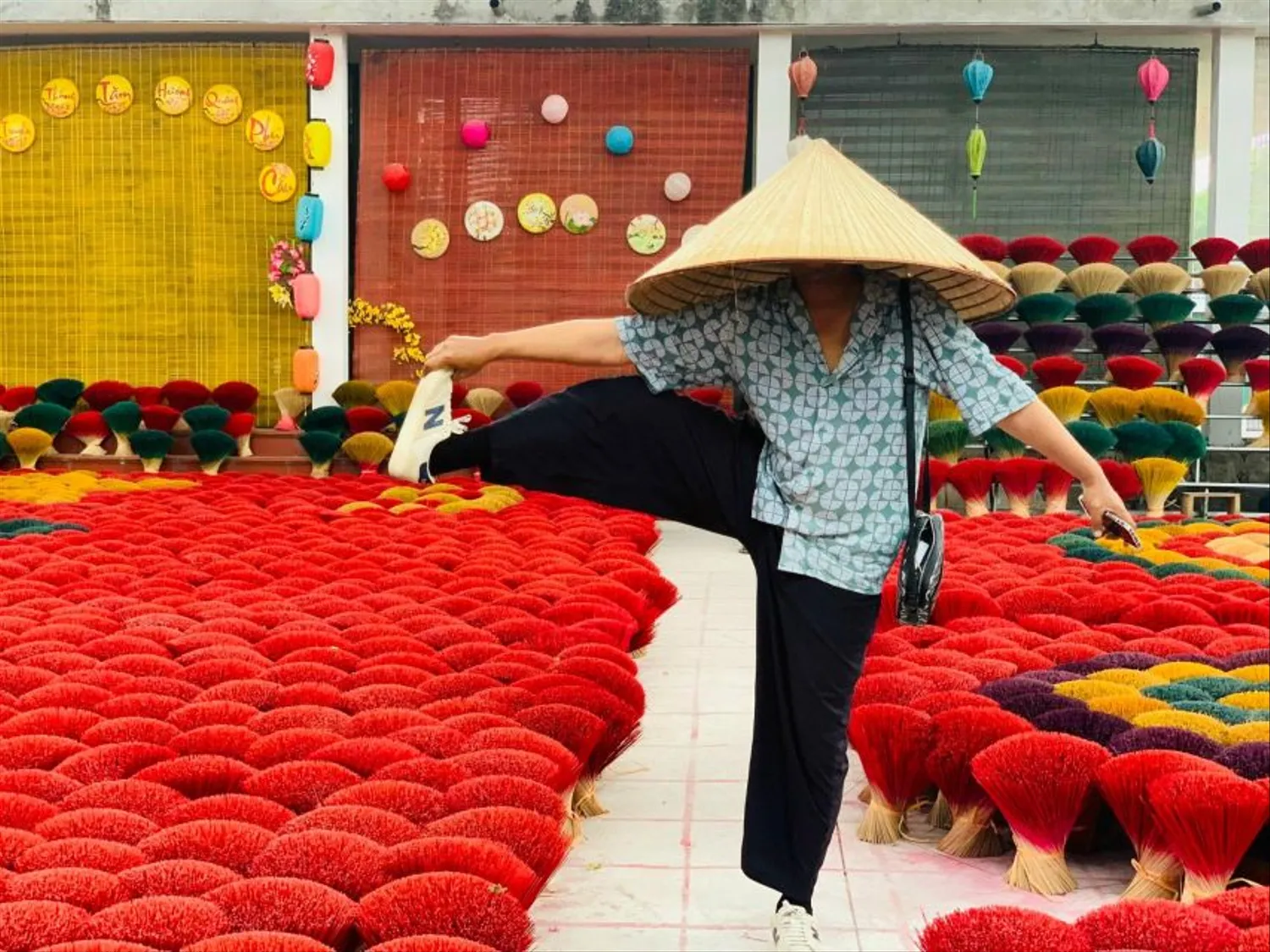
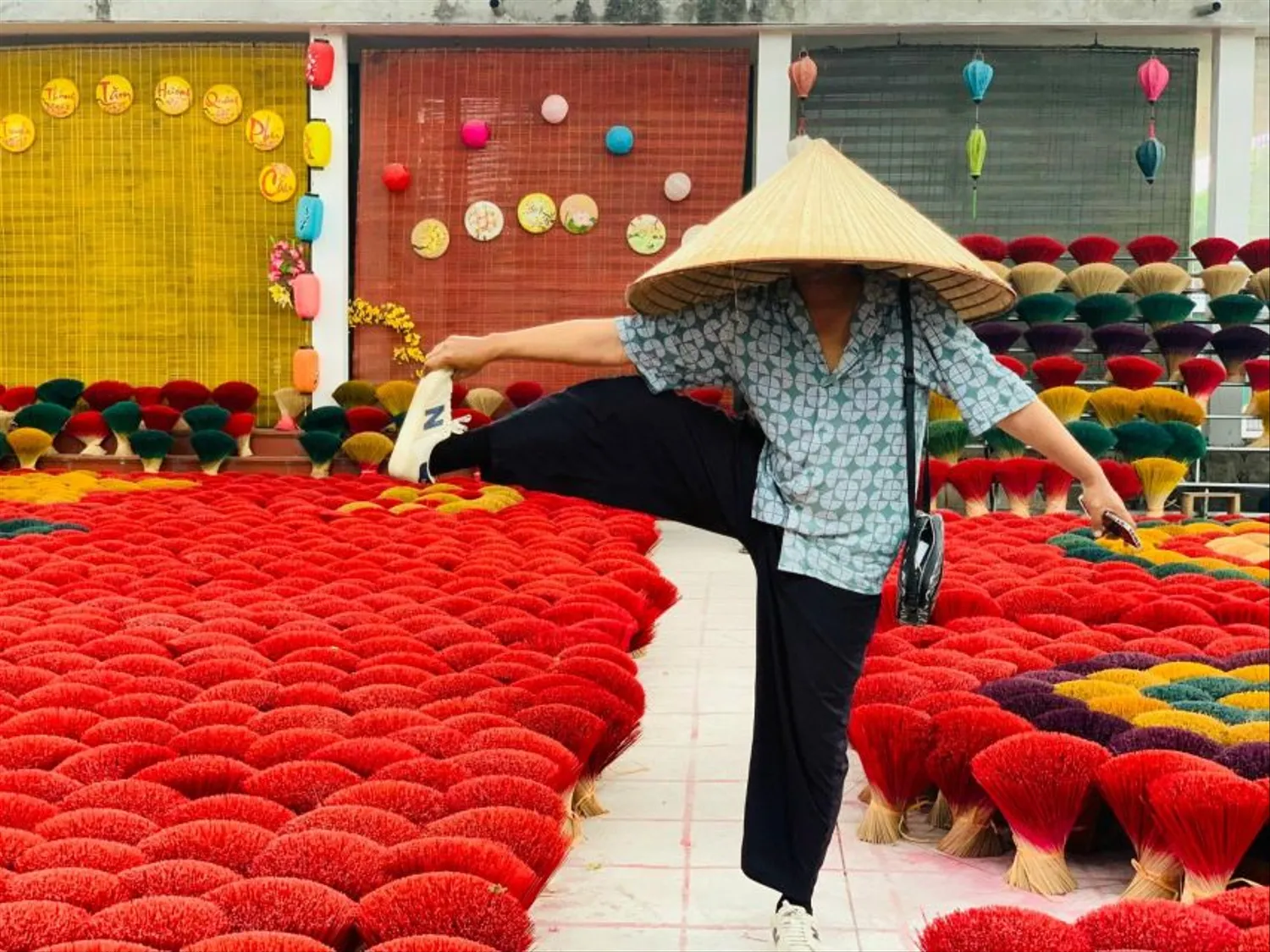
The sequence of the day is designed to build your confidence through tangible action. First, the incense village dazzles you with fields of crimson and ochre sticks drying in the sun—a visual feast that demands your camera. Here, the vibrant colors are not just for show; they represent the prayers and hopes of families who have twisted these sticks for centuries. Next, you move to the conical hat workshop. Under the patient guidance of a local matriarch, you will stitch the delicate layers of palm leaf and bamboo. It will not be flawless, but it will be yours—a wearable memory that no store can replicate. The lacquer art session follows, where you apply coat after coat of resin to a wooden tray, learning that depth comes from patience, not speed. Between these creative efforts, a home-cooked meal of bun cha and fresh spring rolls grounds you in the region's culinary soul, proving that artistry extends to the palate.
This trip is not merely an itinerary; it is a method for slowing down time. The benefit is not just a finished hat or a painted plate, but a shift in perception. You begin to see the effort behind every pattern, to respect the calloused hands of every vendor. The photographs you capture here are different—they hold the context of your own participation. As the afternoon sun softens, you realize that the true souvenir is the muscle memory of creating, the lingering scent of lacquer on your skin, and the quiet pride of having touched something ancient with your own hands. For those ready to trade passive tourism for active immersion, the details of this journey are waiting at https://tinnytravel.com/product/from-hanoi-incense-conical-hat-lacquer-art-villages-day-trip/.
The rhythm of the red river delta
What separates this experience from a simple factory tour is the rhythm. The day unfolds without rush, mirroring the unhurried cycles of rice planting and harvest that define the delta. You are not a spectator watching a demonstration; you are a temporary apprentice in a lineage. The artisans correct your grip, laugh at your clumsy knots, and celebrate your small victories. Their laughter is the real language here. By the time you board the minibus for the return journey, your hands are tired, but your mind is clear. The vibrant photos on your phone are secondary to the vivid memories etched in your fingertips. You leave with a deeper truth: that handicrafts are not decorative extras, but the living pulse of a culture refusing to fade. The day ends, but the conversation with these materials has just begun.