High-density RF systems create connector challenges that standard coaxial interfaces weren't designed to handle. The push-on snap-on architecture that defines the GPPO — also known as Mini-SMP — series exists specifically to address the board space constraints, connection cycle requirements, and signal density demands of modern microwave and millimeter wave systems. Getting the passive components in this connector family right matters as much as the active components surrounding them.
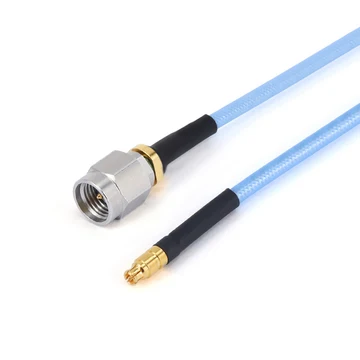
GPPO Load and GPPO Termination — What These Components Actually Do
A GPPO load and GPPO termination serve the same fundamental purpose — absorbing signal energy at an open port rather than allowing reflection back into the signal path. The distinction between them is typically one of terminology rather than function in the GPPO connector family, though specific products may differ in power handling rating or frequency performance.
Unterminated ports in a high-frequency system create reflections that travel back through the signal path and appear as ripple in frequency response measurements, interference in receiver chains, and instability in active circuits. The reflection coefficient at an open port approaches unity — essentially everything incident at the open port reflects back. A properly matched GPPO termination reduces that reflection to a level determined by the return loss specification of the termination itself, typically 15dB or better across the rated frequency range.
The frequency range matters specifically in the GPPO connector family. Mini-SMP interfaces are rated to 26.5GHz in the standard version — the frequency range that most GPPO terminations need to cover for the applications the connector series is used in. Test fixtures, switched matrix systems, and antenna array feed networks all generate situations where ports need termination during testing or when unused channels are present in the system.
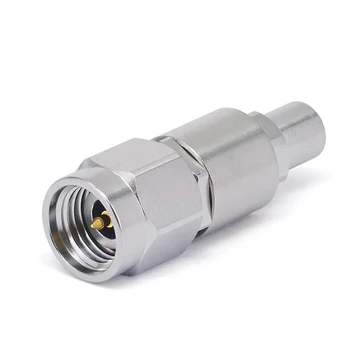
GPPO Adapter — Where Interface Compatibility Gets Handled
GPPO adapter selection comes up whenever a GPPO connector needs to interface with a different connector series — which happens frequently in test environments where GPPO-equipped boards or modules connect to SMA, 2.92mm, or 3.5mm cable assemblies on the test equipment side.
The adapter introduces an additional mechanical interface into the signal path, which means it introduces additional loss and reflection at each mating point. Adapters with poor return loss or high insertion loss change the measurement environment in ways that make it difficult to separate adapter effects from device effects in the measurement data. Quality GPPO adapter products specify both return loss and insertion loss across the operating frequency range clearly — and the specifications should be consistent with what the overall measurement uncertainty budget allows.
Gwave Technology supplies GPPO load, GPPO termination, and GPPO adapter products alongside a full range of RF connectors, cable assemblies, and microwave components covering DC to 110GHz. Same-day shipping on in-stock items. Full range at gwavetech.com.