High-frequency circuit boards require interconnection components that balance compact mounting with consistent electrical characteristics. A Surface Mount Connector provides a practical approach for integrating RF interfaces directly with PCB structures. The featured 2.92mm design uses an edge-slotted configuration and supports DC–40 GHz operation, making this type of interface relevant for demanding microwave, telecommunications, testing, and advanced electronic applications.
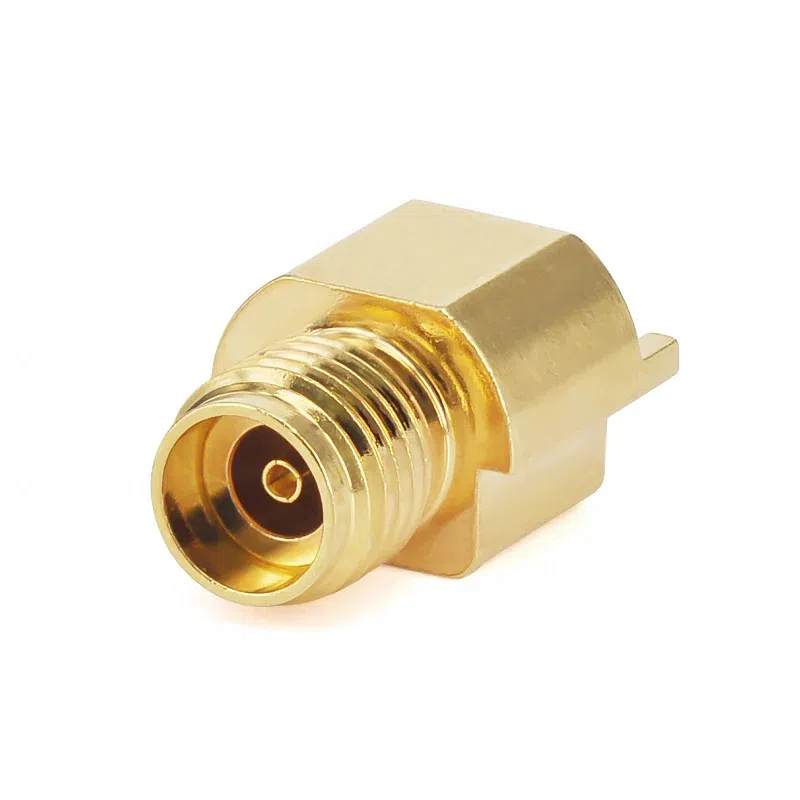
Choosing a suitable Surface Mount Connector involves evaluating more than physical compatibility. Frequency capability, signal behavior, mounting configuration, construction material, and operating temperature all influence component selection. This particular 2.92mm connector combines PCB-edge surface mounting with a 40GHz connector architecture, allowing engineers to address high-frequency interconnection requirements within compact electronic assemblies.
High-Frequency Design Considerations For A 40GHz Connector
A 40GHz connector must maintain controlled signal characteristics across a broad frequency range. The featured product supports frequencies from DC through 40 GHz and provides a VSWR specification of 1.2. These characteristics make the Surface Mount Connector suitable for designs where signal consistency becomes increasingly important as operating frequencies rise and circuit dimensions become more compact.
Insertion loss also plays an important role when engineers evaluate RF interconnection components. The featured 40GHz connector lists insertion loss at ≤0.05√f GHz dB, providing a useful performance reference for system designers. By considering this specification alongside frequency requirements, engineers can assess how the Surface Mount Connector may fit within a particular high-frequency signal path.
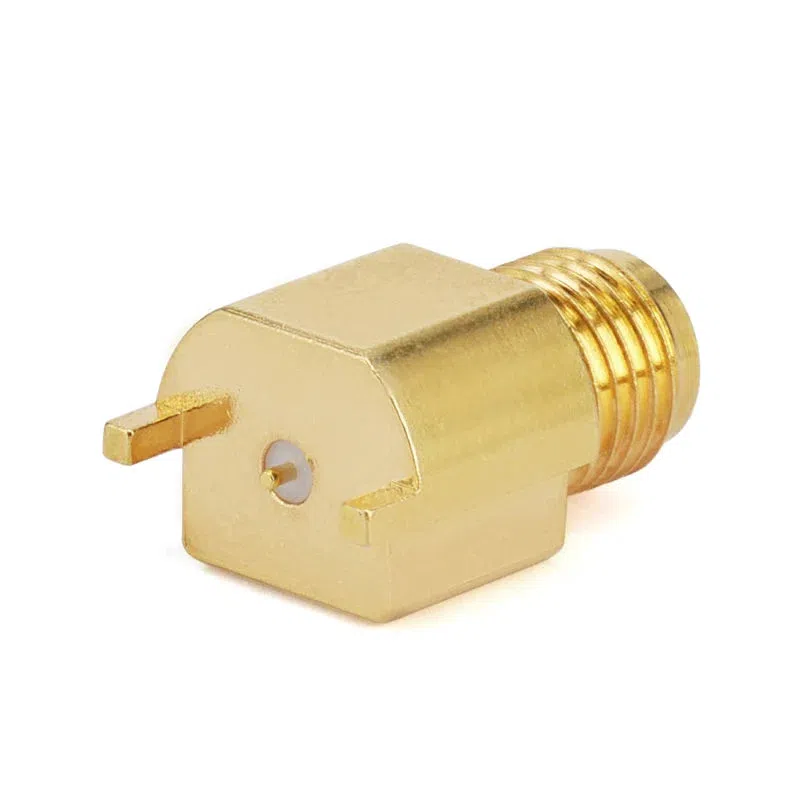
The PCB-edge-slotted configuration provides another important design consideration. Instead of relying on a conventional mounting arrangement, the Surface Mount Connector is designed around PCB-edge integration, supporting applications where board space and interface positioning require careful planning. This approach can simplify component placement while allowing a 40GHz connector to interface with compatible RF circuitry.
Material selection further contributes to connector performance and application suitability. The featured Surface Mount Connector uses brass with gold plating, combining a conductive metallic body with a plated surface intended for RF interconnection applications. For systems operating across demanding frequency ranges, this construction provides engineers with another specification to evaluate when comparing a 40GHz connector with alternative interface designs.
Operating temperature is equally relevant when RF equipment works across changing environmental conditions. This Surface Mount Connector is specified for temperatures ranging from −40°C to +165°C. Such a broad stated range can be considered when engineers assess component suitability for equipment exposed to varying thermal conditions while maintaining the requirements associated with a 40GHz connector.