Introduction
Many dental clinics invest in Google Ads expecting a steady stream of new patient enquiries. After all, Google allows practices to appear in front of people actively searching for dental services in their area.
However, despite the potential of paid search advertising, many campaigns fail to generate meaningful results.
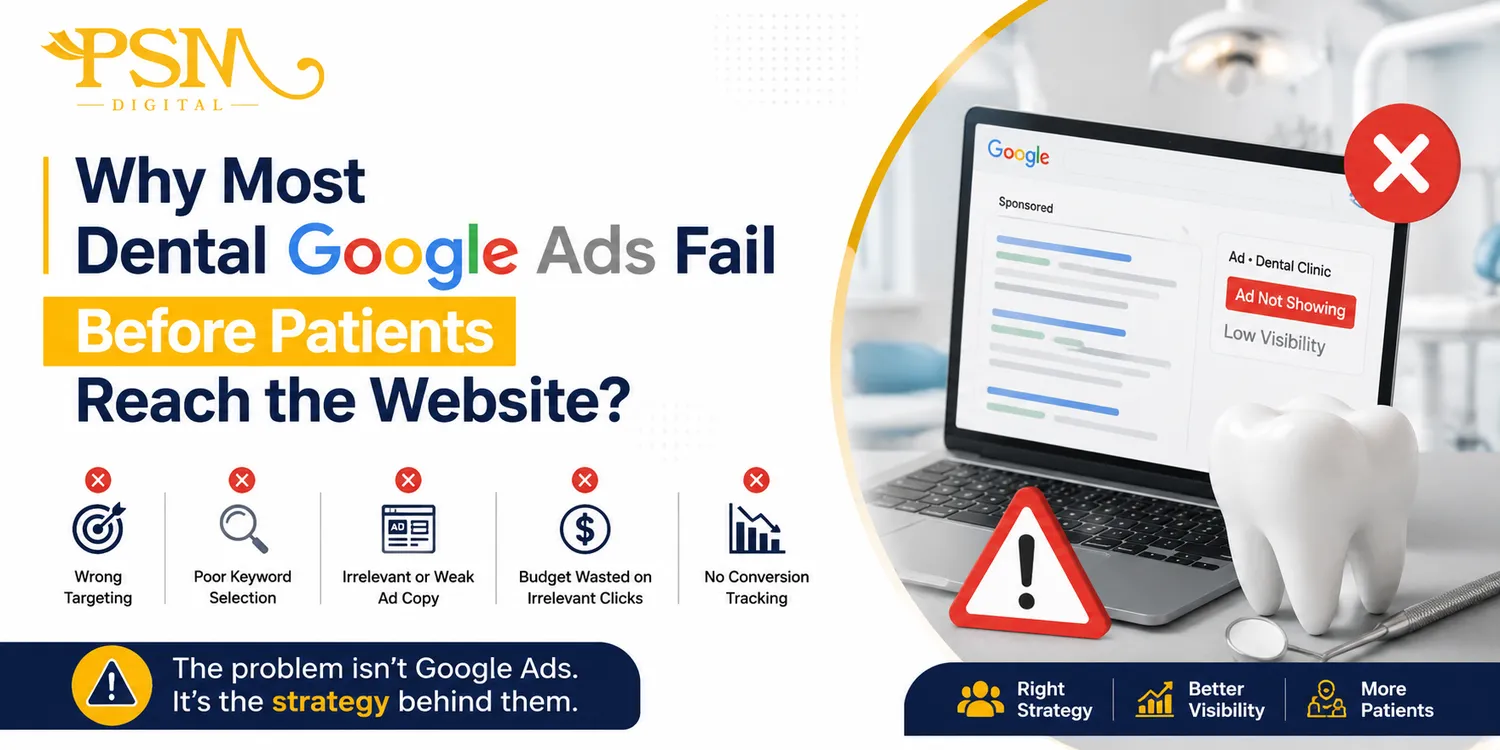
What surprises many practice owners is that the problem often isn't the website. In fact, many dental advertising campaigns lose potential patients before they ever click through to the clinic's website.
Successful Google Ads for dental clinic campaigns depend on much more than simply choosing a few keywords and setting a budget. Factors such as targeting, ad relevance, messaging, competition, and user intent all influence whether a prospective patient clicks on an ad or scrolls past it.
The Wrong Keywords Attract the Wrong Audience
One of the most common reasons dental campaigns underperform is poor keyword selection.
Many clinics target broad terms that generate impressions but fail to attract people who are genuinely looking to book an appointment.
Search Intent Matters More Than Traffic
Not every dental-related search indicates a patient is ready to schedule treatment.
Someone searching for general dental information may have very different intentions than someone searching for an emergency dentist, cosmetic treatment, or family dental clinic.
When keyword targeting doesn't align with patient intent, ad performance often suffers.
Broad Keywords Increase Wasted Spend
Highly generic keywords can attract clicks from users outside the target market, reducing campaign efficiency and increasing advertising costs.
Effective Google Ads for dental clinic campaigns focus on attracting qualified local patients rather than simply generating more traffic.
Ads Fail to Stand Out in Competitive Markets
Many dental clinics operate in highly competitive local markets where multiple practices are bidding for the same search terms.
When several ads appear together, patients make quick decisions about which one deserves their attention.
Generic Messaging Gets Ignored
Ads that use vague statements such as "quality dental care" or "professional dental services" often blend into the competition.
Patients are more likely to engage with messaging that addresses specific needs, concerns, or treatment goals.
Patients Need a Reason to Click
Strong advertising highlights what makes a practice different.
Whether it's same-day appointments, emergency availability, advanced technology, family-focused care, or a particular treatment expertise, patients need a compelling reason to choose one clinic over another.
Poor Local Targeting Reduces Relevance
Google Ads allows highly targeted local advertising, but many campaigns fail to use these capabilities effectively.
Showing Ads to the Wrong Audience
If ads are displayed outside the clinic's service area, impressions and clicks may come from people who are unlikely to become patients.
This can quickly drain advertising budgets without generating meaningful enquiries.
Local Relevance Improves Engagement
Patients searching for dental care are often looking for providers close to home, work, or school.
Campaigns that focus on highly relevant geographic targeting generally achieve stronger engagement and better conversion potential.
Weak Ad Copy Fails to Build Trust
Before patients click on an ad, they make a judgment about the practice based on a few short lines of text.
This means every word matters.
Trust Begins Before the Click
Potential patients often have concerns about cost, comfort, experience, or treatment outcomes.
Effective ad copy helps address these concerns while building confidence in the practice.
Clear Messaging Encourages Action
Strong Google Ads for dental clinic campaigns use concise, patient-focused messaging that speaks directly to the needs of the searcher.
When patients immediately recognize that an ad relates to their specific problem, they are more likely to engage.
Ad Extensions Are Often Underutilized
Google provides additional features that allow advertisers to enhance visibility and provide more information directly within search results.
Unfortunately, many dental campaigns fail to take full advantage of these opportunities.
Additional Information Improves Visibility
Extensions can display details such as phone numbers, locations, service offerings, and appointment options.
These elements help ads occupy more space on the search results page and improve visibility.
Patients Gain More Confidence
Providing additional information directly within the ad can help users feel more comfortable engaging with the practice before visiting the website.
Budget Allocation Problems Limit Results
Many dental clinics assume that increasing ad spend automatically improves performance.
However, budget alone rarely solves campaign issues.
Inefficient Campaign Structure Wastes Spend
Poor keyword selection, weak targeting, and ineffective ad messaging can consume advertising budgets without generating qualified leads.
Increasing spend simply amplifies these inefficiencies.
Strategy Matters More Than Budget
A well-managed campaign with strong targeting and relevant messaging often outperforms larger campaigns that lack strategic direction.
Lack of Ongoing Optimization Hurts Performance
Google Ads is not a set-and-forget marketing channel.
Search behaviour, competition, and patient expectations continually evolve.
Campaign Data Provides Valuable Insights
Performance metrics reveal which keywords, ads, and targeting settings are generating results.
Without ongoing analysis, valuable optimization opportunities may be missed.
Continuous Improvement Drives Better Outcomes
Regular adjustments help improve click-through rates, reduce wasted spend, and increase the likelihood of attracting qualified patients.
This ongoing optimization is often the difference between average and exceptional campaign performance.
Patient Decisions Happen Quickly
Most users spend only a few seconds reviewing search results before choosing where to click.
If an ad fails to capture attention immediately, the opportunity may be lost.
This means success often depends on the combined impact of targeting, messaging, positioning, and relevance long before a patient reaches the clinic's website.
Conclusion
Many dental advertising campaigns fail not because of poor websites, but because they never convince potential patients to click in the first place.
Weak targeting, generic messaging, poor keyword selection, and limited optimization can all reduce performance before users even reach the practice's landing page.
PSM Digital Agency specializes in creating high-performing Google Ads for dental clinic campaigns that attract qualified local patients and maximize advertising investment.
Through strategic targeting, compelling messaging, and ongoing optimization, the agency helps dental practices generate stronger results from their paid search marketing efforts.
If your Google Ads campaigns are generating clicks but not enough new patient enquiries, PSM Digital Agency can help identify opportunities to improve performance and drive measurable growth.