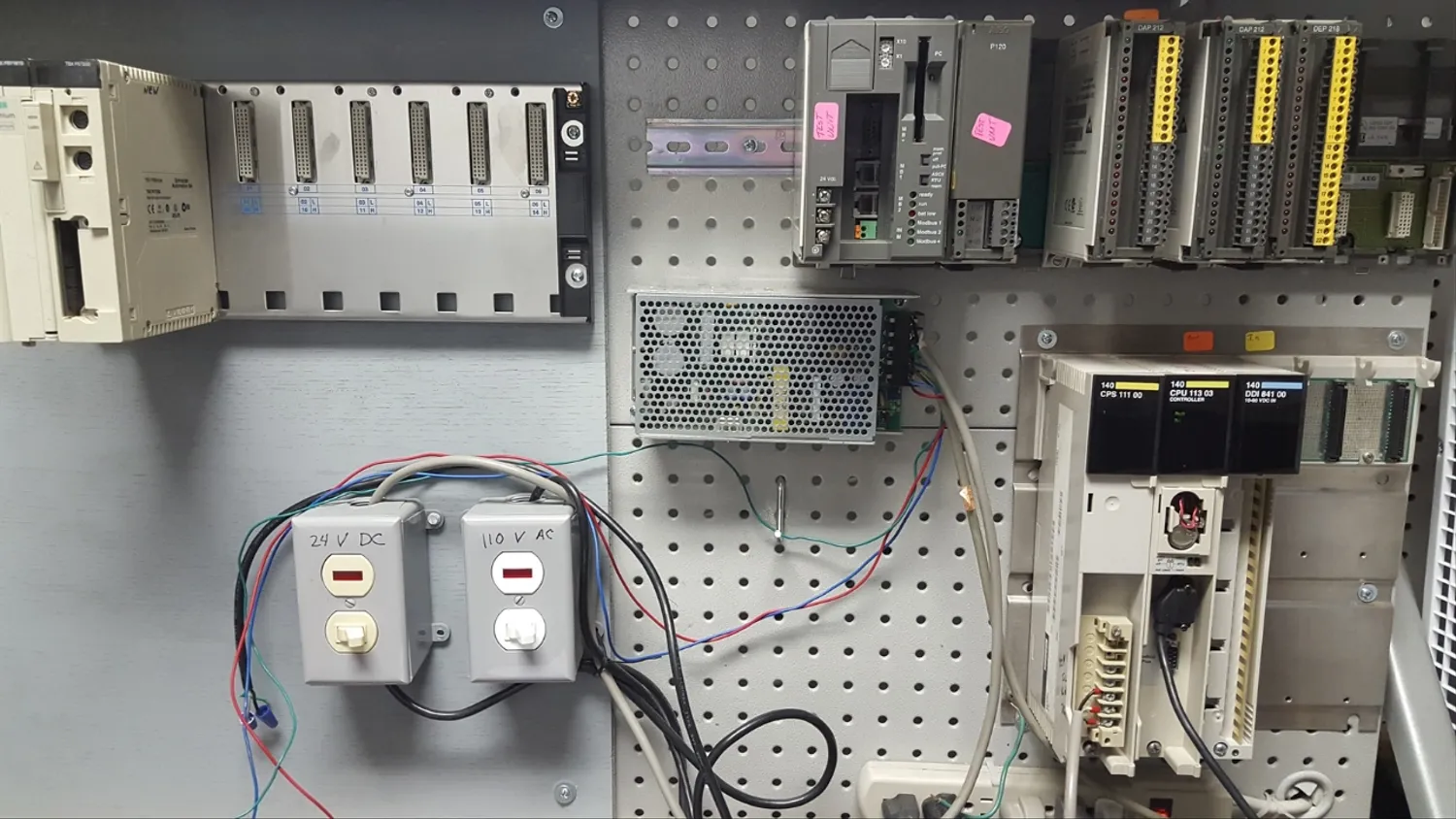
Industrial automation has revolutionized manufacturing by increasing efficiency, consistency, and safety. At the heart of every automated system are several key components that work together to control machines, monitor processes, and optimize production. Understanding these components is essential for engineers, technicians, and decision-makers aiming to implement or upgrade automation systems.
This article provides a detailed overview of the main components of an industrial automation system, their roles, and their applications.
1. Programmable Logic Controllers (PLCs)
Programmable controllers are the brain of industrial automation systems. They are digital computers designed to monitor inputs, execute control logic, and operate outputs in real-time.
Roles and Features:
- Receives signals from sensors or input devices.
- Executes programmed logic to make decisions.
- Controls actuators, motors, valves, and other outputs.
- Handles timers, counters, and complex sequences.
Applications:
- Assembly line control
- Packaging machines
- Conveyor systems
PLCs are highly reliable, flexible, and suitable for a wide range of industrial processes, from discrete manufacturing to continuous control operations.
2. Supervisory Control and Data Acquisition (SCADA) Systems
SCADA systems provide centralized monitoring and control of industrial processes. They collect data from PLCs and field devices, visualize it on dashboards, and alert operators to anomalies.
Key Functions:
- Real-time data acquisition and monitoring
- Remote control of machines and processes
- Alarm management and event logging
- Historical data storage for analytics
Applications:
- Power plants for monitoring turbines and substations
- Water treatment facilities for pump and chemical control
- Manufacturing plants for production monitoring
SCADA systems allow managers to make informed decisions and maintain operational efficiency.
3. Human-Machine Interface (HMI)
An HMI serves as the interface between operators and machines. It allows human operators to monitor processes, input commands, and view system status.
Features:
- Touchscreens or graphical displays
- Real-time data visualization
- Alarm notifications and event tracking
- Trend analysis and reporting
Applications:
- Monitoring conveyor speeds in factories
- Adjusting process parameters in chemical plants
- Visualizing temperature, pressure, or flow data in real time
HMIs make industrial automation user-friendly, allowing operators to interact safely and efficiently with automated systems.
4. Industrial Robots and Actuators
Robots and actuators are responsible for performing physical tasks in automated systems.
- Robots: Handle repetitive, precise, or hazardous operations like welding, packaging, or assembly.
- Actuators: Convert electrical or pneumatic signals from PLCs into physical motion.
Applications:
- Robotic arms assembling car parts in automotive factories
- Actuators opening and closing valves in process industries
- Pick-and-place robots in packaging plants
By taking over repetitive or dangerous tasks, robots and actuators improve efficiency, accuracy, and safety.
5. Sensors and Feedback Devices
Sensors provide essential data about the environment or machinery, enabling automated systems to make informed decisions.
Common Sensors:
- Proximity sensors: Detect object presence or position
- Temperature sensors: Monitor heating or cooling processes
- Pressure sensors: Ensure proper operation of pumps and pipelines
- Flow and level sensors: Measure liquids and gases
Applications:
- Detecting items on a conveyor belt
- Monitoring furnace temperatures in steel plants
- Controlling fluid levels in chemical processes
Sensors act as the “eyes and ears” of industrial automation, providing the input needed for accurate control.
6. Communication Networks
Communication is crucial for linking all components of an automation system. Networks enable data exchange between PLCs, SCADA, HMIs, and other devices.
Industrial Protocols Include:
- Ethernet/IP for high-speed communication
- PROFINET for factory automation networks
- Modbus for simple PLC-to-PLC or PLC-to-SCADA communication
- Wireless networks for remote monitoring and IoT integration
Applications:
- Connecting multiple production lines for coordinated control
- Sending data to cloud analytics platforms
- Enabling remote diagnostics and monitoring
Reliable communication ensures seamless coordination across the entire system.
7. Software and Programming Tools
Software is essential for configuring, programming, and maintaining automation systems.
Key Tools:
- PLC programming software for ladder logic, structured text, or function block diagrams
- SCADA and HMI software for visualization, data logging, and remote control
- Simulation and testing tools for troubleshooting and validation before deployment
Software tools improve accuracy, reduce errors, and enhance the flexibility of automation systems.
8. Power Supply and Backup Systems
A stable power supply is critical for automation systems. PLCs, robots, sensors, and HMIs require consistent voltage levels to operate reliably.
Backup Systems:
- Uninterruptible power supplies (UPS) protect against sudden outages.
- Redundant power circuits ensure continuous operation in critical applications.
These systems prevent downtime and safeguard sensitive electronics.
Conclusion
An industrial automation system is a complex ecosystem where PLCs, SCADA, HMIs, robots, sensors, networks, and software work together seamlessly. Each component plays a specific and crucial role, ensuring that production processes run efficiently, safely, and accurately.
Understanding these key components is vital for engineers, technicians, and decision-makers planning, implementing, or maintaining automation systems. With the right components working in harmony, industries can achieve higher productivity, consistent quality, and reduced operational risks, paving the way for smart manufacturing and Industry 4.0.