In the realm of DIY projects and professional construction endeavors, few materials offer the versatility and transformative power of self-leveling epoxy. Whether you're revamping your garage floor, renovating a commercial space, or adding a sleek finish to your countertops, self-leveling epoxy has become a go-to solution for achieving smooth, durable surfaces with minimal effort. In this comprehensive guide, we'll delve into everything you need to know about self-leveling epoxy, from its composition and application methods to its benefits and potential applications.
Understanding Self-Leveling Epoxy
Self-leveling epoxy is a type of resinous flooring compound that, as the name suggests, has the remarkable ability to level itself once applied to a surface. Composed of epoxy resins, hardeners, and various additives, this versatile material offers superior durability, chemical resistance, and aesthetic appeal. Unlike traditional epoxy coatings, which require meticulous spreading and leveling by hand, self-leveling epoxy effortlessly spreads across the surface, filling in gaps and irregularities to create a seamless finish.
Application Process
The application process for self-leveling epoxy typically involves several straightforward steps:
- Surface Preparation: The key to a successful epoxy application lies in proper surface preparation. This entails thoroughly cleaning the surface to remove dirt, grease, and other contaminants that could compromise adhesion. any cracks or imperfections should be repaired before applying the epoxy.
- Priming (Optional): Depending on the substrate and epoxy system being used, priming may be necessary to promote adhesion and enhance performance. A primer is applied to the surface and allowed to cure before proceeding to the next step.
- Mixing: Self-leveling epoxy comes in two components – resin and hardener – which must be mixed according to the manufacturer's instructions. It's crucial to achieve a thorough and homogeneous mixture to ensure proper curing and optimal performance.
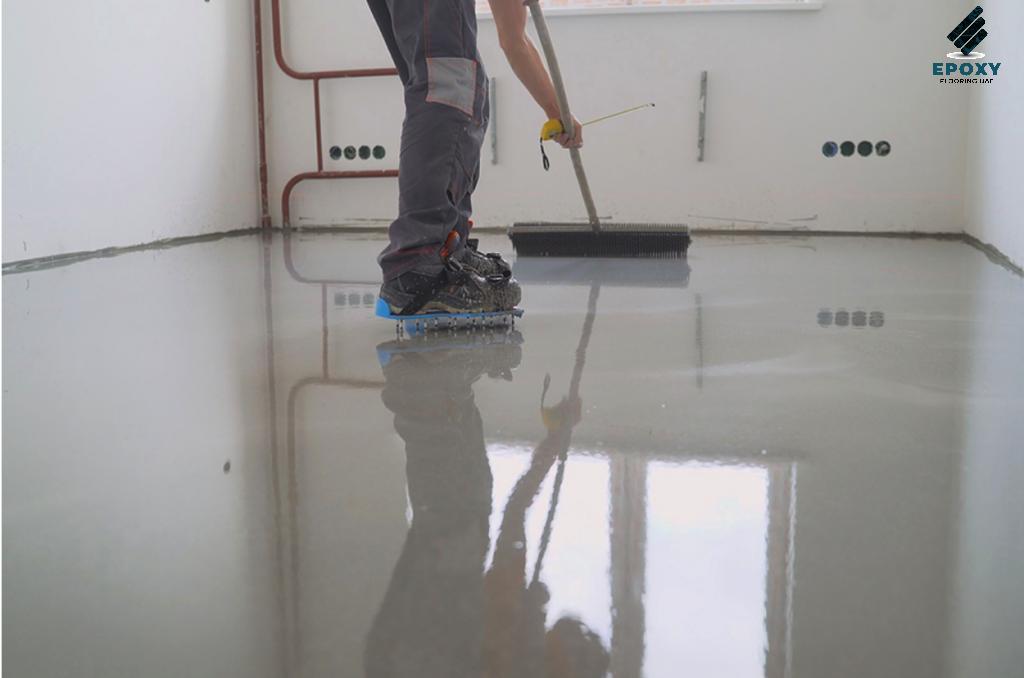
- Pouring and Spreading: Once mixed, the epoxy is poured onto the prepared surface in a continuous stream. From there, it naturally spreads out to form a smooth, level coating. For larger areas, a notched squeegee or roller may be used to help distribute the epoxy evenly.
- Leveling: Despite its self-leveling properties, some assistance may be needed to ensure an even distribution of the epoxy. This can be achieved by gently spreading the material with a roller or trowel, and working it into any corners or tight spaces as needed.
- Curing: After application, the epoxy must be allowed to cure for a specified amount of time, typically ranging from a few hours to several days depending on the product and environmental conditions. During this time, it's essential to protect the freshly coated surface from dust, debris, and foot traffic.
Benefits of Self-Leveling Epoxy
Self-leveling epoxy offers a host of benefits that make it an attractive choice for a wide range of applications:
- Seamless Finish: By filling in gaps and imperfections, self-leveling epoxy creates a smooth, seamless surface that is both visually appealing and easy to maintain.
- Durability: Once cured, epoxy forms a resilient, high-strength coating that can withstand heavy foot traffic, impact, and chemical spills without deteriorating.
- Versatility: From garage floors and industrial settings to residential kitchens and retail spaces, self-leveling epoxy can be used in virtually any environment to enhance both aesthetics and functionality.
- Customization: With an array of colors, textures, and decorative additives available, self-leveling epoxy offers endless possibilities for customization, allowing you to create a unique look that complements your space.
- Easy Maintenance: Unlike porous surfaces such as concrete or tile, epoxy is non-porous and resistant to stains, making it incredibly easy to clean and maintain.
Applications of Self-Leveling Epoxy
The versatility of self-leveling epoxy makes it suitable for a wide range of applications, including:
- Garage Floors: Transform your garage into a showroom-worthy space with a high-gloss epoxy finish that resists oil stains and tire marks.
- Commercial Spaces: From restaurants and retail stores to warehouses and healthcare facilities, self-leveling epoxy provides a durable, hygienic flooring solution that can withstand heavy use and frequent cleaning.
- Residential Interiors: Elevate the look of your home with epoxy-coated countertops, tabletops, and floors that offer both style and functionality.
- Industrial Settings: In industrial settings such as manufacturing plants and warehouses, epoxy flooring provides a seamless, easy-to-clean surface that meets the rigorous demands of heavy machinery and equipment.
Conclusion
Self-leveling epoxy offers a cost-effective, durable, and visually stunning solution for a wide range of flooring and surface coating applications. Whether you're tackling a DIY project or embarking on a commercial renovation, self-leveling epoxy provides the versatility and performance you need to achieve professional-quality results with ease.