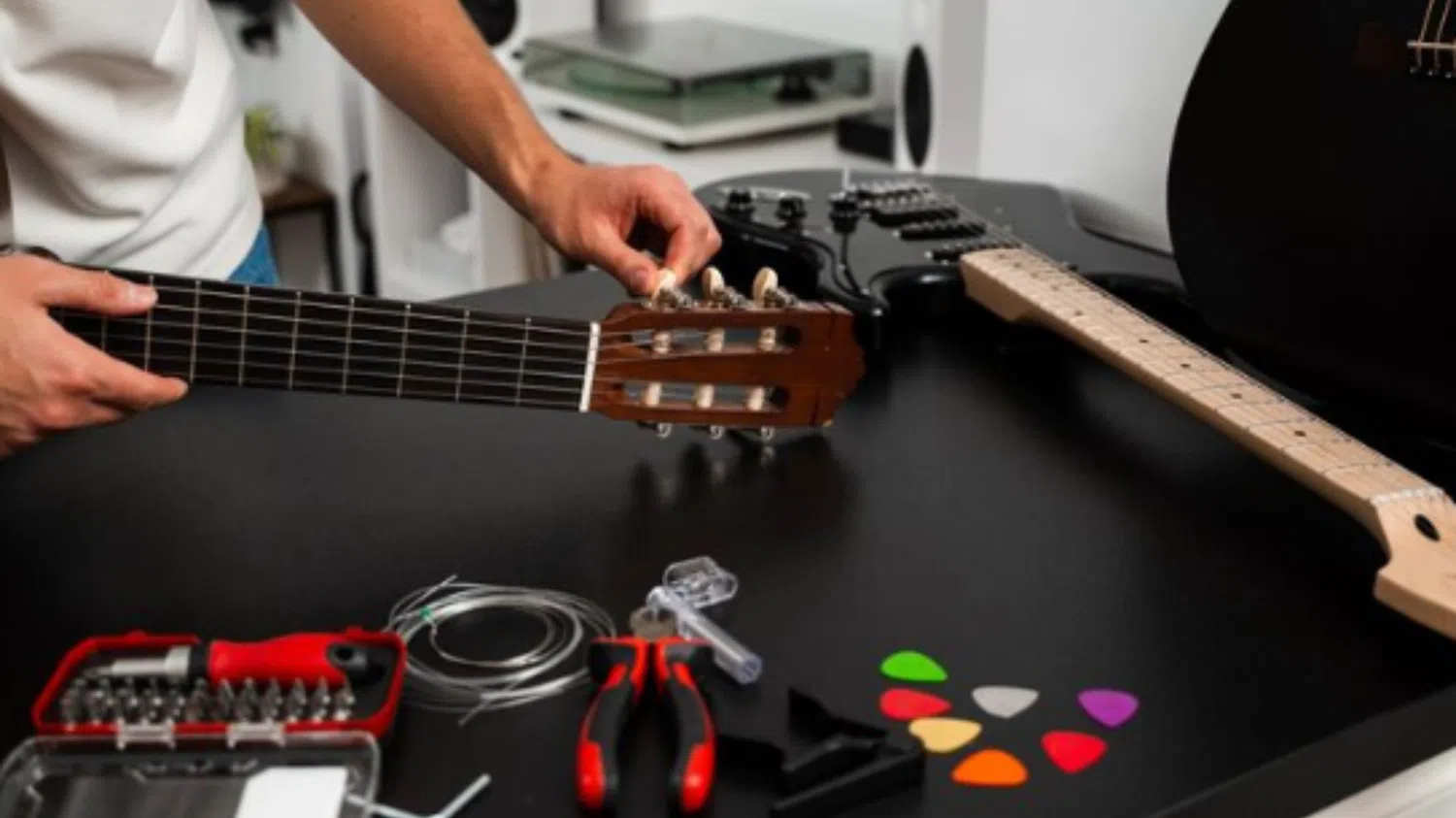
Have you ever picked up your electric guitar, played a few chords, and thought, “Why does this feel harder than it should?”
Maybe the strings feel unusually stiff. Maybe your notes buzz. Perhaps the guitar sounds fine through the amp, but something just feels off under your fingers.
Before blaming your playing, pickups, strings, or even the guitar itself, take a closer look at the setup.
A good electric guitar setup can change how comfortable, responsive, and enjoyable your instrument feels. And no, you do not need to be a professional guitarist to notice the difference.
Start With the Neck Relief
Let’s begin with something you may not notice immediately: the neck.
The guitar neck needs a small amount of natural curve to give the strings enough room to vibrate. Too much curve can make the strings sit high and make fretting feel tiring. Too little can cause annoying fret buzz.
Does your hand feel tired after only a short playing session? That could be a clue.
Look for signs such as:
Strings that feel unusually high from the fretboard
Buzzing when you play certain frets
Notes that sound weak or unclear
Difficulty pressing strings down comfortably
The right neck relief helps your guitar feel smoother instead of making you fight it.
Check the String Action
Now, what about the distance between your strings and the fretboard?
That is your string action.
If the action is too high, you may find yourself pressing harder than necessary. And honestly, who wants to squeeze every note like it owes them money?
High action can make bends, chords, and faster playing feel uncomfortable.
If it is too low, however, you may hear fret buzz when you play. A little buzz can sometimes be part of a guitar's character, but excessive buzzing can make clean playing frustrating.
A proper setup aims for a practical middle ground that suits your playing style.
Do Not Ignore Fret Buzz
Fret buzz is one of those problems that can make you question your entire guitar.
You play a note. Bzzzz.
You move to another fret. There it is again.
Before assuming something is seriously wrong, check whether the issue comes from the setup. Uneven frets, low action, neck relief, or even your playing technique can contribute to buzzing.
A technician can check these areas and determine what is actually causing the problem instead of simply raising the strings and hoping for the best.
Look at the Intonation
Here is another setup issue that often hides in plain sight.
Your guitar may sound perfectly tuned when you play open strings, but does it stay in tune as you move higher up the neck?
If a chord sounds strange around the middle or upper frets, the intonation may need attention.
Proper intonation helps the guitar play more accurately across the fretboard. This matters even more when you record, play with other musicians, or spend a lot of time using higher frets.
You tune the guitar, so why does that high note still sound wrong? Intonation could be the missing piece.
Check the Nut and Tuning Stability
The nut has a small job, but it has a big effect.
If the string slots are poorly cut or the strings are not moving smoothly through them, you may experience tuning problems. You might tune your guitar, play for a few minutes, and suddenly wonder, “Why am I tuning this thing again?”
A setup can include checking the nut, string seating, and other areas that affect tuning stability.
Your Strings Matter Too
Sometimes the problem is not only the guitar's setup. Your strings could also be working against you.
Old strings can sound dull and feel rough. The wrong string gauge can make the guitar feel too stiff or too loose for your preference.
Think about how you actually play:
Do you bend strings often?
Do you prefer a softer feel?
Do you play heavy rhythm parts?
Do you switch between standard and alternate tunings?
Your string choice should match your playing habits. A setup should work with your preferred strings, not against them.
What About a Bass Guitar Setup?
If you also play bass, the same basic idea applies. A bass guitar setup can address neck relief, string action, intonation, fret buzz, and tuning concerns.
Bass strings are thicker and have different physical demands, so the setup needs to suit the instrument rather than simply copying an electric guitar setup.
If your bass feels unusually difficult to play, do not assume that is just how bass is supposed to feel.
When Should You Get a Professional Setup?
You can check your guitar for obvious problems, but adjustments such as truss rod changes, saddle work, nut filing, and fret-related repairs require care.
If you are unsure, getting help from a qualified guitar technician is often the safer choice.
A good setup should leave you thinking, “Ah, that feels better.”
Your guitar should respond naturally when you play it. You should not have to fight the strings, struggle with basic chords, or constantly wonder why certain notes sound wrong.
So, before you decide that your guitar is the problem, give its setup a closer look. Sometimes, the instrument you already love simply needs a little attention to play the way it was meant to.